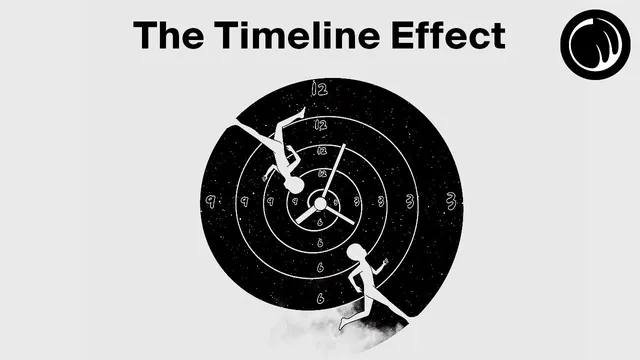
The Tragedy of Being Too Early - The Timeline Effect
Based on Pursuit of Wonder's video on YouTube. If you like this content, support the original creators by watching, liking and subscribing to their content.
Frank’s lifelong limp and early ridicule pushed him toward art as his main outlet and identity-building practice.
Briefing
A single, nearly invisible brain swelling helped kill Frank at 39—after years of chasing art with little recognition—while an alternate version of his life hinges on one small choice made weeks earlier. The central insight is the “timeline effect”: for every decision that doesn’t happen, another self and another path unfold, and the one that matters most may be the one you never get to see.
Frank was born with a congenital limb length discrepancy, leaving his left leg about two and a half inches longer than his right. The resulting lifelong limp limited typical childhood activities and made him a frequent target of ridicule and isolation. Art became his refuge and identity. In high school he loaded up on art classes, studied from “the greats,” and developed a personal style. At the University of Pittsburgh he majored in studio arts, focusing heavily on his work even when his grades and output stayed only “average” compared with stronger peers. Professors repeatedly criticized his pieces as unsatisfactory—lacking clear method and technical understanding, too concept-driven rather than arranged and executed. Still, he felt tethered to painting and couldn’t shake the compulsion it gave him.
Over more than a decade, Frank sacrificed stability to keep pursuing art. He tried to build a career through moves, jobs, and relationships, but success never arrived in the way he needed. His work sometimes made it into small local underground galleries, yet it was often met with harsh critique—described as tasteless, crude, or “not art.” The rejection fed depression and stress, and his life narrowed to tedious, low-paying work that drained him while he kept returning to painting.
By his mid-to-late thirties, friends, family, and strangers increasingly treated his persistence as foolish. His mother worried about his well-being and also about the embarrassment his failures caused her at social gatherings. His father leaned on clichés about hobbies and insanity, urging him toward something “viable.” Frank, nearly broke and unable to imagine a future with a family, felt beaten down by the gap between how the world saw him and how he saw himself.
Then a strange physical turn: in the last year of his thirties, Frank developed recurring, tightening pain in the back of his neck, followed by nausea and disorientation. Tests found nothing. A doctor prescribed almotriptan for migraines and referred him to specialists, but his condition worsened quickly. On the Sunday of that weekend, Frank was found dead in his apartment at 39.
The autopsy revealed a tiny edema in the frontal lobe that likely disrupted blood flow until it culminated in a stroke. It was too small to detect in time.
The story’s counterfactual lands hard: in one alternate timeline, Frank avoids a bar a couple weeks before his death. He doesn’t get drunk, doesn’t fall and hit his head on a stop sign corner, and therefore never develops the swelling that kills him. He continues working on a new piece, which is noticed by an art dealer visiting local galleries. The dealer sells it for $17,000, igniting a career that makes Frank world famous by his early forties—praised as ahead of his time and influential enough to spur later movements.
Frank’s tragedy, then, isn’t only that he died before recognition. It’s that he died without ever knowing whether his persistence was about to pay off—while the version of events that could have proved him right remained unknowable.
Cornell Notes
Frank’s life is portrayed as a long, grinding pursuit of art, shaped by early isolation from a congenital limp and sustained by an almost compulsive belief that painting was his true path. After years of limited success and harsh criticism, he dies at 39 when a tiny brain swelling—undetectable until too late—leads to a stroke. The “timeline effect” reframes that outcome: in an alternate version, a single earlier choice prevents a head injury, the swelling never forms, and a new artwork catches the attention of an art dealer. That piece sells for $17,000 and launches a world-famous career, showing how small deviations can determine whether talent is recognized in time.
What early life factors pushed Frank toward art and away from conventional paths?
Why didn’t Frank’s art career take off during his twenties and thirties?
What medical event ended Frank’s life, and why was it hard to catch?
How does the alternate timeline change one earlier decision into a completely different outcome?
What triggers recognition in the alternate timeline, and what follows?
What is the “timeline effect” takeaway about success and timing?
Review Questions
- How do Frank’s physical limitations and social treatment in childhood shape his identity and career focus later?
- What role does the tiny frontal-lobe edema play in the timeline where Frank dies, and why couldn’t doctors detect it earlier?
- Which specific earlier choice in the alternate timeline prevents the head injury, and how does that lead to the $17,000 sale?
Key Points
- 1
Frank’s lifelong limp and early ridicule pushed him toward art as his main outlet and identity-building practice.
- 2
Despite intense focus, Frank’s work was repeatedly criticized for lacking technical method and for being too concept-driven rather than executed with clear arrangement.
- 3
Years of limited recognition and harsh peer critique contributed to financial stress, depression, and a narrowing of his life around painting.
- 4
Frank died at 39 after a tiny frontal-lobe edema likely progressed into a stroke, and the swelling was too small to be detected before it became fatal.
- 5
In the alternate timeline, skipping a bar a couple weeks earlier prevents drunken behavior and a stop-sign head injury, so the fatal swelling never develops.
- 6
A new artwork eventually catches an art dealer’s attention, selling for $17,000 and triggering a career that becomes world-famous by around age 43.
- 7
The “timeline effect” frames success as contingent on small, unknowable events—so timing and persistence can be decisive even when outcomes look hopeless.