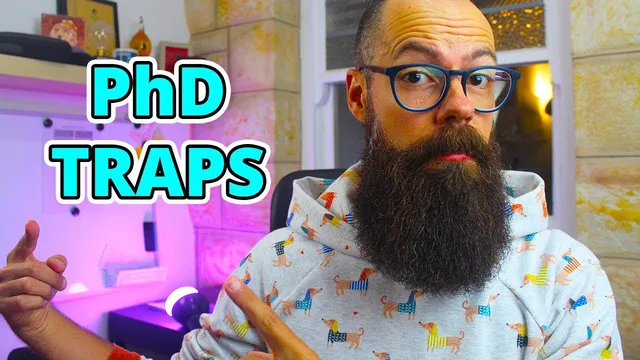
The traps all PhD students fall into
Based on Andy Stapleton's video on YouTube. If you like this content, support the original creators by watching, liking and subscribing to their content.
Self-doubt about research quality often intensifies when progress is near, because the next step looks obvious only after prior groundwork.
Briefing
Every PhD student eventually feels their work is “obvious,” “trivial,” or not good enough—often right when they’re getting close to real progress. That sense comes from being too close to the problem: the next step can look clear only because months of groundwork have already made it clear to you. Meanwhile, other researchers’ results can look effortless from the outside, even though their internal process likely involved the same incremental “small steps that add up” thinking. The practical takeaway is to trust the process of building toward a big question, and when self-doubt spikes, return to the original research thought and talk it through with a supervisor.
A second cluster of traps shows up when academic incentives start steering effort away from the actual research. One common warning sign is a supervisor pitching a task as “good for your CV.” The framing often benefits the supervisor’s career and workload more than the student’s. If the request is a distraction—like conference organization, presentations, or administrative work—students are encouraged to pause and ask whether it helps their own research priorities. A polite refusal is presented as legitimate, especially when the student is busy with something that directly advances the thesis.
Near the end of a PhD, the “one more experiment” trap becomes especially dangerous. The promise is usually that a single perfect addition will fill a gap, strengthen the story, or make the thesis feel complete. But research rarely ends, and chasing that extra piece can cascade into more experiments and more delays. The advice is to double-check whether the extra work is truly necessary or whether it can be treated as “further work.” The transcript also points out that removing full chapters can be acceptable when the thesis still delivers a novel, interesting, and coherent package—because time-to-submission matters.
Momentum can also be lost through procrastination disguised as planning. A recurring pattern is thinking, “I’ll do it tomorrow,” then discovering it takes longer than expected—so starting with a small, concrete action (even 10 minutes) is recommended to keep progress compounding. The same logic applies to lab routines: tasks that feel like overhead (like cleaning) can become excuses to postpone the main work, even though small daily progress prevents the “snowball” effect.
Finally, drifting focus and “paper baiting” can quietly derail a PhD. As the research question fades from daily attention, new shiny ideas can pull time away from the core goal; the fix is to periodically refresh the primary question and redirect back to it. Side projects and instrument work are not automatically bad, but requests to run “quick experiments” in exchange for authorship can consume disproportionate time. The transcript estimates that papers resulting from such baiting happen less than 25% of the time, so students should scrutinize timelines, scope, and what exactly is being promised before agreeing.
Cornell Notes
PhD self-doubt often peaks when progress is near: the next step feels obvious only because prior work has built the path, while other researchers’ results look effortless from the outside. The transcript urges students to trust incremental progress, revisit the original research question, and discuss uncertainty with a supervisor. It then highlights incentive-driven traps: doing tasks “for your CV” can distract from thesis work, and “one more experiment” near the end can delay submission without adding essential value. Momentum matters—starting with small actions today prevents procrastination from turning into larger delays. Finally, focus can drift into tangents or instrument favors; “paper baiting” requests should be evaluated carefully because authorship often doesn’t translate into a publishable outcome.
Why does research start to feel “trivial” right when it’s getting close to real progress?
How should a student respond when a supervisor frames an extra task as “good for your CV”?
What’s the “one more experiment” trap, and how can it be handled near thesis end?
What practical tactic prevents procrastination from snowballing during a PhD?
Why can instrument work and “quick experiments” become a trap even when authorship is promised?
How does focus drift happen, and what’s the recommended countermeasure?
Review Questions
- When does the feeling that your research is “obvious” become a warning sign versus a sign of progress?
- What questions should you ask before accepting a task framed as “good for your CV”?
- How would you decide whether an additional experiment near thesis end is essential or should be deferred as further work?
Key Points
- 1
Self-doubt about research quality often intensifies when progress is near, because the next step looks obvious only after prior groundwork.
- 2
Other researchers’ results can seem effortless from the outside; their internal process likely involved the same incremental steps.
- 3
Treat “good for your CV” requests as a potential mismatch of incentives—pause and evaluate whether the work distracts from thesis priorities.
- 4
Near the end of a PhD, challenge the “one more experiment” urge by asking whether it’s truly necessary or can be deferred as further work.
- 5
Prevent procrastination by starting with a small, immediate action (e.g., 10 minutes) to maintain momentum.
- 6
Minimize focus drift by regularly refreshing the primary research question and redirecting away from tangents that don’t support it.
- 7
Be cautious with “paper baiting” and quick-instrument favors: clarify scope and timelines, and recognize that publishable outcomes may be uncommon (estimated under 25%).