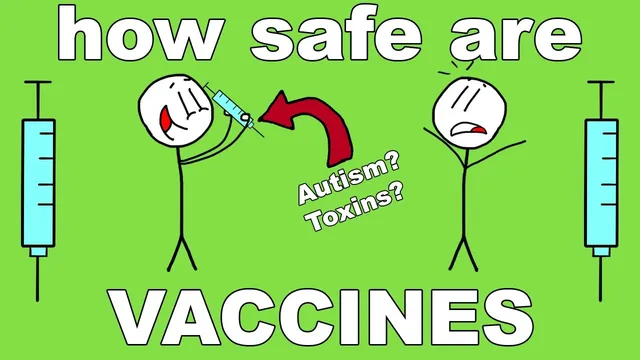
The Truth About Vaccine Safety
Based on Second Thought's video on YouTube. If you like this content, support the original creators by watching, liking and subscribing to their content.
The autism claim is traced to a single 1997 MMR study that was later retracted for fraud and ethical/procedural violations, and subsequent research found no autism link.
Briefing
Vaccines are portrayed as both scientifically safe and publicly necessary: the strongest claim—that vaccines cause autism—was traced to a discredited 1997 study and has been repeatedly rejected by later research, while other common safety worries hinge on chemicals present in tiny, biologically manageable amounts. The practical takeaway is that refusing vaccination reliably increases outbreaks, putting infants, the elderly, and immunocompromised people at real risk.
The autism accusation is anchored to a single high-profile paper published in The Lancet in 1997 by British surgeon Andrew Wakefield. That work suggested the MMR vaccine increased autism risk, but it was later retracted after findings of serious procedural errors, ethical violations, and funding ties to groups opposed to vaccine manufacturers. Wakefield ultimately lost his medical license. Subsequent studies—conducted after the hypothesis was taken seriously—found no link between MMR vaccination and autism. The transcript also links the episode to a broader public-health cost: vaccination rates in the UK reportedly fell by about 80% after the scandal, and resources that could have been used to investigate autism’s true causes were instead spent trying to validate a fraud.
Beyond autism, the transcript addresses ingredient-based fears. It argues that substances often labeled “toxic” are present in vaccines at extremely low doses and that the body already handles them naturally at higher levels. Thimerosal (an organic mercury compound) is described as a preservative used since the 1930s and still found in flu shots; the concern centers on mercury exposure. The transcript counters that the mercury in thimerosal is ethyl mercury (different from methyl mercury found in fish) and notes that thimerosal use was discontinued in most vaccines in 1999, with thimerosal-free alternatives available for flu shots.
Formaldehyde is presented as a chemical used to deactivate viruses and detoxify bacterial toxins, with the claim that newborns already have far more formaldehyde circulating than any single vaccine dose would add. Aluminum is framed as an immune-adjuvant used to strengthen responses; the transcript acknowledges worries about brain and bone effects in large doses but argues there is no cause for alarm at vaccine levels, emphasizing aluminum’s ubiquity in the environment and comparing estimated intake from breastfeeding (about 7 mg over six months) with vaccine totals (about 4.4 mg).
Other ingredients—antibiotics used during manufacturing, MSG as a preservative, and gelatin as a stabilizer—are addressed as well. The transcript claims antibiotic residues in finished vaccines are negligible and that no vaccine allergic reactions have been traced to antibiotics; it portrays MSG-related symptoms as short-term and not strongly supported by science, and it argues gelatin’s allergy risk is extremely rare (about 1 in 2 million), with gelatin-free alternatives available.
Finally, the transcript argues that personal choice not to vaccinate has predictable community consequences. Historical examples are used to show that drops in vaccination rates lead to disease resurgence and deaths, including smallpox in Stockholm (1873), whooping cough in the UK after a perceived claim of ineffectiveness, and modern measles outbreaks in the United States tied to under-vaccinated groups. It adds that even vaccinated people can occasionally get measles if their immune response is insufficient, but that does not undermine vaccine effectiveness. The overall message is that scientific consensus is “as close to unanimous as you can get” and that vaccination prevents far greater harm than the risks posed by rare side effects.
Cornell Notes
The transcript links vaccine safety concerns to two main threads: the autism claim and ingredient fears. The autism narrative traces back to Andrew Wakefield’s 1997 MMR study in The Lancet, which was later retracted for fraud and ethical/procedural violations; later research found no autism link. Ingredient worries are addressed by arguing that chemicals like thimerosal, formaldehyde, and aluminum appear in vaccines at tiny doses and are handled by the body at higher baseline levels. The transcript also emphasizes that declining vaccination rates lead to disease resurgence, citing measles outbreaks in the U.S. and earlier historical examples. The practical implication is that vaccination protects not only individuals but also those who are too young, elderly, or immunocompromised to handle infections well.
What happened to the 1997 MMR–autism claim, and why does it still matter in public debate?
How does the transcript respond to fears about thimerosal (mercury) in vaccines?
What comparisons does the transcript use to argue that formaldehyde exposure from vaccines is not alarming?
Why does the transcript treat aluminum as a low-risk adjuvant rather than a toxin?
How does the transcript connect vaccine refusal to measles outbreaks and broader risk?
What does the transcript say about allergic reactions from antibiotics, MSG, and gelatin?
Review Questions
- Which retraction details and follow-up findings does the transcript use to refute the MMR–autism link?
- What dose-comparison logic does the transcript apply to thimerosal, formaldehyde, and aluminum?
- How does the transcript use historical and U.S. measles examples to argue that individual vaccine refusal harms community health?
Key Points
- 1
The autism claim is traced to a single 1997 MMR study that was later retracted for fraud and ethical/procedural violations, and subsequent research found no autism link.
- 2
Thimerosal concerns are addressed by distinguishing ethyl mercury from methyl mercury and noting thimerosal was discontinued in most vaccines in 1999, with thimerosal-free alternatives available for flu shots.
- 3
Formaldehyde is described as a virus-inactivation and toxin-detoxification chemical, with the transcript arguing vaccine exposure is tiny compared with normal human metabolism.
- 4
Aluminum is framed as an immune adjuvant used for strengthening vaccine responses; the transcript argues vaccine-level aluminum is far below harmful thresholds and compares it to environmental and breastfeeding intake.
- 5
Antibiotics used during vaccine manufacturing are claimed to leave negligible residues in finished products, and the transcript says no vaccine allergic reactions have been traced to them.
- 6
Gelatin is presented as the most allergy-associated ingredient among the listed concerns, but reactions are described as extremely rare and gelatin-free alternatives exist.
- 7
Lower vaccination rates are linked to measles and other disease resurgence, with the transcript citing multiple historical cases and U.S. outbreaks tied to under-vaccinated groups.