The Ultimate Guide to Moving From Evernote to Obsidian | Part 2
Based on Linking Your Thinking with Nick Milo's video on YouTube. If you like this content, support the original creators by watching, liking and subscribing to their content.
Evernote’s decline is framed as a strategic identity shift: growth and monetization pressure replaced the original focus on capturing notes “at any time in any place.”
Briefing
Evernote’s long decline traces back to a mismatch between its original “every note… at any time in any place” promise and a later push to chase growth through monetization, feature expansion, and even consumer-fashion branding—an “Icarus moment” that helped competitors like Notion and Obsidian take over the modern personal knowledge management space. The turning point is framed around Apple’s iPhone App Store launch in 2008, when Evernote became a day-one hit and scaled rapidly to 75 million users by 2013. At that stage, CEO Phil Libin also leaned into lifestyle products—“Evernote backpacks,” “Evernote wallets,” and more—signaling a pivot toward being “the Nike for smart people,” not just a note system.
From there, the case for switching becomes less about nostalgia and more about how people actually use notes. Staying in Evernote makes sense for three types of users: those treating it mainly as a static archive for clipped articles (where Evernote’s Web Clipper is both its best and most dangerous tool), those who store information but rarely synthesize or manage complex projects, and those who don’t save personal/journaling content and can tolerate paying a subscription indefinitely just to retrieve old PDFs and articles. In this framing, Evernote works like a “dusty attic”—useful when needed, but not ideal as a daily thinking engine.
Switching to Obsidian is recommended when notes are used to think, not just to collect. The transcript lays out three “switch” triggers: using notes to generate insights, using notes to synthesize information and connect ideas across complex work, and needing stronger control over privacy and sharing—especially when Evernote’s cloud access led the creator to censor writing. Obsidian is positioned as a “supercharged sense-making machine” because it encourages linking through context, helping users learn faster and recall more effectively.
The practical migration guidance focuses on how to handle old Evernote material without dragging clutter into a new system. The recommended approach is to keep exported Evernote notes in a separate “old vault” rather than importing everything into the main Obsidian workspace. The transcript uses an “attic” metaphor: you don’t want your new ideaverse polluted with old problems. Instead, users copy specific notes into the main vault as needed, then create bidirectional links (for example, a note on “storytelling transitions” linking back to a “rhetoric map”). To maintain clarity over time, the old note is renamed with a simple “transferred” marker (implemented via a hotkey on Mac), so future searches reveal whether an item has already been assimilated.
Finally, the decline story is reinforced with a quick CEO-by-CEO timeline—Steppen Patiković’s empowerment vision, Phil Libin’s expansion, Chris O’Neal’s restructuring, Ian Small’s stabilization and monetization preparation, and the later acquisition by Bending Spoons under Luca Ferrari—followed by four factors behind the free fall: urgent pressure to make money, feature bloat that slowed the product, a deluded vision that diluted the core note promise, and intensifying competition as grassroots users moved to Notion and Obsidian.
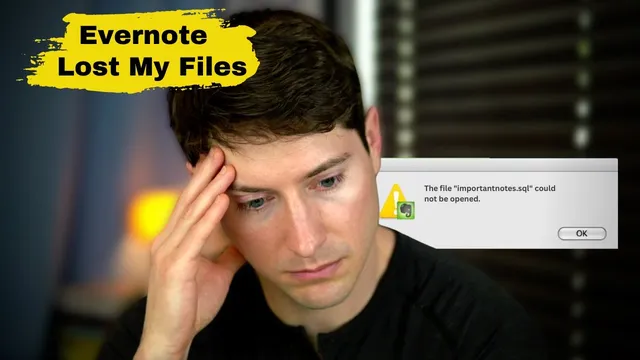
The transcript also adds a personal note: two audio recordings were lost, highlighting how fragile knowledge can be even when software promises permanence. The “secret reason” for switching is ultimately behavioral—breaking a “toxic relationship with knowledge” by replacing constant capturing with intrinsic, joyful thinking in a better environment.
Cornell Notes
Evernote’s decline is attributed to a pivot away from its core promise toward monetization pressure, feature bloat, and a diluted vision that expanded beyond notes into lifestyle products. Staying in Evernote can still work for people who use it mainly as a static archive (especially with Web Clipper), store information without much synthesis, or don’t rely on private/journaling content and don’t mind ongoing subscription costs.
Switching to Obsidian is recommended for users who want notes to drive thinking: generating insights, synthesizing ideas, managing complex projects, and maintaining stronger privacy/control. Migration guidance emphasizes keeping old Evernote material in a separate “attic” vault, then selectively copying notes into the main Obsidian ideaverse with context-based links. A simple “transferred” renaming convention helps users confirm whether an item has already been moved and avoids duplicating clutter.
Why does the transcript frame Evernote’s “Icarus moment” as more than just product changes?
What are the three main reasons someone might not need to switch from Evernote?
What triggers a switch to Obsidian in the transcript’s framework?
How should old Evernote notes be handled during migration, and why?
What does “transferred” labeling accomplish during migration?
How does the transcript illustrate better note structure after moving to Obsidian?
Review Questions
- Which user goals make Evernote a reasonable “static archive,” and what tradeoff does the transcript highlight for that approach?
- What migration strategy prevents clutter from contaminating a new Obsidian workflow, and how does the “transferred” label support it?
- How do the transcript’s three “switch” triggers differ from the three reasons to stay in Evernote?
Key Points
- 1
Evernote’s decline is framed as a strategic identity shift: growth and monetization pressure replaced the original focus on capturing notes “at any time in any place.”
- 2
Staying in Evernote can be rational if it functions mainly as a static archive for clipped content, with minimal synthesis or complex project management.
- 3
Switching to Obsidian is most compelling when notes are used to generate insights, synthesize ideas, and manage privacy-sensitive writing.
- 4
A clean migration keeps exported Evernote material in a separate “attic” vault rather than importing everything into the main ideaverse.
- 5
Selective copying plus context-based linking (e.g., linking a note back to a map) helps transform imported notes into an interconnected knowledge system.
- 6
Renaming moved items with a simple “transferred” marker creates a durable check that avoids duplicate work and preserves long-term clarity.