The Ultimate Learning Technique (You Might Be Ignoring)
Based on Linking Your Thinking with Nick Milo's video on YouTube. If you like this content, support the original creators by watching, liking and subscribing to their content.
PKM is framed as a system for sense making, not just storing information.
Briefing
Personal knowledge management (PKM) is framed as a way to make sense of the world—and the stakes are practical: without a system, people drown their best insights in new information and forget what mattered. The core problem isn’t a lack of ideas; it’s attention and retrieval over time. As life changes, “the you of today” won’t match “the you of 10 years ago,” so relying on memory alone guarantees that breakthroughs fade. PKM is presented as the antidote: instead of collecting more “idea noise,” people should pause, identify signal, and then connect that insight to an existing note so it can be revisited, extended, and re-grounded later.
The transcript ties PKM to an old human impulse—codifying reminders that help people live well. Ancient traditions are used as examples of how societies turned complex knowledge into memorable guidance: Buddhism’s eightfold path, Stoicism’s four virtues, and religious formulations of the golden rule. The point isn’t that these frameworks are identical to modern note systems, but that durable learning depends on turning experience into reusable structure. PKM is described as “sense making,” a process that helps answer existential questions like what to do, how to conduct oneself, where to spend limited attention, and what truly matters.
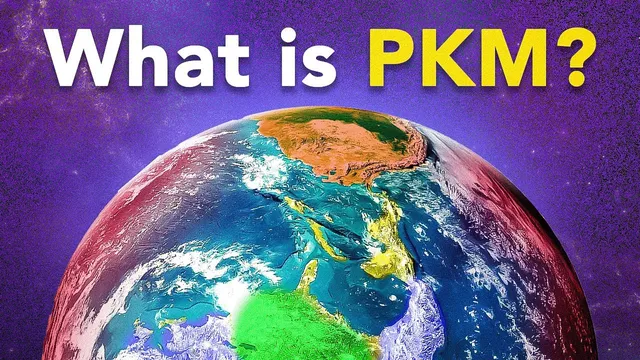
From there, the discussion pivots to a concrete framework meant to organize how people spend time managing knowledge. The “PKM planet” divides the work into six overlapping domains: memory management (PMM), idea management (PIM), writing management (PWM), productivity management (PPM), skill management (PSM), and relationship management (PRM). The transcript emphasizes that real workflows blend these areas—connecting ideas often leads to writing, and writing often serves a project or goal—so the planet is designed as a “common way” to map where attention actually goes.
The practical value of the PKM planet is diagnostic. With limited time, people can waste effort by managing knowledge in the wrong place or in the wrong way. By plotting their activities across the six domains, they can bring more intention, explain their approach to others, and recognize personal “archetypes.” The next part of the plan is a series of videos promising to examine common PKM archetypes, including top-down versus bottom-up thinkers, note takers versus note makers, and patterns like “content regurgitators” versus “sense makers.”
Ultimately, PKM is pitched as a long-term training system for thinking. Digitally linking insights is presented as a method for developing ideas over decades, making more sustainable leaps of understanding, and strengthening critical, creative, and connective thinking. The payoff is not just better recall, but a more grounded, joyful, and meaningful way to learn—one that supports contribution to family, friends, community, and society by preserving and nurturing a person’s best thinking over time.
Cornell Notes
Personal knowledge management (PKM) is presented as a long-term method for “sense making”—turning experiences and ideas into durable, reusable knowledge. The central failure mode is forgetting: people’s future selves change, and constant information intake can drown out the insights that mattered most. PKM counters that by focusing on signal, then connecting new insights to existing notes so they can be revisited and extended over years. To make PKM actionable, the transcript introduces the “PKM planet,” a framework with six domains: memory, ideas, writing, productivity, skills, and relationships. Mapping time across these areas helps people spot where attention goes, avoid common pitfalls, and build sustainable thinking habits.
Why does forgetting become inevitable even for people who have “breakthroughs”?
What does “good PKM” look like in contrast to “collecting more ideas”?
How does the “PKM planet” framework organize knowledge work?
What practical benefit comes from mapping time on the PKM planet?
What kinds of PKM archetypes are promised next, and why do they matter?
How is PKM linked to better thinking and long-term learning?
Review Questions
- What is the difference between “signal” and “noise” in the PKM approach, and how does digital linking change what happens to an insight?
- How do the six domains of the PKM planet (PMM, PIM, PWM, PPM, PSM, PRM) overlap in real workflows?
- Which archetype pitfalls (e.g., regurgitation vs sense making) would most likely prevent knowledge from becoming durable over time?
Key Points
- 1
PKM is framed as a system for sense making, not just storing information.
- 2
Forgetting is treated as structural: future selves change, so breakthroughs must be externalized and connected to last.
- 3
Good PKM emphasizes pausing for signal, then linking insights to existing notes rather than collecting more ideas.
- 4
The “PKM planet” organizes knowledge work into six overlapping domains: PMM, PIM, PWM, PPM, PSM, and PRM.
- 5
Mapping where time goes across the six domains helps reduce wasted effort and improves results.
- 6
Recognizing PKM archetypes (top-down vs bottom-up, note takers vs note makers, regurgitators vs sense makers) is positioned as a way to avoid common learning traps.
- 7
Digitally linking thinking is presented as a long-term training method for critical, creative, and connective thinking over decades.