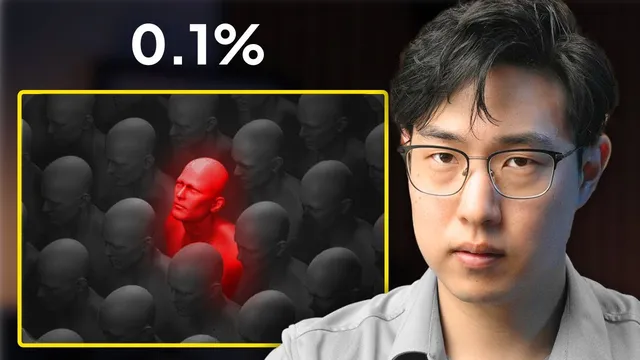
The Unique Behaviours of Top 0.1% Students
Based on Justin Sung's video on YouTube. If you like this content, support the original creators by watching, liking and subscribing to their content.
Top performance is framed as a barrier-removal process, not a matter of finding one more technique.
Briefing
Top students aren’t simply better at studying techniques—they tend to have fewer barriers to improvement because they treat learning as a system to debug, not a routine to endure. The core claim is that two people can receive the same study method and still produce wildly different results, largely because the more successful learners remove obstacles step by step: they adjust their habits, challenge what doesn’t work, and experiment until the process produces the outcome.
A major reason most learners stall isn’t a lack of “the next best technique,” but the presence of barriers—especially anxiety, insecurity, and status quo bias. Mainstream study habits often come from tradition and prior experience rather than solid research, and when exams approach, fear of failure discourages experimentation. That combination causes habits to harden: people keep repeating familiar methods even when those methods aren’t producing results.
The transcript contrasts two mindsets. Struggling students often cling to methods they were told work, even after evidence they don’t, because switching feels threatening. They may also copy what high performers do, assuming success is transferable. Top learners, by contrast, are less attached to their current methods and more attached to the refinement process itself. When a method fails to deliver, they move quickly—testing changes, identifying what’s missing, and focusing on cause-and-effect relationships between study actions and outcomes.
The differences show up in three common scenarios. After repeated bad exam results, the typical student hopes the next test will be easier, studies more, or copies a classmate’s approach—often adding ineffective work. The top learner instead analyzes why the result happened: whether strategies are redundant, whether a needed angle is missing, and what process change could fix the gap. If confidence is low before an exam, the typical response is more volume—more past papers, flashcards, and hours—while the top learner targets weaknesses directly, asking what gap undermines confidence and which testing angle hasn’t been tried. When lectures feel overwhelming, the typical student either shuts down or overcompensates by doing more of the same; the top learner diagnoses the sources of overwhelm and adjusts methods to reduce it.
The practical takeaway is that excellence is less about accumulating techniques or logging more hours and more about doing more with less: using the same time and tools to extract greater value. The transcript frames top performance as a trajectory—students aren’t born top learners, but they develop behaviors that make improvement possible early on. The final prompt is self-audit: examine reactions, habits, and tendencies to see whether they match the prerequisites for becoming an excellent learner or keep someone stuck.
Cornell Notes
The transcript argues that top learners improve because they systematically remove barriers rather than because they rely on secret techniques. Most students don’t get better due to anxiety, insecurity, and status quo bias, which makes them repeat familiar habits even when those habits fail. High performers are less attached to their methods and more focused on refining them through fast experimentation and cause-and-effect thinking. In three scenarios—bad exam results, low confidence, and overwhelming lectures—the “normal” response is usually more volume or copying success, while the top learner diagnoses the underlying cause and changes the process. The result is a shift from studying harder to studying smarter: doing more with less time and fewer ineffective actions.
Why can two students use the same study technique and still get very different results?
What barrier keeps many learners from improving: not knowing what to do or something else?
How does the transcript define the difference between “copying success” and refining methods?
What should a learner do after repeated bad exam results?
How do top learners respond when they feel overwhelmed in lectures or studying?
What is the practical goal the transcript sets for studying efficiency?
Review Questions
- Which specific barriers (emotional or cognitive) does the transcript say prevent learners from experimenting, and how do those barriers affect study choices near exams?
- In each of the three scenarios (bad exam results, low confidence, overwhelm), what concrete actions does the transcript contrast between typical students and top learners?
- Why does the transcript argue that “copying success” is a flawed strategy, and what should replace it instead?
Key Points
- 1
Top performance is framed as a barrier-removal process, not a matter of finding one more technique.
- 2
Anxiety, insecurity, and status quo bias near exams discourage experimentation and cause ineffective habits to persist.
- 3
Mainstream study habits are often shaped by tradition and prior experience rather than strong research.
- 4
Top learners are less attached to methods and more committed to refining them through fast, targeted experimentation.
- 5
Copying high performers usually fails because learners differ in brain, experience, and context; success isn’t directly transferable.
- 6
The transcript emphasizes “do more with less”: use the same time and tools to increase value rather than logging more hours.
- 7
After setbacks, the key move is cause-and-effect analysis—identify what’s missing or redundant and change the process accordingly.