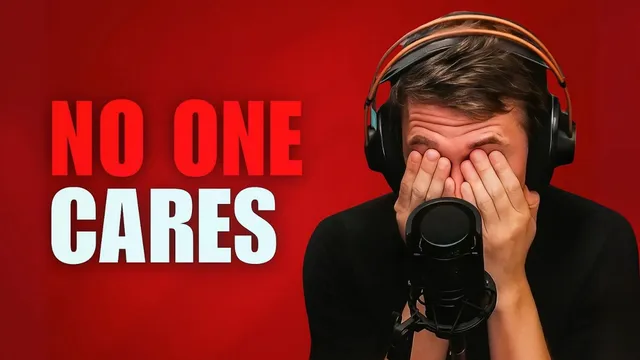
The Who Cares Era
Based on The PrimeTime's video on YouTube. If you like this content, support the original creators by watching, liking and subscribing to their content.
Fabricated AI-generated supplements made it into print, and the transcript treats the failure as a chain of indifference across writer, editor, production, business, and reader.
Briefing
A string of mainstream publications ran externally produced supplements packed with fabricated “facts,” expert quotes, and book titles generated by AI—yet the failures weren’t confined to one bad actor. The deeper outrage centers on a chain reaction of indifference: writers, editors, production teams, business stakeholders, and ultimately readers all failed to slow down, verify, or care enough to catch errors before print. The delay—two days before anyone noticed—becomes the clearest evidence that the real problem is cultural, not merely technical.
From there, the conversation widens into a broader diagnosis of why “good enough” content keeps winning. AI is portrayed as a mediocrity machine that pushes output toward the mathematical average: it can generate something that “looks right” quickly, consuming extraordinary resources to deliver copy that satisfies surface expectations. The rapid expansion of AI chatbot users is treated as proof that many people accept approximations when the stakes feel low. Even critics concede that “good enough” can be rational in practice—like autogenerated code for a small admin panel where the goal is functionality, not artistry.
Still, the transcript argues that the bigger shift is not simply that AI is present; it’s that incentives and attention have changed. Negotiations for a smart, deeply reported limited-run show reportedly collapsed as discussions were “dumbed down” into generic internet chatter—an example of how funding and audience appetite can shrink for work that demands sustained attention. A related theme is the rise of content designed to be consumed while doing something else, which makes deep craft harder to justify and easier to replace.
The “who cares era” label is contested. One counterpoint claims society isn’t indifferent so much as overloaded and optimized for shortcuts: people are “fact satiated,” surrounded by expert-sounding claims, and trained to accept them rather than challenge them. Another angle frames the problem as competition and scale—job applicants can mass-produce tailored applications, forcing everyone into a race where visibility matters more than craftsmanship. In that environment, even people who care can end up producing “enough” work because the market rewards speed and volume.
Amid the cynicism, the transcript lands on a personal and cultural prescription: when machines deliver mediocrity, the most radical act is to make something yourself—imperfect, rough, and human. The speaker emphasizes craft, fulfillment from building with one’s hands and eyes, and discomfort with the “black ball” of autogenerated systems that become hard to modify. The call to action is practical and behavioral: support real makers, pay full attention, read and watch deliberately, and keep caring loudly—especially as institutions face budget cuts and replacement attempts that treat expertise as interchangeable.
Cornell Notes
AI-generated supplements with fabricated facts made it into print, and the failure is framed as systemic: writers, editors, production staff, business stakeholders, and readers all missed the problem. The transcript links this to a broader culture of “good enough,” where AI outputs that look right can satisfy low-stakes expectations, especially when people are overloaded and trained to accept expert-sounding claims. Craft suffers when incentives reward speed and volume—whether in media production, job applications, or software work. The counterargument to “who cares” is that people may still care, but they’re pushed into shortcuts by attention scarcity, competition, and mass distribution. The proposed antidote is to build and verify: make imperfect work yourself, support deep effort, and practice full attention.
Why does the transcript treat the AI supplement incident as more than an isolated editorial mistake?
How is AI characterized, and why does that matter for what gets published or accepted?
What’s the transcript’s nuanced view of “good enough”?
What examples are used to show how incentives can downgrade quality even without AI?
Why does the transcript push back on the idea that people simply “don’t care”?
What does the transcript recommend as a response to the “mediocrity” dynamic?
Review Questions
- What specific chain of responsibility does the transcript identify in the AI supplement incident, and why is the two-day detection delay important?
- Which two competing explanations are offered for why quality declines: “people don’t care” versus “people are forced into shortcuts”?
- How does the transcript distinguish between acceptable “good enough” use of AI (e.g., small functional code) and harmful use (e.g., mass-produced, experience-free applications or fabricated supplements)?
Key Points
- 1
Fabricated AI-generated supplements made it into print, and the transcript treats the failure as a chain of indifference across writer, editor, production, business, and reader.
- 2
AI is portrayed as producing plausible, average-looking output quickly, which lowers the incentive to verify and increases the appeal of “good enough.”
- 3
The critique isn’t that AI exists; it’s that speed-and-volume incentives can degrade deep reporting, long-form craft, and sustained attention.
- 4
“Who cares” is challenged with the idea of shortcut culture: information overload, fact saturation, and competitive pressure push people toward the fastest path.
- 5
Craft is framed as both a quality standard and a source of personal fulfillment—building with one’s hands and eyes creates satisfaction that autogenerated work often lacks.
- 6
Job-market and content-market dynamics can reward surface area and throughput, causing even caring people to produce “enough” rather than excellent work.
- 7
The proposed countermeasure is cultural and practical: support real makers, verify claims, and practice full attention while making imperfect work yourself.