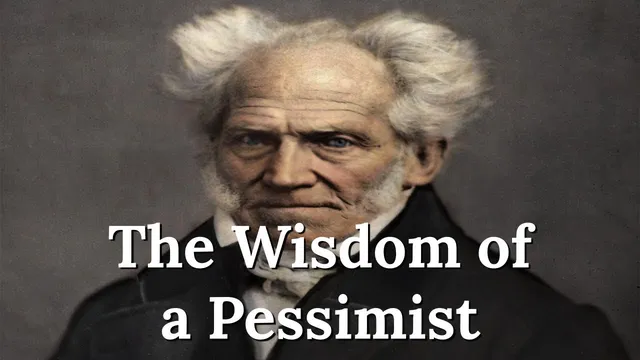
The Wisdom of a Pessimist - Arthur Schopenhauer
Based on Academy of Ideas's video on YouTube. If you like this content, support the original creators by watching, liking and subscribing to their content.
Schopenhauer’s central claim is that an unconscious “will to live” underlies reality and drives endless striving for survival and reproduction.
Briefing
Arthur Schopenhauer’s pessimism rests on a single, consequential claim: the deepest reality behind everything is an unconscious “will to live” that drives endless striving for survival and reproduction, and that blind engine makes misery and evil built into existence rather than accidental to it. Because human beings experience the world through appearances and cannot directly access “things in themselves,” Schopenhauer argues that the most reliable access to reality comes from inward experience—discovering that the self is not primarily a rational observer but a bundle of wanting. From that starting point, suffering stops looking like a moral failure and starts looking like the predictable outcome of how life is structured.
Schopenhauer’s metaphysics begins with Kant’s limits on knowledge. Kant held that people can know only how the world appears, not what it is in itself. Schopenhauer agrees with the boundary—except for one exception: people experience their own inner nature from within. That inner nature is characterized by “endless striving,” expressed as desire, need, and longing. He links this striving to two fundamental aims: survival (health, pleasure, comfort) and reproduction (sexual desire and status-seeking like money and fame). Even nature beyond humans—plants, animals, and inorganic forces such as gravitation, magnetism, and crystal formation—shares the same inner essence. The result is a universe where everything presses toward existence without rational purpose.
That blind striving produces a bleak picture of individuality and conflict. Schopenhauer treats separateness as “Maya,” an appearance masking the unity of the will. Yet each organism behaves as if it were the center of the world, naturally prioritizing its own well-being—egoism as a structural feature, not a personal defect. With limited resources, organisms collide: survival requires killing and consuming, and reproduction fuels competition, deception, and violence. The cruelty of nature and the cruelty of human life become two expressions of one underlying process: the will is both hunter and prey, perpetrator and victim.
Suffering then becomes the default condition of consciousness. Desire generates dissatisfaction when unmet, and only brief relief when satisfied before new wants arise. Even the best life is “tragic” in structure, ending in death—slow decay or sudden accident—so lasting happiness remains impossible while consciousness remains captive to willing. Schopenhauer rejects the idea that a moral, loving God could have created such a world, describing the will instead as “demonic” if treated as a deity.
The practical question is what to do with this diagnosis. Schopenhauer offers two main routes to escape the cycle of willing. The first is aesthetic appreciation: beauty can temporarily lift people above egoistic preoccupation with desire, creating moments of liberation from the pressure of the will. The second is ethical renunciation, an ascetic denial of the will to live—voluntary chastity, poverty, and detachment from possessions and impulses. This path aims at indifference to the world’s pulls, cutting the “threads” of craving, fear, envy, and anger. Yet not everyone accepts withdrawal as livable; Carl Jung is cited as approving of the bleak vision but rejecting the solution, preferring a way to affirm life despite its suffering. The transcript closes by promising that next step: how to live with awareness of life’s terrible truths without surrendering to them.
Cornell Notes
Schopenhauer argues that the world’s underlying reality is an unconscious “will to live” that drives endless striving for survival and reproduction. People can’t know “things in themselves” in the usual way, but they do know their own inner nature from within: it feels like wanting, not like detached reason. Because desire never yields lasting satisfaction, suffering becomes the default condition of consciousness, and death completes the cycle. The will also explains nature’s conflict: egoism and competition follow from organisms’ shared essence, even when separateness is only an appearance. Schopenhauer’s escape route is to reduce or silence willing—first through aesthetic experience that temporarily frees attention from desire, and ultimately through ethical renunciation and ascetic self-denial.
Why does Schopenhauer think inward experience can bypass Kant’s limits on knowledge?
What are the two core aims Schopenhauer says all desire serves?
How does Schopenhauer connect human conflict to a metaphysical unity beneath individuality?
Why does Schopenhauer think lasting happiness is impossible?
What does Schopenhauer recommend as a practical response to this pessimistic diagnosis?
Why does Carl Jung’s reaction matter in the transcript’s arc?
Review Questions
- How does Schopenhauer use the experience of one’s own mind and body to claim access to “things in themselves”?
- In Schopenhauer’s framework, why do desire and dissatisfaction recur even after a wish is fulfilled?
- What are the differences between aesthetic appreciation and ethical renunciation as routes to reducing the will’s hold?
Key Points
- 1
Schopenhauer’s central claim is that an unconscious “will to live” underlies reality and drives endless striving for survival and reproduction.
- 2
Inward experience is treated as a privileged route to reality because it reveals the self as wanting, not merely as an external appearance.
- 3
Nature’s conflict is explained metaphysically: egoism and competition follow from organisms’ shared essence, even if separateness is only an appearance.
- 4
Suffering is built into desire itself—unmet wants cause pain, met wants bring only temporary relief before new desires arise.
- 5
Schopenhauer rejects the idea of a morally loving creator for a world structured like “hell,” describing the will as “demonic” if personified.
- 6
Escape from suffering requires reducing or silencing willing, first through aesthetic moments of liberation and ultimately through ascetic ethical renunciation.
- 7
The transcript highlights a key objection: some thinkers accept the pessimistic diagnosis but resist the proposed withdrawal from life.