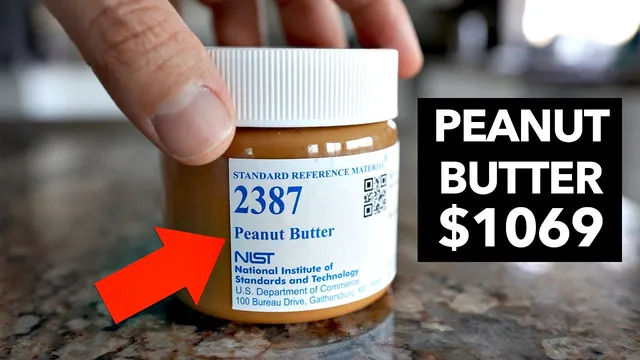
The world depends on a collection of strange items. They're not cheap
Based on Veritasium's video on YouTube. If you like this content, support the original creators by watching, liking and subscribing to their content.
NIST SRMs are expensive because they are homogenized for consistency and certified through long, uncertainty-controlled measurements—not because the material is inherently rare.
Briefing
A jar of peanut butter can cost around $1,000 not because it’s tastier, but because it’s been engineered into a “truth in a bottle” calibration tool—perfectly consistent, precisely measured, and backed by years of uncertainty-controlled analysis. The core idea is that modern food safety, lab testing, and industrial regulation depend on standardized reference materials (SRMs): samples whose composition is known so accurately that other labs can verify their instruments and methods produce the right numbers.
In the NIST warehouse, the mundane and the bizarre sit side by side: dried wastewater sludge turned into fine powder, tissue samples preserved for analysis, and even peanut butter treated as a scientific benchmark. For the peanut butter example, NIST homogenizes batches so every jar contains the same substance, then scientists at the National Institute of Standards and Technology (NIST) spend years quantifying compounds with specified uncertainties. Buyers—researchers and manufacturers—run their own analytical equipment on the SRM and check whether their results match the certified values on the certificate. That process matters because labels and measurements can’t be trusted without calibration, and because real-world contaminants can be dangerous.
Aflatoxins illustrate the stakes. Peanut butter can naturally contain aflatoxins—carcinogenic compounds produced by fungi on peanuts. If a factory’s testing system can’t accurately detect elevated aflatoxin levels, contaminated product may slip through. NIST’s standard peanut butter includes a known level of aflatoxin, letting laboratories calibrate to a reference point and measure whether their samples are above safe thresholds. The transcript also notes practical limits: NIST can’t characterize every food type, so it uses “surrogate” standards that are close enough in composition and consistency to support accurate measurement.
NIST’s SRMs extend far beyond food. Steel standards emerged from a 1905-era crisis in railcar quality: foundries could make alloys, but lacked a shared way to compare results. NIST produced standard steels and distributed them so manufacturers could inter-compare their chemistry against known samples. Today, Charpy tests—used to assess steel toughness—depend on NIST’s Charpies, with companies checking materials annually for applications ranging from pipelines to defense and nuclear-waste storage.
Even consumer safety relies on SRMs. Standard cigarettes support flammability testing for mattresses and bedding, helping regulators and manufacturers ensure products behave consistently under standardized ignition conditions. Forensics uses a “standard bullet” with manufactured nano-indentations and mapped marks so labs can validate groove measurements when linking bullets to weapons.
The same calibration logic drives environmental monitoring: NIST sells standards for house dust, lead paint, glacier water, and soil collected from contaminated sites. The transcript goes further into human-derived materials, including “domestic sludge” from wastewater treatment and plans for a first living SRM using hamster ovary cells to produce monoclonal antibodies. The throughline is simple: whether the target is aflatoxins, steel toughness, flammability, or toxins in dust, SRMs turn hard-to-measure reality into quantified, verifiable numbers—quietly underpinning safety, compliance, and trust.
Cornell Notes
NIST standard reference materials (SRMs) are precisely characterized samples used to calibrate and validate measurements across industries. A $1,000 jar of peanut butter is expensive because it’s homogenized for consistency and certified with quantified compounds and uncertainties, enabling labs to confirm their instruments produce the correct values. This calibration is crucial for food safety, such as detecting aflatoxins, and for regulatory testing where measurement accuracy affects outcomes. SRMs also support steel toughness testing (Charpy standards), flammability tests (standard cigarettes), forensic bullet groove measurements, and environmental monitoring (dust, soil, lead paint, glacier water). As science advances, NIST expands into harder matrices and even living reference materials, including plans for hamster ovary cells producing monoclonal antibodies.
Why can a jar of peanut butter cost around $1,000, and what makes it scientifically useful?
How does the peanut butter SRM help with aflatoxin detection?
What does NIST mean by using “surrogate” standards for different foods?
How did SRMs for steel originate, and why do they still matter?
What role do SRMs play in safety and forensics beyond calibration?
Why are environmental and biological matrices harder, and how does NIST respond?
Review Questions
- What steps make an SRM like peanut butter reliable for calibrating lab instruments, and how does that reliability translate into real-world safety?
- How does the “food triangle” approach justify using one SRM to measure a different food product?
- Compare the purposes of SRMs used for calibration versus those used for validation, using examples from steel, cigarettes, or bullets.
Key Points
- 1
NIST SRMs are expensive because they are homogenized for consistency and certified through long, uncertainty-controlled measurements—not because the material is inherently rare.
- 2
Calibration works when labs run an SRM and check that their measured values match the certified certificate values NIST provides.
- 3
Food safety depends on SRMs for detecting naturally occurring contaminants like aflatoxins, where accurate measurement can determine whether unsafe product is caught.
- 4
NIST uses surrogate standards when it can’t characterize every food type, selecting SRMs that closely match target composition and consistency.
- 5
SRMs underpin industrial quality control, including steel toughness testing via Charpy standards that many companies check annually.
- 6
Safety and forensic workflows rely on standardized materials to validate measurements under consistent test conditions, from flammability cigarettes to marked bullets.
- 7
NIST expands SRMs into complex matrices and even living systems, including plans for hamster ovary cells producing monoclonal antibodies.