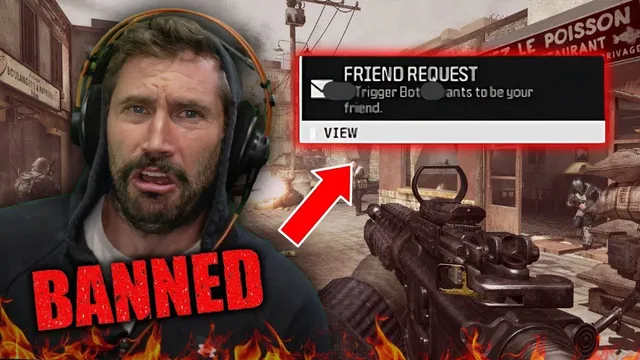
The Worst Anti-Cheat Ever
Based on The PrimeTime's video on YouTube. If you like this content, support the original creators by watching, liking and subscribing to their content.
Ricochet’s criticized detection relied on signature scanning of live memory for specific cheat-related text strings, including “triggerbot.”
Briefing
Call of Duty’s Ricochet anti-cheat was thrown into crisis after an exploit was described that could trigger permanent bans simply by having certain text strings appear in a player’s in-game memory. The core mechanism wasn’t a sophisticated bypass of detection logic—it was a signature-scanning approach that flagged the presence of a specific phrase associated with a common cheat menu option (“triggerbot”). Because Ricochet scans live memory for those signatures, ordinary gameplay data—like player names, friend-request names, and chat messages—can inadvertently contain the trigger phrase and get swept into the ban net.
The exploit’s abuse path is straightforward: send a friend request or message containing the targeted string, or otherwise ensure the phrase lands in the recipient’s memory during a match. Since lobby player names and chat content are already present in memory while the game runs, the detection can misfire even when the recipient isn’t cheating. The transcript notes that this wasn’t limited to chat—player identifiers and social interactions can also be scanned—making it possible to ban “random” accounts at scale. A claim is made that thousands of Call of Duty players were banned before major streamers were targeted, after which Ricochet reportedly disabled the ban behavior and investigated.
A key technical criticism centers on how the signatures were constructed. Signature scanning is a known technique in anti-cheat and antivirus systems, but it requires careful engineering so that the signature is specific to the cheat’s loaded code—not just any coincidental text that could appear in normal data. The discussion highlights Ricochet’s use of plain-text/ASCII-style strings and multi-string patterns as signatures. That choice is portrayed as a major oversight: any compiled code or data that happens to contain functionally similar content can raise a detection flag, and even accidental matches can occur.
The fallout quickly became as much about accountability as about detection logic. Activision’s response, quoted in the transcript, says Ricochet identified and disabled a workaround that detected the detection system in Modern Warfare 3 and Call of Duty Warzone, then restored accounts impacted by the workaround. The statement frames the issue as affecting a “small number” of legitimate players, while the transcript’s participants argue the underlying design allowed negligence—scanning too broadly and banning too aggressively based on strings that can appear in non-cheating contexts.
Accounts were reportedly being unbanned, with a caveat that players caught using the relevant strings as part of real cheating would remain penalized. Still, the episode underscores a broader security lesson: anti-cheat systems that can produce false positives at scale—especially permanent bans—create a vulnerability not just for cheaters, but for anyone caught in the blast radius of overly permissive detection rules. The transcript ends with calls for safer detection practices, review workflows for flagged accounts, and a general push for more robust engineering rather than shortcuts that trade accuracy for speed.
Cornell Notes
Ricochet’s signature-scanning approach was criticized after an exploit allegedly caused permanent bans by matching a cheat-related text string (“triggerbot”) in a player’s in-game memory. The detection logic appears to treat the presence of that phrase as sufficient evidence, even though normal gameplay data (chat messages, friend-request names, and lobby player names) can contain the same text. Because those strings can land in memory without any cheating, the system can misfire and punish legitimate players. The transcript claims thousands of accounts were affected before Ricochet disabled the problematic behavior and began restoring accounts, while cheaters using the strings would still be unbanned. The episode highlights how overly broad string-based signatures and lack of false-positive safeguards can turn anti-cheat into a self-inflicted denial-of-service.
How does signature scanning work in anti-cheat, and why does it matter for false positives?
Why can a chat message or friend request lead to a ban if the detection is memory-based?
What specific design choice drew the most criticism: scanning for strings or the way signatures were built?
What does the Call of Duty response claim, and how does it differ from the transcript’s concerns?
Why is permanent banning viewed as particularly harmful in this scenario?
Review Questions
- What conditions must be true for a signature-scanning anti-cheat to avoid false positives, and how did the criticized approach fail that standard?
- Explain how a targeted phrase could appear in memory without any cheating, and why that would still trigger a string-based signature scan.
- What tradeoff does the transcript suggest between detection speed/simplicity and security reliability, and what mitigation steps were proposed?
Key Points
- 1
Ricochet’s criticized detection relied on signature scanning of live memory for specific cheat-related text strings, including “triggerbot.”
- 2
Normal gameplay data—chat messages, friend-request names, and lobby player names—can contain the same phrase and still be present in memory during scanning.
- 3
The exploit’s abuse allegedly involved sending messages or friend requests containing the trigger phrase to cause bans in recipients who weren’t cheating.
- 4
Participants argued the signature design was overly permissive because plain-text/ASCII-style string matching can produce accidental matches.
- 5
The transcript claims Ricochet disabled the ban behavior and began restoring accounts after major targeting drew attention.
- 6
Activision’s response framed the issue as a workaround affecting a small number of legitimate accounts, while critics focused on negligence and lack of false-positive safeguards.
- 7
The episode reinforces that anti-cheat systems must minimize false positives and use review workflows rather than immediate permanent bans when detection confidence is uncertain.