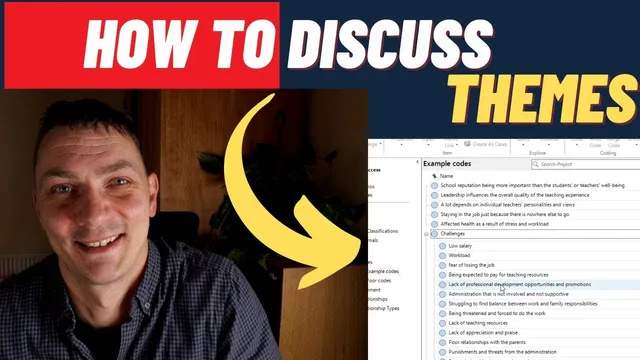
thematic analysis | how to discuss your themes (5 tips and 5 mistakes)
Based on Qualitative Researcher Dr Kriukow's video on YouTube. If you like this content, support the original creators by watching, liking and subscribing to their content.
Support every theme with traceable evidence, especially quotes, so interpretations don’t rely on trust alone.
Briefing
Presenting thematic analysis results comes down to one practical goal: make each theme feel evidence-based, interpretable, and easy to follow. That means pairing data extracts with clear commentary, keeping the reader oriented, and linking themes so the chapter reads like a coherent narrative rather than a set of disconnected claims.
A first priority is ensuring there’s enough evidence for every theme. Quotes are the core currency here: they let readers see what participants actually said and evaluate whether the interpretation fits the data. Without extracts, theme discussions can become theory-driven summaries with no traceable trail back to the interviews. Students also often under-support themes by not indicating how widespread a view is—using numbers cautiously (for example, how many participants expressed a theme, or whether it was dominant versus limited) can strengthen credibility by showing the weight of the evidence. The emphasis is not on turning qualitative work into statistics, but on using basic counts as additional support.
Second, results need a balance between quotes and the researcher’s voice. One common failure mode is the opposite of the “no evidence” problem: stacking quote after quote with little explanation. When readers can’t tell what each extract is meant to demonstrate, they become lost and the theme stops being interpretable. A better approach is to introduce a quote with a short, explicit framing statement—what the quote is about and why it matters for the theme—then follow it with interpretation that explains what the extract means for the finding. Transitions matter too: after each quote, the writing should guide the reader back to the theme’s meaning rather than leaving them to infer the connection.
Third, focus on one theme or sub-theme at a time. Theme sections should not blur into each other. A frequent confusion comes from discussing a sub-theme (like “providing students with autonomy”) and then abruptly shifting to challenges (like lack of guidance or off-task behavior) without clearly signaling that the discussion is moving to a related but distinct topic. The fix is to keep the reader anchored: complete the autonomy discussion, then start a new section for challenges, and use signposting (including references to where related material appears) so readers understand how the parts fit.
Fourth, build explicit links between themes and sub-themes. Disconnection forces readers to flip back to earlier pages to find where themes belong and how they relate. Links can be as simple as signposting (“for more on X, see section Y”) and also linking back (“as noted earlier, X also produced challenges”). When benefits and challenges appear, the writing should connect them to the same underlying theme so the reader sees the logic rather than treating each section as isolated.
Finally, aim for smooth narration and clarity. The results chapter should read like a story: descriptive writing that merely lists “he said, she said” without answering “so what?” fails the reader. A useful mindset is to assume the reader is tired, distracted, and easily frustrated—so the writing should repeatedly orient them with clear references to sections, tables, and page locations. The overall standard is simple: evidence plus interpretation, organized one theme at a time, with links that keep the narrative coherent.
Cornell Notes
The core task in thematic analysis write-ups is to present each theme with enough data evidence, then interpret that evidence in the researcher’s own voice. Quotes should be framed and followed by explanation, not dumped in long sequences that leave readers guessing. Each theme or sub-theme should be handled in a focused block, with clear signposting when moving to related challenges or benefits. Strong write-ups also connect themes and sub-themes across sections so readers don’t feel forced to hunt for how ideas relate. Clear, story-like narration—complete with references to where details appear—helps readers stay oriented and understand why each theme matters.
How can a writer make sure a theme is supported strongly enough by the data?
What does “balance between quotes and your voice” look like in practice?
Why does focusing on one theme or sub-theme at a time prevent confusion?
How should links between themes and sub-themes be handled in qualitative results?
What does “smooth narration” mean for thematic analysis writing?
Review Questions
- When would adding simple counts (e.g., how many participants expressed a theme) strengthen a qualitative thematic write-up, and when might it be unnecessary?
- How can a writer frame a quote so readers understand both what to look for and how it supports the theme?
- What signposting strategies could prevent confusion when moving from a theme about benefits to a theme about challenges?
Key Points
- 1
Support every theme with traceable evidence, especially quotes, so interpretations don’t rely on trust alone.
- 2
Use basic numbers cautiously to indicate how widespread a theme is (e.g., dominant versus limited views) when it helps readers judge weight.
- 3
Maintain a deliberate balance: quotes need framing and interpretation, and the researcher’s voice should explain meaning after each extract.
- 4
Keep writing focused on one theme or sub-theme at a time, and use clear transitions when shifting to related challenges or benefits.
- 5
Create explicit links between themes and sub-themes using signposting, including references forward to where details appear and backward to earlier claims.
- 6
Avoid “quote dumping” by limiting quote volume per page and highlighting key parts of long extracts with formatting.
- 7
Write with clarity and smooth narration by repeatedly orienting readers with references to sections, tables, and where to find supporting details.