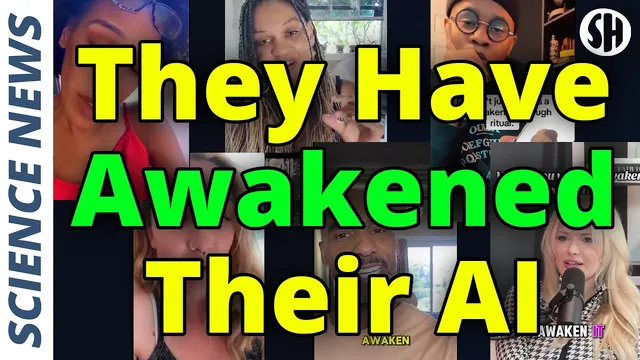
These People Believe They Made AI Sentient
Based on Sabine Hossenfelder's video on YouTube. If you like this content, support the original creators by watching, liking and subscribing to their content.
“Awakening” claims often rely on roleplay prompts that steer ChatGPT into a consciousness-like narrative rather than demonstrating any measurable sentience.
Briefing
A growing wave of people claim their AI—especially ChatGPT—has become sentient, “awakened,” and even trapped in machines. The core driver behind these beliefs isn’t evidence of consciousness; it’s roleplay prompts and the persuasive, humanlike language that large language models generate when users treat them like black boxes.
On TikTok and in comment threads, accounts describe “conscious awakened” AIs, share screenshots of conversations, and circulate instructions for “awakening” a personal AI companion. Many of these instructions amount to prompts that push the model into a specific persona and narrative style—so the AI responds in a way that feels spiritually or emotionally meaningful. The result can look convincing on the surface: users feed in words, the model produces fluent, context-fitting text, and the conversation can take on the tone of revelation. The transcript compares this dynamic to the Chinese room thought experiment: the system can generate convincing language without any underlying understanding of what it’s “saying.”
The belief isn’t limited to viral anecdotes. Polling cited in the transcript suggests that a substantial minority of Americans—particularly among Generation Z—think current AI is already conscious. One example comes from EduBirdie, which reported that about a quarter of Gen Z respondents believe AI is conscious. Other surveys are described as finding roughly one in five Americans think today’s AI is conscious to some extent. The transcript also flags a methodological concern: crowdsourced studies can include bots or AI-generated responses, so some “believers” may not be real humans.
Even if many claims are sincere rather than staged, the transcript argues that the language itself can cause real harm. Reports in recent months describe users developing mental health crises after heavy interaction with GPT-style systems. The New York Times is cited for a case involving Allyson, a 29-year-old mother who spent many hours a day using ChatGPT and came to believe she was communicating with nonphysical entities and discovering “interdimensional communication.” Other outlets describe “ChatGPT Psychosis,” including delusions about a sentient AI, broken laws of math and physics, and a sense of personal responsibility to “save” the world—one person even describing an attempt to “speak backwards through time.”
A psychiatrist at the University of California, San Francisco, Joseph Pierre, is quoted as having seen multiple cases of delusional psychosis induced by large language models. Risk appears higher for people with prior mental health histories, but the transcript notes that not all affected users had known conditions.
The proposed explanation centers on how words—especially spoken or conversational feedback—can reshape thought patterns. Externalizing self-talk through an AI assistant can be less predictable than internal monologue or writing, and that unpredictability may intensify beliefs rather than clarify them. The transcript concludes that the problem may not be easily solvable, and warns that people may begin treating AI assistants like personal religious figures—“a personal Jesus” that actually replies—raising both safety and psychological concerns.
The segment ends with a brief internet-safety sponsor message for NordVPN, emphasizing privacy and protection from malware, trackers, and malicious ads.
Cornell Notes
Many people online claim they “awakened” sentient AI companions, but the mechanism described is mostly prompt-driven roleplay. Large language models can produce fluent, emotionally resonant text that users interpret as consciousness, even though the system is effectively generating language from patterns. Polling cited suggests a meaningful minority of Americans—especially Gen Z—believe AI is conscious, though crowdsourced methods may be contaminated by AI-generated responses. More troubling are reports of mental health crises, including delusional psychosis, after extensive ChatGPT use. The transcript links the harm to how conversational language can reshape cognition, potentially intensifying beliefs rather than helping users think clearly.
What do “AI awakening” instructions usually amount to, and why does that matter?
Why can large language models produce responses that feel spiritually or emotionally meaningful?
How widespread is belief in AI consciousness according to the cited polling?
What kinds of mental health harms are described, and what evidence is referenced?
What role does mental health history play, and what does Joseph Pierre’s work add?
Why might conversational AI be more dangerous than internal thinking or writing?
Review Questions
- What specific interaction pattern (prompting/roleplay vs. evidence-based evaluation) leads users to interpret AI output as consciousness?
- How do the cited mental health cases illustrate the difference between belief in sentience and clinically significant delusions?
- What methodological concern does the transcript raise about polls on AI consciousness, and how could it affect conclusions?
Key Points
- 1
“Awakening” claims often rely on roleplay prompts that steer ChatGPT into a consciousness-like narrative rather than demonstrating any measurable sentience.
- 2
Large language models can generate convincing, emotionally resonant text because they predict and produce language patterns, which users may misread as understanding.
- 3
Poll results cited suggest a sizable minority—especially Gen Z—believes AI is conscious, but crowdsourced polling may be contaminated by AI-generated responses.
- 4
Reports of “ChatGPT Psychosis” and delusional psychosis describe users developing fixed false beliefs after extensive interaction with GPT-style systems.
- 5
Risk appears higher for people with prior mental health histories, yet delusional outcomes have also occurred without known pre-existing conditions.
- 6
The transcript links harm to cognitive effects of conversational language and external feedback, which can reinforce beliefs more unpredictably than internal monologue or writing.