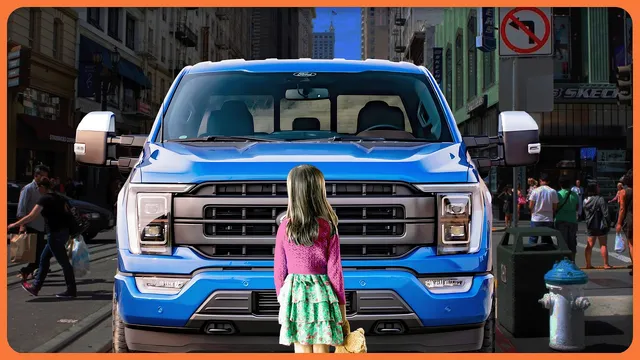
These Stupid Trucks are Literally Killing Us
Based on Not Just Bikes's video on YouTube. If you like this content, support the original creators by watching, liking and subscribing to their content.
SUVs and light trucks are framed as a major public-safety threat because their design and crash compatibility worsen outcomes for people outside the vehicle.
Briefing
Oversized SUVs and light trucks are driving a road-safety and public-health crisis—killing pedestrians and even increasing fatalities for drivers—while also worsening congestion and pollution. The core claim is that these vehicles became mainstream not because they’re genuinely needed, but because U.S. rules and marketing let automakers sidestep passenger-car safety and emissions standards. That combination has helped create an “arms race” on streets: bigger, heavier vehicles feel safer to their owners, yet they make crashes more lethal for everyone outside the driver’s seat.
The transcript links the rise of SUVs to policy loopholes and incentives. In the U.S., SUVs are classified as “light trucks,” a category that historically avoided the same safety and emission requirements applied to passenger cars. The result: automakers could build SUVs using pickup-truck-style body-on-frame designs—stiffer frames and larger engines that are worse for fuel economy and crash compatibility. A key driver was the corporate average fuel economy (CAFE) regime: manufacturers lobbied to keep light trucks outside the strict passenger-car targets, then pushed consumers toward light trucks to avoid penalties.
Marketing then helped sell the tradeoffs. Early SUV branding leaned on outdoorsy status, but focus groups revealed Americans’ fear of crime and violence. Ads framed SUVs as protective “guardian angels,” turning road safety into a competition for size. The transcript argues that once more drivers choose larger vehicles, the whole system shifts: vehicles get bigger and more aggressive, small cars become harder to buy, and pedestrians and cyclists lose protection.
Safety impacts are presented as both mechanical and statistical. The transcript highlights bumper-height differences—cars must meet bumper regulations, while light trucks can set bumpers higher—creating worse outcomes when an SUV hits a smaller vehicle. It also points to crash compatibility: a stiffer, higher vehicle can misalign with the safety systems of a normal car, shifting harm toward occupants. For pedestrians, the higher front end changes impact location toward the torso and head, and ground clearance increases the chance of head injuries or being pulled underneath. A cited advocacy effort (Kids and Cars) reports that children are often not visible from the driver’s seat, contributing to “frontovers.” The transcript claims that over a 10-year period, more than 500 American children were killed in SUV runovers, frequently in their own driveways.
Beyond crashes, the transcript argues SUVs worsen city life through space and emissions. Longer and wider vehicles reduce throughput on roads, make parking harder, and push development toward larger paved areas. Off-road capability is framed as an enabler of curb-jumping into sidewalks. On pollution, the transcript claims SUVs became a major contributor to emission growth because automakers promoted them to avoid stricter CAFE emission standards; it also argues that heavier vehicles complicate the transition to electric cars by requiring larger, heavier batteries.
The proposed remedies are regulatory and urban-policy focused: close the light-truck loophole so these vehicles meet passenger-car safety and fuel-economy standards; improve pedestrian crash testing and crash-compatibility rules; require cross-class testing rather than only same-weight-class comparisons; and use city tools like weight-based taxes, higher parking costs for longer vehicles, and speed-limit reductions for heavier vehicles. The transcript also notes that some European cities are seeing rapid SUV growth and warns that action is needed before the problem deepens. The closing message reframes the issue as freedom: the freedom to travel without being endangered by oversized vehicles, and the freedom to choose safer, smaller cars—or to get around by walking, cycling, and transit without constant risk.
Cornell Notes
The transcript argues that SUVs and light trucks became dominant through a U.S. regulatory loophole and aggressive marketing, not through genuine need. By classifying them as “light trucks,” automakers avoided passenger-car safety and emissions standards, then sold the result as “safety” and status. The consequences are framed as system-wide: higher bumpers and stiffer frames worsen crash compatibility, while visibility problems and ground clearance increase harm to pedestrians and cyclists. The same vehicles also worsen congestion and parking constraints in cities and raise pollution levels, with extra complications for electric-vehicle transitions because heavier vehicles require larger batteries. The proposed fixes focus on closing the loophole, upgrading pedestrian crash testing, and using city-level weight, parking, and speed policies to counter the arms race.
How did U.S. policy help SUVs grow from niche vehicles into a dominant market?
Why does the transcript claim SUVs are more dangerous in crashes, even when marketed as safer?
What evidence is used to connect SUVs to pedestrian and child deaths?
How do SUVs affect city congestion and parking, according to the transcript?
Why does the transcript say SUVs complicate the shift to electric vehicles?
What policy changes does the transcript propose to reduce SUV harm?
Review Questions
- Which regulatory mechanism in the transcript is presented as the main reason automakers could sell SUVs while avoiding passenger-car safety and emissions requirements?
- What specific design factors (e.g., bumper height, frame stiffness, visibility) are linked to higher pedestrian risk?
- How do the transcript’s proposed city policies (taxes, parking costs, speed limits) aim to counter the “vehicle arms race” dynamic?
Key Points
- 1
SUVs and light trucks are framed as a major public-safety threat because their design and crash compatibility worsen outcomes for people outside the vehicle.
- 2
In the U.S., treating SUVs as “light trucks” has allowed automakers to avoid the same safety and emissions standards applied to passenger cars.
- 3
CAFE incentives and lobbying are presented as a key reason automakers pushed consumers toward light trucks rather than improving passenger-car efficiency.
- 4
Marketing shifted from outdoorsy status to fear-based “protection” messaging, reinforcing a size-based safety arms race on roads.
- 5
The transcript links SUV growth to city problems including congestion, reduced parking capacity, and increased pedestrian and cyclist danger.
- 6
Heavier vehicles are argued to increase pollution and to make electric-vehicle transitions harder because they require larger batteries.
- 7
The proposed solutions focus on closing the light-truck loophole, improving pedestrian crash testing and cross-class compatibility rules, and using city-level weight, parking, and speed policies to slow adoption.