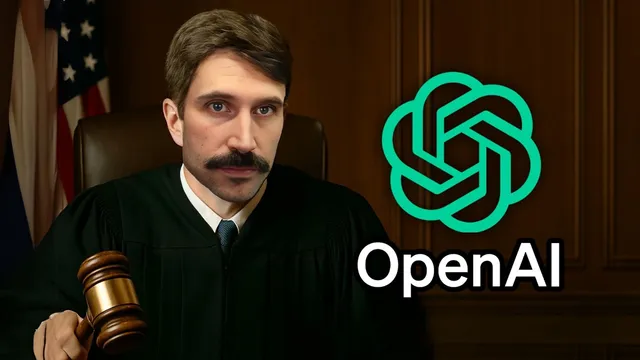
This Doesn't Look Good For AI - The Standup - Ep 4
Based on The PrimeTime's video on YouTube. If you like this content, support the original creators by watching, liking and subscribing to their content.
Courts evaluating AI training under fair use may focus heavily on whether the training causes negative economic impact to copyright owners, not just whether the output competes directly.
Briefing
A copyright fight over AI training is shifting from theory to courtroom leverage—especially around whether training data has a “market” value that must be licensed. In the episode’s main legal thread, the discussion centers on a lawsuit involving Thompson Reuters, where the key point is that AI systems were trained by copying copyrighted works without permission, and the defense of “fair use” is expected to fail when the use harms the rights holder economically. Fair use, under the US framework, relies on a multi-factor test, but the most important factor is whether the use causes negative economic impact to the copyright owner. That principle is treated as the backbone of why courts may view unlicensed AI training as infringement rather than a protected exception.
The conversation also ties the dispute to international copyright norms. Copyright is treated as a worldwide right under the Berne Convention, which allows only narrow exceptions. That matters because AI training isn’t a purely US policy question; if courts in major jurisdictions reject fair use arguments for training, similar reasoning can ripple across countries that recognize the same baseline protections.
A major practical implication raised is that AI companies’ “no harm” argument may not hold up, because there is already a real market for training data licenses. The episode cites examples of creators receiving offers to license their content for AI training, and it argues that the relevant economic harm isn’t hypothetical—it’s the lost opportunity to monetize licensing. The most concrete signal comes from an early court decision (described as coming out in February) finding for Thompson Reuters and stating there is “potentially a market” for training data, meaning copying could infringe in that market and carry “negative ramifications.” The takeaway is less about certainty and more about momentum: if courts keep thinking in terms of market substitution and economic harm, AI training may increasingly require licenses.
From there, the discussion broadens into second-order questions that developers and creators will face. If code is hosted on GitHub, does the platform’s terms effectively grant training rights? The episode treats this as a hard, contract-and-adhesion problem with uncertain outcomes, warning that “gray areas” could still land users in trouble. It also explores what remedies could look like: in copyright cases, injunctions often come first, which could force companies to pull training content and rerun training—potentially expensive and operationally disruptive. Even if some downstream effects like model distillation complicate attribution, the episode suggests courts will be asked to sort out how far liability extends.
A separate but related theme is corporate pressure to use AI at work. Shopify is described as moving from suggestion to requirement, tying AI usage to performance expectations and claiming large productivity multipliers. The panel pushes back on the credibility of “100x” claims and argues that mandating AI use—especially as a performance metric—can be counterproductive or at least hard to measure fairly. The episode ends by pivoting to AI-generated game experiences, arguing that faster iteration could help designers, but that current demos often look more like cosmetic “producer knobs” than tools for testing real gameplay mechanics and balancing.
Overall, the episode frames a near-term future where AI adoption is constrained by licensing risk and performance politics, while technical progress still leaves designers and developers demanding tools that affect real outcomes—not just faster-looking prototypes.
Cornell Notes
The episode argues that unlicensed AI training is likely to face growing legal pressure because courts may reject “fair use” when copyrighted training data has economic value. Using Thompson Reuters’ case as the anchor, it emphasizes that fair use turns heavily on whether the use causes negative economic impact to the rights holder, and that courts have signaled there may be a market for training data. The discussion then extends to practical developer questions: platform terms (like GitHub) may not cleanly eliminate liability, and remedies could include injunctions that force companies to rerun training. A parallel thread critiques corporate mandates to use AI (e.g., Shopify), warning that productivity multipliers are often exaggerated and that measuring AI usage as performance is difficult. Finally, it questions whether AI game-generation demos truly help designers test gameplay mechanics or mostly deliver surface-level changes.
Why does “fair use” matter so much in AI training disputes, and what factor is treated as most important?
What does the Thompson Reuters-centered discussion claim about a “market” for training data?
If code is on GitHub, does that automatically mean AI training is allowed?
What kinds of legal remedies could follow if training is found infringing?
How does the episode critique corporate mandates to use AI (specifically Shopify)?
Do AI-generated game demos meaningfully help designers, or mostly change surface details?
Review Questions
- How does the episode connect fair use to economic harm, and why is that link portrayed as decisive?
- What uncertainties remain about training rights when code is publicly hosted (e.g., GitHub), and why?
- If a court orders remedies for infringing AI training, what operational steps could companies face, and what makes downstream model effects harder to untangle?
Key Points
- 1
Courts evaluating AI training under fair use may focus heavily on whether the training causes negative economic impact to copyright owners, not just whether the output competes directly.
- 2
International copyright norms (via the Berne Convention) treat copyright as a worldwide right with only narrow exceptions, making AI training disputes more than a US-only policy issue.
- 3
A central legal pressure point is the existence of a licensing market for training data; if such a market is harmed, fair use arguments weaken.
- 4
Platform terms of service may not automatically eliminate liability for training on hosted content; contract-adhesion and “limits on what can be granted” remain unresolved questions.
- 5
If infringement is found, injunctions could force companies to stop using certain training data and potentially rerun expensive training pipelines.
- 6
Corporate mandates to use AI (like Shopify’s described policy) can be difficult to measure fairly and may rely on exaggerated productivity claims.
- 7
AI game-generation demos may speed iteration, but designers still need tools that test gameplay mechanics and balancing—not just cosmetic changes.