This Might Just Be the World's Best Metro System
Based on Not Just Bikes's video on YouTube. If you like this content, support the original creators by watching, liking and subscribing to their content.
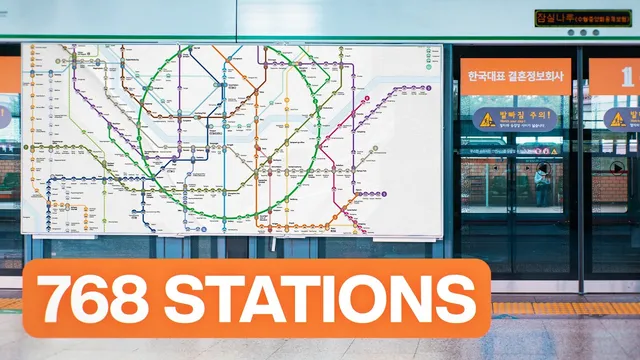
Seoul’s metro is described as region-wide rather than city-only, with lines spanning roughly 150 km between far stations and connecting suburbs and satellite cities without repeated detours through central Seoul.
Briefing
Seoul’s metro system stands out for one simple reason: it makes high-frequency rail feel seamless across the entire region—so riders rarely need to plan, transfer, or wait. Trains run so often that schedules become irrelevant, with arrivals typically every 2–3 minutes during rush hour and every 5–6 minutes at other times. Even travel between suburbs and satellite cities is portrayed as straightforward, because multiple lines connect across the wider network rather than forcing riders to detour through central Seoul.
That “seamlessness” is reinforced by design choices that go beyond route maps. The system’s platform screen doors—installed in every station since 2009—are presented as a defining safety and operational upgrade. The transcript cites a dramatic drop in average annual fatalities from 37.1 to 0.4 after installation, and argues the benefits extend further than preventing falls. Platform doors also reduce problems caused by debris on tracks, which can damage equipment, trigger electrical shorts, and even start fires involving the third rail. They also cut noise and improve air quality and cooling efficiency, with claims that PM10 particulate levels fell 20% and that Seoul saves over 16 billion Won (about 10 million euro) per year in air-conditioning costs.
The boarding experience is treated as another layer of system integration. Doors are labeled by carriage and door number, and navigation apps—especially Korean ones like Kakao Metro and Naver Maps—are described as tightly synced with where trains stop and where riders should stand. The result is less crowding on platforms and fewer wayfinding failures, with station signage designed to guide riders at every step: numbered exits, platform signs that list end stations and popular destinations, colored ground lines in larger stations, LCD screens inside trains for upcoming stops and transfer options, and clear markings for which side of the train doors will open.
Beyond metro lines, the transcript emphasizes how Seoul blurs the boundary between urban metro service and heavy-rail commuter travel. Different operators manage parts of the network (including the city of Seoul and Korail), yet transfers are described as seamless through shared payment using the T-Money card. Fare gates are also said to default to open in busy stations, closing only when there’s a card issue—reducing friction for riders.
Still, the praise has limits. Surface transit—especially buses—is criticized for bouncing and rocking, frequent delays in traffic, and unreliable schedules, even on BRT lanes where buses can still get stuck at red lights. The broader urban challenge is framed as car-first infrastructure: wide roads, long light cycles, and intersections that prioritize vehicle flow over pedestrians. The transcript contrasts this with the metro’s efficiency and argues Seoul needs more policies that actively discourage driving, not just better alternatives.
Finally, the system’s momentum is presented as ongoing rather than finished. New rail projects under construction—including the Great Train eXpress (GTX) lines—aim to cut commute times from satellite towns by half. The GTX-A segment is already operating, and future GTX-B and GTX-C lines are scheduled for completion by 2030 and 2028, respectively, with high-speed commuter service running underground and connecting major regional destinations quickly. The overall takeaway is that Seoul’s transit advantage comes from consistent, system-wide execution—safety, frequency, wayfinding, and network integration—paired with continued expansion.
Cornell Notes
Seoul’s metro system is portrayed as a regional rail network that feels effortless because trains run extremely frequently and connect across suburbs and satellite cities without forcing riders into repeated detours through central Seoul. A key differentiator is platform screen doors installed in every station since 2009, credited with major safety gains (fatalities dropping from 37.1 to 0.4 annually) plus reductions in debris-related equipment issues, noise, particulate levels, and air-conditioning costs. Wayfinding is treated as an engineered workflow: door numbers, station exit numbering, platform guidance, and navigation apps (like Kakao Metro and Naver Maps) align with where trains stop and where doors open. Seamless transfers extend beyond metro lines through shared T-Money payment across operators. The transcript also notes that surface buses struggle with traffic delays, highlighting that the metro’s success depends on prioritizing rail over cars.
Why does the transcript claim Seoul riders rarely need to consult schedules?
What role do platform screen doors play beyond safety in the Seoul system?
How does Seoul’s system make boarding and navigation more efficient at the platform level?
What makes transfers across different rail types feel seamless in the Seoul region?
Why does the transcript criticize Seoul’s bus system despite its extensive coverage?
How do the GTX projects fit into the broader claim about Seoul’s transit future?
Review Questions
- Which specific design elements (frequency, platform screen doors, wayfinding, payment integration) does the transcript treat as the biggest drivers of Seoul’s transit performance?
- What safety, operational, and environmental outcomes are attributed to platform screen doors, and what numbers are given?
- How does the transcript explain the difference between the metro’s efficiency and the bus system’s shortcomings?
Key Points
- 1
Seoul’s metro is described as region-wide rather than city-only, with lines spanning roughly 150 km between far stations and connecting suburbs and satellite cities without repeated detours through central Seoul.
- 2
Very high service frequency (2–3 minutes in rush hour; 5–6 minutes off-peak; about 10 minutes on some outer branches) makes schedules largely unnecessary for riders.
- 3
Platform screen doors installed in every station since 2009 are credited with major safety gains (fatalities dropping from 37.1 to 0.4 annually) and additional benefits like reduced debris-related failures, lower noise, and improved air quality and cooling efficiency.
- 4
Wayfinding is engineered into the system: exit numbering, platform guidance, LCD updates, clear door-side markings, and navigation apps (notably Kakao Metro and Naver Maps) that align with door/carriage numbering.
- 5
Seamless transfers across metro and heavy-rail commuter services are supported by shared T-Money payment and consistent rider-facing design, even when different operators manage different lines.
- 6
Surface buses are criticized for traffic delays and unreliable schedules, even on BRT lanes, leading riders to prefer the metro for most trips.
- 7
Seoul’s transit advantage is framed as ongoing: new GTX lines (GTX-A already open; GTX-B and GTX-C planned for 2030 and 2028) aim to cut satellite-city commute times by half while expanding underground high-speed commuter capacity.