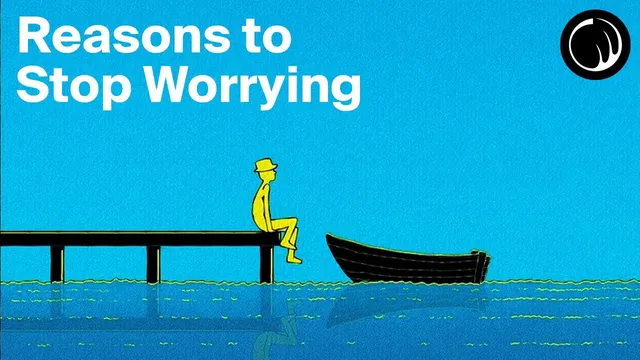
This Simple Concept Will Change How You Think About the Future
Based on Pursuit of Wonder's video on YouTube. If you like this content, support the original creators by watching, liking and subscribing to their content.
The transcript frames background dread as a byproduct of human foresight: people can imagine future failure, which both enables planning and fuels anxiety.
Briefing
A low, ever-present dread about life’s worst moments may be unavoidable—but it can also be reframed as a source of strength. The central idea is that anxiety about “terrible phone calls” and other life-altering shocks is not just noise to eliminate; it’s a signal of how much people value what they have, and it can be turned into a practical mindset for meeting disorder with greater capacity.
The transcript opens with a familiar human pattern: most people don’t constantly rehearse catastrophe, yet an unease sits in the background—like a refrigerator hum—until an unexpected text, call, or message pulls that anxiety into focus. This dread isn’t limited to dramatic events; it ranges from small disruptions to major losses. Because humans can imagine the future, they can also anticipate failure, which brings planning benefits but also a “curse” of knowing things can go wrong. The result is a constant tension: foresight helps people prepare, but it also keeps them aware of uncertainty.
To manage that tension, the transcript draws on multiple philosophical traditions that converge on a similar boundary: focus on what can be controlled internally rather than trying to command external outcomes. Stoicism centers on logos, a rational order behind events, and argues that people should direct attention to choices, evaluations, and perceptions—while accepting that everything else is beyond resistance. Seneca is cited to emphasize that suffering often isn’t a present fact, and that running toward imagined pain can be pointless.
Buddhism and Daoism offer a different route to the same destination: peace through nonattachment and harmony with flux. In this view, thoughts and feelings are “empty points of awareness” shaped by changing phenomena, and well-being comes from reducing desire to cling and control. Daoism adds the idea of graceful passivity—adapting without rigid resistance—captured by the metaphor of water as the soft substance that overcomes hardness.
The transcript then connects these acceptance-based philosophies to a modern concept: anti-fragility. Coined by statistician and former options trader Nassim Nicholas Taleb, anti-fragility describes systems that get stronger through disorder, attacks, and failures—unlike resilience (bouncing back) or robustness (resisting). Applied to human life, the argument is that repeated exposure to hardship can improve readiness and processing capacity. People remain “still here” after many feared events, suggesting that the worst moments—while painful—often aren’t the final catastrophe.
Finally, the transcript reframes grief and fear as proportional to love: pain and worry are not only consequences of things going wrong, but also evidence that something mattered. It cites amor fati—loving what is necessary rather than wishing it were different—as a way to transform dread into acceptance.
The closing section shifts to media habits, warning that sensational news can exploit anxiety and keep audiences hooked. Ground News is presented as a tool to compare coverage across political bias and ownership, using examples such as reporting on Oregon Governor Tina Kotek’s drug-related bill to illustrate how different outlets skew headlines and emphasis. The takeaway is that clearer information can reduce informational silos—helping people face uncertainty with steadier judgment rather than fear-driven reaction.
Cornell Notes
The transcript argues that dread about life’s “terrible phone calls” is a constant human background condition created by foresight. Multiple traditions—Stoicism, Buddhism, and Daoism—offer a shared prescription: accept external flux and focus on internal control (choices, perceptions, nonattachment, and adaptive harmony). It then links this acceptance to anti-fragility, a concept associated with Nassim Nicholas Taleb, claiming that disorder can make systems—and people—stronger rather than merely resilient. The piece also treats grief and fear as proportional to love, suggesting that anxiety can be reframed as evidence of what matters. Finally, it warns that sensational news can intensify fear and recommends comparing sources to reduce bias-driven distortions.
Why does the transcript treat anxiety about future catastrophe as both unavoidable and potentially useful?
How do Stoicism’s ideas translate into a practical approach to worry?
What do Buddhism and Daoism add to the acceptance framework?
What is anti-fragility, and how does it apply to human hardship?
How does the transcript connect fear and grief to love?
Why does the transcript bring up Ground News, and what problem does it claim to solve?
Review Questions
- Which internal factors does Stoicism say people can control, and how does that boundary change how worry should be handled?
- How does anti-fragility differ from resilience and robustness, and what does the transcript claim it means for personal hardship?
- What role does nonattachment play in Buddhism’s approach to uncertainty, and how does it compare to Daoism’s “graceful passivity”?
Key Points
- 1
The transcript frames background dread as a byproduct of human foresight: people can imagine future failure, which both enables planning and fuels anxiety.
- 2
Stoicism recommends directing attention to internal control—choices, evaluations, and perceptions—while accepting that external outcomes follow an order beyond resistance.
- 3
Buddhism and Daoism converge on acceptance through nonattachment and harmony with flux, emphasizing adaptive flow rather than rigid control.
- 4
Anti-fragility (linked to Nassim Nicholas Taleb) is used to argue that disorder can strengthen capacity to handle future shocks, not just help people recover.
- 5
Fear and grief are treated as proportional to love: caring deeply makes loss painful, but also makes attachments meaningful.
- 6
Sensational news can exploit anxiety; comparing coverage across bias and ownership can reduce informational silos and distortions.