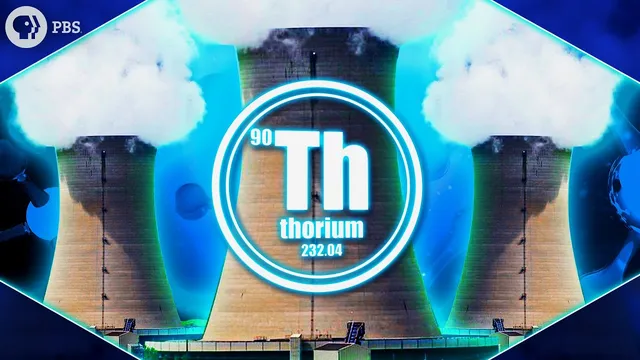
Thorium and the Future of Nuclear Energy
Based on PBS Space Time's video on YouTube. If you like this content, support the original creators by watching, liking and subscribing to their content.
Thorium reactors aim to change the nuclear fuel cycle by breeding thorium-232 into fissile uranium-233, potentially improving neutron economy and waste characteristics.
Briefing
Thorium-based nuclear reactors are being pitched as a safer, cleaner alternative to today’s uranium systems—mainly because thorium can be turned into uranium-233, which can sustain fission while producing waste that is easier to manage than the long-lived actinides created by conventional reactors. The promise matters because nuclear power remains one of the few large-scale ways to cut carbon emissions without relying on weather, yet it still faces hard constraints: safety, radioactive waste, and nuclear proliferation risks.
Modern fission plants work by forcing very heavy nuclei—like uranium-235—to split after absorbing a neutron. Those splits release energy and more neutrons, and if enough neutrons trigger additional fissions, the chain reaction becomes self-sustaining. In commercial “light water” reactors, neutrons are slowed by a moderator (often ordinary water) so uranium-235 is more likely to split. The same water also cools the core, but that design creates a recurring vulnerability: cooling failures. Three Mile Island, Chernobyl, and Fukushima all involved disruptions to cooling systems, and the common lesson is that water cooling depends on active systems that can fail due to equipment problems or human error.
Even if reactors run safely, waste remains the central drawback of the uranium fuel cycle. Light water reactors use only about 1% of extracted uranium-235; the rest becomes mostly unused material or heavier transuranic actinides. Those actinides are highly radioactive with half-lives measured in tens of thousands of years, and long-term disposal is difficult to guarantee against earthquakes, volcanic activity, and far-future geological events.
Fast reactors and breeder concepts aim to reduce that burden by using fast neutrons that can split more of the heavy material. Their waste is dominated by fission products with half-lives of centuries rather than millennia, but they require more enriched fuel (over 20% uranium-235) and raise proliferation concerns because intermediate steps can involve weapons-grade plutonium. Thorium is introduced as a different path: thorium-232 is not fissile on its own, but when it absorbs a neutron it decays into protactinium-233 and then uranium-233, which is fissile. The neutron “economy” is favorable—uranium-233 can produce slightly more than two neutrons per split even with slow neutrons—making it possible to breed more uranium-233 from thorium inside a thermal reactor.
The most discussed design is the liquid fluoride thorium reactor (LFTR). In this approach, thorium and uranium-233 are dissolved in molten fluoride salts (with fluorine, and often beryllium or lithium fluoride). A graphite lattice slows neutrons in the core region, while the liquid fuel can be drained quickly in emergencies using a low-melting-temperature plug. The system is designed for “walkaway” safety: if mechanical and human controls fail, the reactor should shut down rather than run away. LFTRs also promise compactness because they don’t require the high-pressure water structures of conventional plants, enabling modular deployment.
The biggest risk shifts from chemistry to governance: smaller, modular reactors could be harder to regulate and monitor. That raises a key safeguard question—how to ensure weaponizable uranium-233 remains inaccessible without enormous effort. The broader energy debate then returns to a practical choice: whether nuclear power is necessary alongside renewables like wind and solar, especially as battery technology improves, or whether the climate challenge can be met without betting heavily on nuclear infrastructure.
Cornell Notes
Fission reactors turn heavy nuclei into smaller ones, releasing energy when neutrons trigger additional splits. Conventional light-water reactors rely on water to slow neutrons and cool the core, but cooling failures have driven major accidents, and their uranium fuel cycle leaves long-lived transuranic actinides that are hard to dispose of safely. Fast reactors can reduce the long-lived waste problem by using fast neutrons, but they need highly enriched fuel and can create proliferation-sensitive intermediate material. Thorium reactors aim to change the fuel cycle: thorium can be bred into uranium-233, which supports fission with good neutron economy. A liquid fluoride thorium reactor design uses molten fluoride salts and graphite moderation, plus passive “drain-down” shutdown features, but it raises monitoring and safeguards challenges—especially around preventing access to weaponizable uranium-233.
Why does a fission reactor need “critical mass,” and what prevents the chain reaction from becoming an explosion?
How do light-water reactors work, and why do cooling failures matter so much?
What makes conventional uranium nuclear waste so difficult, and how do fast reactors change the waste profile?
Why is thorium attractive, and what role does uranium-233 play?
What safety and design features distinguish the liquid fluoride thorium reactor (LFTR)?
What is the main proliferation-related concern raised for widespread small thorium reactors?
Review Questions
- How do neutron moderation and cooling choices in light-water reactors influence both efficiency and accident risk?
- Compare the waste time scales produced by light-water reactors versus fast reactors, and explain why those differences occur.
- What design and safeguards requirements would be necessary to make a thorium LFTR approach both safe and proliferation-resistant?
Key Points
- 1
Thorium reactors aim to change the nuclear fuel cycle by breeding thorium-232 into fissile uranium-233, potentially improving neutron economy and waste characteristics.
- 2
Light-water thermal reactors depend on water for both neutron moderation and cooling, making cooling-system reliability a central safety issue.
- 3
Conventional uranium fuel cycles produce long-lived transuranic actinides, creating major long-term radioactive waste disposal challenges.
- 4
Fast reactors can reduce long-lived waste by using fast neutrons, but they require highly enriched fuel and can introduce proliferation-sensitive intermediate materials.
- 5
Liquid fluoride thorium reactor designs use molten fluoride salts and graphite moderation, with an emergency drain-down mechanism intended to support passive shutdown.
- 6
The biggest practical risk for thorium adoption may be governance: smaller modular reactors could be harder to monitor, raising safeguards concerns around uranium-233 accessibility.