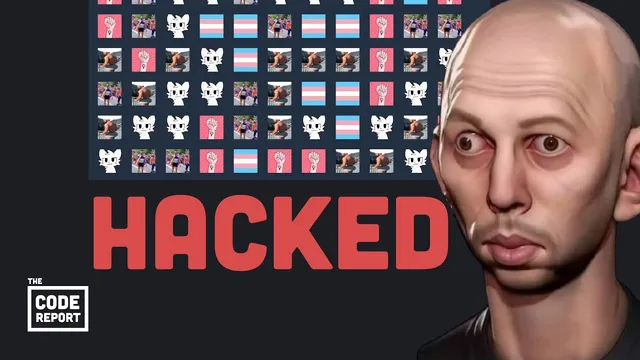
Top G Andrew Tate penetrated by LGBT hackers
Based on Fireship's video on YouTube. If you like this content, support the original creators by watching, liking and subscribing to their content.
The breach is described as exposing at least 14 GB of course content plus usernames and emails for over 700,000 members.
Briefing
A major breach hit “The Real World,” formerly known as Andrew Tate’s Hustler’s University, exposing at least 14 GB of course-related material and leaking the usernames and emails of more than 700,000 members. The fallout extends beyond raw data: the leak also included content from both public and private chat rooms, where members discussed topics ranging from AI automation and content creation to health, fitness, and crypto.
The breach data was published on DSS.com, a nonprofit that aggregates and analyzes hack datasets. For members, the incident also appears to have been operationalized into a check: alumni can reportedly test whether they’ve been “pwned” via Have I Been Pwned–style tooling (the transcript cites “iben pone.com”). If the site’s own claims of 100,000+ active members are accurate, the leaked database implies a business with substantial recurring revenue—framed in the transcript as potentially exceeding $5 million per month.
Technical sleuthing in the transcript points to a stack that includes Next.js on the signup page and a main application built with React.js, alongside a set of DNS prefetch links that likely indicate where backend services are hosted. By inspecting API responses and error pages, the analysis suggests the backend is running on Cloudflare and that a “rocket” string appears on a 404 page—interpreted as evidence of Rust Rocket (and contrasted against other “rocket” possibilities like Rocket Chat). The transcript also claims the frontend JavaScript bundle is not obfuscated and contains code comments, making reverse engineering easier for attackers.
The incident’s most visible provocation came after the intrusion. Instead of staying hidden, the attackers allegedly entered the university’s primary chat room and flooded it with emojis and images—specifically including the transgender flag and feminist fist imagery—along with pictures of Tate wearing a rainbow flag. The timing is described as coinciding with Tate’s live stream on Rumble, turning the breach into a public disruption.
The transcript further ties the platform’s software ecosystem to open-source disputes. It references Revolt, an open-source chat platform whose developer previously accused Tate of violating the AGPL license by stealing software. The analysis claims Hustler’s University still uses a closed-source fork of Revolt, despite earlier attempts at resolution.
Finally, the transcript frames the broader harm as falling on the program’s alumni—described as roughly 800,000 graduates—whose credentials are portrayed as losing value after the breach and the surrounding controversy. Overall, the incident combines large-scale personal data exposure, chat-room content leakage, and a conspicuous post-hack harassment campaign with a backend stack that appears to have been easier to map than it should have been.
Cornell Notes
A breach of “The Real World” (formerly Andrew Tate’s Hustler’s University) exposed at least 14 GB of course content and leaked usernames and emails for over 700,000 members, including data from public and private chat rooms. The leaked dataset was posted on DSS.com, and the transcript notes that alumni can check whether they were compromised via a Have I Been Pwned–style site. Technical analysis in the transcript points to a web stack involving React.js and Next.js (at least on signup), with backend services behind Cloudflare and likely Rust Rocket suggested by error-page text. The attackers allegedly also used the main chat room to flood it with LGBTQ- and feminist-themed emojis and rainbow-flag imagery while Tate was live on Rumble, making the intrusion both a data breach and a public disruption.
What personal and content data was exposed in the breach, and where did it end up?
How does the transcript connect the platform’s technology to the breach (frontend and backend clues)?
What role did open-source licensing disputes play in the narrative about the platform’s chat software?
What was the attackers’ behavior after gaining access, and why is it described as especially notable?
What does the transcript claim about the business scale and potential revenue impact?
Review Questions
- Which specific types of data (course material, account identifiers, chat content) does the transcript say were leaked, and how does it describe where that data was published?
- What technical signals does the transcript use to infer the backend framework (e.g., Cloudflare headers, “rocket” text on a 404 page), and what frontend weakness made analysis easier?
- Why does the transcript treat the post-hack emoji flooding as more than a typical intrusion, and what timing detail ties it to Rumble?
Key Points
- 1
The breach is described as exposing at least 14 GB of course content plus usernames and emails for over 700,000 members.
- 2
Leaked data reportedly included both public and private chat-room content, spanning areas like AI automation, fitness, and crypto.
- 3
The dataset was published on DSS.com, and the transcript notes an alumni “pwned” check via a Have I Been Pwned–style site.
- 4
Technical analysis in the transcript links the web stack to Next.js (signup), React.js (main app), Cloudflare (API responses), and likely Rust Rocket (via “rocket” text on a 404 page).
- 5
The transcript claims the frontend JavaScript bundle was not obfuscated and contained comments, which would speed up reverse engineering.
- 6
After the intrusion, attackers allegedly flooded the main chat room with LGBTQ- and feminist-themed emojis and rainbow-flag imagery while Tate streamed on Rumble.
- 7
The narrative also ties the platform to Revolt and an earlier AGPL licensing dispute involving a closed-source fork.