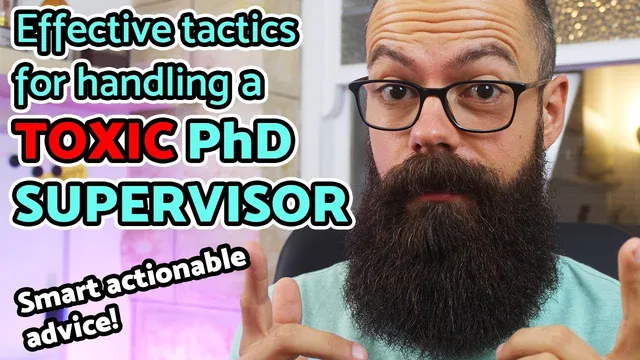
Toxic PhD Supervisor? Effective tactics for dealing with a bad supervisor!
Based on Andy Stapleton's video on YouTube. If you like this content, support the original creators by watching, liking and subscribing to their content.
Treat bullying, threats, and inappropriate behavior as workplace-level violations and escalate them quickly with evidence.
Briefing
A toxic PhD supervisor problem usually falls into three buckets—unacceptable conduct, poor leadership/communication, and personality clashes—and the practical fix depends on which bucket a student is dealing with. The most urgent category is anything that would be unacceptable in a normal workplace: bullying, threats, or inappropriate behavior toward students. Because supervisors hold power over students’ academic progress, conduct that targets any student—regardless of gender, citizenship, or background—should be treated as a serious breach, documented, and escalated quickly rather than endured.
The transcript highlights how academic advancement can reward unethical behavior, meaning a supervisor can be “brilliant” academically while still failing as a leader. A concrete example is cited from Adelaide involving Alan Cooper, described as someone who bullied students and also faced allegations tied to grant applications. Another example comes from the narrator’s own experience of being threatened in a meeting—told to produce a result “or else,” with the threat framed as job loss. The response described is firm and immediate: stop the meeting, challenge the threat, and escalate the issue through formal channels. The recommended escalation path is to bring evidence to the dean of the school (and, if needed, human resources), while approaching the supervisor’s boss carefully because professional relationships and collaborations may complicate informal reporting. The key is to go in armed with facts and evidence so the behavior can be addressed and the student is protected.
For the second category—poor leadership or poor communication—the transcript argues the issue is often structural: academics may be promoted for grants, funding, and publications rather than for mentoring skills. The solution is to actively redesign the supervision relationship. Students are encouraged to request a predictable meeting cadence (at least fortnightly early on, potentially weekly), set expectations for feedback timelines (for example, feedback on writing within a specific number of days), and explicitly ask how the supervisor will support progress toward thesis and publication goals. If the supervisor is hands-off or missing in action, the student should take control of the process instead of waiting.
When communication problems persist, the transcript recommends building a support network beyond the primary supervisor. That can include additional mentors inside or outside the student’s immediate research area, and—when personality friction exists—co-supervisors. The third category, personality clash, is framed as different from misconduct: the supervisor may be competent and responsive, but the working relationship simply doesn’t click. In that case, the advice is to stay professional, reduce expectations of friendship, and formalize meetings so the interaction remains academically focused. Co-supervisors or inviting additional people into meetings can help keep discussions on track and reduce the impact of interpersonal tension.
Across all three categories, the throughline is communication plus escalation when boundaries are crossed. Students are urged not to assume, to ask for specific support, and to challenge bullying, threats, or inappropriate conduct early—because the thesis still has to get done, and a safe, functional supervision structure is essential to finishing it.
Cornell Notes
PhD supervision problems tend to cluster into three levels: unacceptable conduct (bullying, threats, inappropriate behavior), poor leadership/communication (often due to promotion based on grants and papers rather than mentoring), and personality clashes (where the supervisor may be competent but the relationship doesn’t work). For misconduct, the transcript stresses immediate escalation using evidence, with reporting to the dean of the school and possibly human resources. For leadership and communication gaps, students should proactively structure the relationship—request regular meetings, define feedback timelines, and clarify how the supervisor will support thesis and publication progress. When interpersonal friction or supervision gaps persist, mentors and co-supervisors can fill the missing support and keep meetings academically focused.
What counts as “unacceptable” supervisor behavior, and why is escalation emphasized?
How does the transcript connect academic career incentives to supervision quality?
What concrete steps are recommended for a supervisor who is a poor communicator or poor leader?
What should students do if their primary supervisor is “hands-off” or missing in action?
How does the transcript distinguish a personality clash from misconduct, and what’s the recommended response?
Why are co-supervisors or additional mentors suggested for personality clashes or supervision gaps?
Review Questions
- Which supervisor problems should trigger immediate escalation, and what evidence-based approach is recommended?
- What meeting cadence and feedback expectations does the transcript suggest for early-stage PhD supervision?
- How do co-supervisors and mentors function differently when the issue is a personality clash versus poor leadership?
Key Points
- 1
Treat bullying, threats, and inappropriate behavior as workplace-level violations and escalate them quickly with evidence.
- 2
Academic promotions can reward grants, funding, and publications more than mentoring quality, which can lead to weak leadership in supervision.
- 3
For poor communication, students should proactively set meeting schedules and define feedback timelines rather than waiting passively.
- 4
Early-stage PhDs benefit from more frequent supervision (fortnightly or weekly), because early mistakes can compound into later delays.
- 5
Build a support network: mentors and co-supervisors can fill gaps and reduce the impact of supervision weaknesses.
- 6
When personality clashes arise, keep the relationship professional and academically focused rather than expecting friendship.
- 7
If informal approaches fail, escalate through formal university channels such as the dean’s office and potentially human resources.