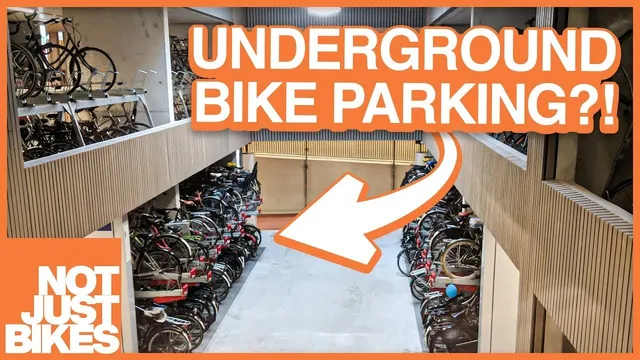
Underground Bicycle Parking is Amazing
Based on Not Just Bikes's video on YouTube. If you like this content, support the original creators by watching, liking and subscribing to their content.
Underground bicycle parking in the Netherlands is driven by capacity needs, not just prestige, because bike demand—especially at train stations—is extremely high.
Briefing
Underground bicycle parking garages are spreading in the Netherlands because the country needs them—but the core challenge is that they can undermine one of cycling’s biggest conveniences: fast, easy parking right at the destination. With nearly half of Dutch train travelers arriving by bicycle and many leaving bikes locked at stations, cities face a capacity problem that outdoor racks alone can’t solve. Underground facilities therefore aren’t a vanity project; they’re a practical response to storing large volumes of bikes in the same place.
The trade-off is speed and friction. Parking underground typically means navigating stairs or slow mechanical ramps, and it can take longer than locking up outside if a legal spot exists. Dutch cities also mark the surface area above these garages as a no-parking zone for bicycles—bikes left there can be tagged and removed by the municipality—yet that enforcement alone doesn’t reliably change behavior. To make underground parking stick, garages need tangible benefits: protection from weather, added security, and often free access for at least the first 24 hours (followed by daily payment or monthly subscriptions). Still, the experience can be awkward, especially for cargo bikes.
Several examples illustrate how design choices shape usability. At Amsterdam’s Stravinskylaan station, multiple underground garages exist on different sides of the outstation, alongside outdoor parking—highlighting how underground storage is being layered to handle demand. But even when garages are new, they may restrict certain bike types. One Amsterdam garage refused a BOK feeds cargo bike because cargo bikes weren’t allowed on the stair-based access routes, and even regular bicycles can struggle with the grooved stairs when the route is steep or slippery.
Some facilities try to reduce the hassle with ride-in ramps, but these are still uncommon. The University of Amsterdam has a cyclo-bilenda rideable underground garage, originally built as a car parking structure and later adapted for bicycles. Nijmegen also has rideable underground parking, and the world’s largest bicycle parking garage in Utrecht—Boots left—lets cyclists ride through between levels. Even Amsterdam Central has a standalone bicycle parking building (Fietslot), but the concern is that if slopes are too steep, riders may descend too quickly to brake safely.
The Netherlands is still experimenting. Many planned replacements and new garages continue to rely on mow Vader’s (mechanical ramps) or stairs rather than fully rideable designs. That leaves a clear question for future upgrades: how can cities preserve cycling’s “park-and-go” advantage while moving riders into expensive, capacity-heavy underground infrastructure? The answer will likely determine whether underground parking becomes a seamless norm—or a reluctant backup option.
Cornell Notes
The Netherlands built underground bicycle parking garages to handle massive bike demand at places like train stations, where nearly half of travelers arrive by bicycle. The facilities solve storage and safety problems, offering weather protection, monitoring, and often free access for the first 24 hours. But underground parking can reduce a key cycling benefit—quick, convenient parking at the destination—because many garages require slow mechanical ramps or stair-based access. Some rideable designs exist, including adapted car garages and large multi-level facilities in cities like Utrecht, yet most new projects still lean on ramps or stairs. The central issue is whether Dutch cities can redesign underground parking to be fast and intuitive enough to change parking habits.
Why did underground bicycle parking become necessary in the Netherlands, especially around train stations?
What makes underground parking hard to adopt, even when it’s safer and weather-protected?
How do Dutch cities try to push cyclists toward underground garages?
What design features determine whether cyclists can ride into underground parking versus having to dismount?
Which examples show the range of underground bicycle parking approaches across Dutch cities?
Review Questions
- What incentives and enforcement mechanisms do Dutch cities use to encourage underground bicycle parking, and why might enforcement alone fail?
- Compare stair-based or mechanical-ramp garages with rideable designs. What usability trade-offs does each approach create?
- Why does slope design matter for rideable underground parking, and what safety problem can steep ramps create?
Key Points
- 1
Underground bicycle parking in the Netherlands is driven by capacity needs, not just prestige, because bike demand—especially at train stations—is extremely high.
- 2
Outdoor parking is often limited, so underground garages consolidate storage where large numbers of bicycles must be handled efficiently.
- 3
Underground facilities must compensate for lost convenience by offering weather protection, security monitoring, and free or subsidized access (at least the first 24 hours).
- 4
Surface-level enforcement (no-parking zones and bike removal) pushes behavior only partially; practical benefits are still required.
- 5
Many garages remain slow or awkward to use because access relies on stairs or mechanical ramps, which can be especially difficult for cargo bikes and in wet conditions.
- 6
Rideable underground parking exists in select cities and facilities, but most new or planned projects still favor ramps or stairs rather than fully ride-in designs.
- 7
Slope and braking safety are central design constraints for rideable garages, influencing how quickly cyclists can enter and exit between levels.