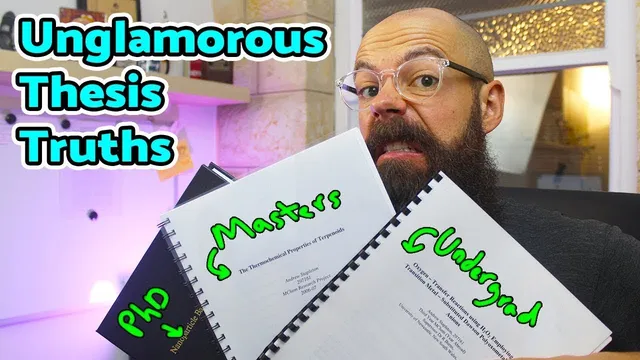
Unglamorous truths about writing a thesis | PhD, Masters, Bachelors
Based on Andy Stapleton's video on YouTube. If you like this content, support the original creators by watching, liking and subscribing to their content.
Draft continuously to generate text; treat perfection as something for later revision rather than a first-pass requirement.
Briefing
Writing a thesis is less about producing perfect sentences on the first pass and more about maintaining momentum long enough to generate enough text to revise. The core prescription is blunt: keep writing, even when the prose feels unpolished. Perfectionism can stall progress, so the practical goal becomes protecting the flow of ideas from brain to keyboard—allowing rough drafts, incomplete thoughts, and messy phrasing (including informal parenthetical notes) to exist long enough to be cleaned up later.
Revision is treated as the real craft. After the initial “word spill,” the work shifts to recrafting: revisiting sections, tightening language, and correcting the small mechanical issues that reviewers catch—missing full stops, inconsistent capitalization, and other easy-to-overlook errors. Feedback is positioned as essential, not optional: supervisors, librarians, and other readers can help spot problems early, and even minor edits improve the final document. The thesis process, in this view, is iterative by design—writing first, editing relentlessly, and treating the first draft as a necessary draft rather than a final product.
Concentration is framed as the hardest variable to control, especially when starting sessions in a library or at a desk. Starting is described as the biggest friction point, so the advice is to make the next session easier: when stopping for the day, leave a trail. Write a few bullet points showing where the work left off, add brief comments about the thought process at that moment, and return to those notes later to re-enter the flow quickly.
Fuel and focus also come up in a candid, non-romantic way. The transcript emphasizes that thesis writing can be “soul destroying,” and that people sometimes rely on caffeine, sugar, or other quick boosts to keep going—whether that’s caffeine drinks, chocolate, or even dates—while still acknowledging that sleep and wellbeing matter. The underlying point isn’t to endorse unhealthy habits; it’s that the thesis ultimately requires producing a certain amount of words within a certain amount of time, and some people use whatever works to get through the grind.
The most concrete risk-management advice is about backups. Losing a thesis is portrayed as a nightmare scenario, and a horror story is shared about a computer being formatted by a university while the thesis drive was connected, forcing the author to submit only scanned, marked-up printed copies as a PDF. The takeaway is to back up repeatedly and redundantly—on more than one cloud service, and not just in one place.
Finally, the transcript argues against viewing a thesis as one massive 80,000–90,000-word object. Instead, it should be built as sections and subsections: write small chunks (200–300 words) under subheadings, let structure guide the writing, and gradually accumulate the full document. That approach turns an overwhelming climb into a series of manageable steps, while also making it easier to revise once the framework exists. The result is a thesis-writing strategy built around momentum, structure, feedback, and safeguards—because the psychological stress and long-term anxiety of getting it wrong can linger for years.
Cornell Notes
Thesis writing succeeds when momentum beats perfection. The process starts with “word spilling”—drafting rough text without stopping for ideal phrasing—then shifts into heavy revision, using feedback to fix both content and small mechanical errors. Concentration and starting are major obstacles, so leaving clear bullet-point notes about where to resume helps the next writing session begin faster. Because thesis work can be psychologically stressful and technically fragile, redundant backups are treated as non-negotiable. Finally, the thesis should be structured into sections and subheadings, writing small chunks under each heading so the full 80,000–90,000-word task becomes a slow, manageable climb.
Why does “keep writing” matter more than aiming for perfect prose immediately?
What role does revision and feedback play in turning rough drafts into a finished thesis?
How can a writer make the next writing session easier after stopping for the day?
What practical strategies are mentioned for maintaining concentration during thesis writing?
What backup strategy is recommended, and why?
How does breaking the thesis into sections change the writing experience?
Review Questions
- What specific behaviors help prevent perfectionism from stopping thesis progress, and how does revision fit into that workflow?
- How does leaving bullet-point “resume notes” at the end of a writing session reduce friction the next day?
- What redundancy rules for backups are implied by the horror story, and what failure mode does it illustrate?
Key Points
- 1
Draft continuously to generate text; treat perfection as something for later revision rather than a first-pass requirement.
- 2
Use iterative editing and seek feedback from supervisors and other readers to catch both content problems and small formatting errors.
- 3
Make restarting easier by ending each session with bullet points and brief notes about where the work paused and what to do next.
- 4
Expect concentration to be difficult; some writers use quick boosts to keep moving, but the thesis still comes down to producing words on a schedule.
- 5
Back up aggressively and redundantly—on more than one cloud service—and assume that “two places” can still fail.
- 6
Structure the thesis into sections and subheadings so writing becomes manageable chunks instead of one overwhelming word count.
- 7
Recognize that thesis stress can linger psychologically, including recurring nightmares, which makes planning and safeguards (like backups) even more important.