Unlock Book Wisdom: How to Actually Use What You Read
Based on Tiago Forte's video on YouTube. If you like this content, support the original creators by watching, liking and subscribing to their content.
Convert book insights into a dedicated, searchable project space so guidance is retrievable when you’re exhausted.
Briefing
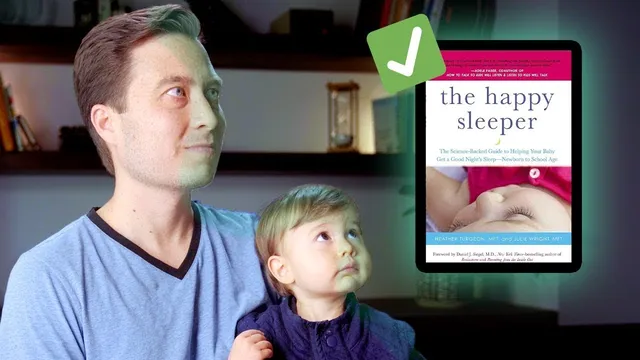
Sleep training becomes far more manageable when book knowledge is converted into a usable, personalized system—fast enough to act on during the hardest nights. A new father, overwhelmed by months of constant wake-ups and round-the-clock care, turned to The Happy Sleeper after a relative recommended it. The book’s promise—an approach aligned with the latest science—was immediately appealing, but the practical problem was brutal: reading a 300+ page book, taking notes, and translating advice into a plan would take far too long when sleep-deprived and trying to respond in real time.
The solution was to treat the process like a project with a clear outcome and deadline: help his son Caillou (and his wife Lauren) get consistent full-night sleep as soon as possible. He first read the book on an iPad in about a week, using highlights to capture only the passages relevant to his child’s age. To avoid losing those insights, he relied on Readwise, which automatically syncs ebook highlights into his digital notes app, Evernote. Once the reading pass was done, he created a dedicated project notebook as a folder in Evernote and distilled the highlights into a single note packed with the best excerpts—bolded for visibility and then marked with bright yellow highlighting for “middle-of-the-night” retrieval. The goal wasn’t to reread the book; it was to open the iPad and find the right guidance within about 30 seconds.
Next came the step that turned information into action: building a checklist-style action plan. He copied only the bolded and yellow-highlighted passages into a new note titled “Caillou’s sleep training action plan,” then reorganized content into sections that matched his priorities. Items to buy and ship were placed at the top. The two central techniques from the book—Sleep wave and Sleep ladder—were positioned near the top as the core framework, even though details about how to use them had to be assembled from multiple chapters rather than taken from a single place. He then added a customized bedtime routine, a nap routine and schedule, daytime tips to ensure Caillou was tired by bedtime, and even motivational mantras for staying consistent when progress stalled.
Crucially, the plan wasn’t meant to be a one-size-fits-all script. The book authors offered a range of options for different families, so he selected what fit his constraints and his child’s age, then iteratively tweaked the plan as Caillou responded to different techniques. The payoff was immediate: the distilled one-page version—representing roughly 3% of the full 326-page book—was printed and pinned outside the child’s room. That single page helped the family stay aligned on their sleep philosophy during moments when giving up felt tempting.
The broader takeaway is that the most valuable ideas in books and classes often remain “stuck” unless they’re saved, organized, distilled, and expressed in a form that can actually be used. For busy people, the practical skill isn’t just consuming information—it’s building a trusted external system (“a second brain”) that turns reading into routines, decisions, and outcomes.
Cornell Notes
A sleep-deprived father used The Happy Sleeper by converting it into a fast, personalized action system rather than trying to reread the whole book at night. He highlighted age-relevant passages on an iPad, then used Readwise to sync those highlights into Evernote. In Evernote, he distilled the best excerpts into a dedicated notebook and created a checklist-style “Caillou’s sleep training action plan,” assembling core techniques (Sleep wave and Sleep ladder) from multiple chapters. He further customized bedtime and nap routines, daytime strategies, and motivational mantras, then printed a one-page version (about 3% of the book) to keep by the child’s room. The result was better sleep and stronger alignment between partners.
Why did reading the entire book and taking notes still fail as a solution during sleep training?
How did the “highlight → sync → distill” workflow make the book usable at night?
What role did checklist creation play in turning advice into results?
How were the book’s core techniques handled when they weren’t presented in one place?
Why did the plan require customization rather than direct adoption of the authors’ advice?
What made the one-page printout so effective for the family?
Review Questions
- What specific steps turned ebook highlights into a usable nighttime decision tool, and why did each step matter?
- How did the checklist structure change the way sleep training advice could be applied day-to-day?
- Why was it necessary to assemble Sleep wave and Sleep ladder details from multiple chapters rather than relying on a single section?
Key Points
- 1
Convert book insights into a dedicated, searchable project space so guidance is retrievable when you’re exhausted.
- 2
Use a highlight-and-sync workflow (Readwise → Evernote) to capture relevant passages without manual re-entry.
- 3
Distill aggressively: bold and color-code the “best of the best” so you can find answers in seconds.
- 4
Translate guidance into a checklist-style action plan that reflects your family’s priorities, constraints, and sequence of actions.
- 5
Assemble core techniques from multiple parts of a book when the instructions aren’t consolidated in one place.
- 6
Customize options to your child’s age and your household’s willingness to try, then iterate based on observed results.
- 7
Print a condensed one-page reference to keep both partners aligned and reduce the temptation to quit during setbacks.