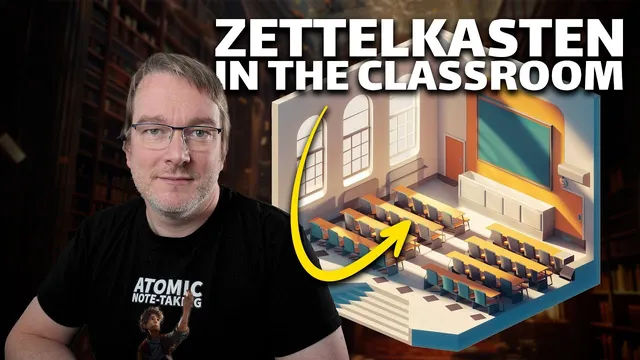
Using the Zettelkasten method for students in the classroom
Based on Martin Adams's video on YouTube. If you like this content, support the original creators by watching, liking and subscribing to their content.
Taking notes during class supports recall and counters the recency effect that can distort what feels important.
Briefing
Zettelkasten note-taking can work in a classroom setting—especially when students capture notes during the live session—because active note-making improves learning and later recall far more than passive listening or slide-only study. The core advantage isn’t just organization; it’s the mental filtering and retrieval practice that happens while information is still fresh in the mind.
In typical classrooms, lectures, virtual sessions, or conference talks often come with slides and handouts. The temptation is to sit through the presentation, then rely on materials afterward. But passive listening tends to trigger the recency effect: people overweight what they heard most recently, even if it’s not the most important content. That can create a false sense of understanding—everything feels familiar—while the real skill needed for exams and assignments, recall, doesn’t get trained. Without active note-making, students may recognize concepts as they appear later, yet struggle to reproduce them when it matters.
Capturing notes during class helps students filter what’s worth keeping. Instead of spending an hour or more extracting key ideas from handouts after the fact, students can narrow a long lecture to a smaller set of meaningful points while the session is happening. This saves time, which can then be reinvested in higher-value work such as “literature notes,” where understanding is rebuilt in the student’s own words and connections.
The transcript also emphasizes that time is the limiting resource. If students delay note-making until after class, they may “borrow” time from the deeper work required to transform raw lecture material into usable knowledge. In contrast, taking notes during the session can reduce the amount of rework later and make subsequent study more efficient.
For practical implementation, the approach described uses bullet points in a notes app while listening. The example given is Bear, with touch typing to keep up with the pace of spoken explanations while maintaining attention on slides. The speaker notes that taking more notes than necessary can still be beneficial because it forces ongoing filtering.
Finally, the method is framed as building “freshness” and navigability in memory. Writing notes creates spatial and contextual cues—where information lives and how it relates—which supports recall and makes later “fleeting notes” and “literature notes” less like starting from scratch. The overall recommendation is to treat the lecture as a raw input stage for fleeting notes, then rewrite and reorganize those ideas afterward in an atomic, personal way so understanding becomes embodied and readily available during exams, assignments, and presentations.
Cornell Notes
Zettelkasten note-taking can be used effectively in classrooms when students capture notes during live sessions rather than relying only on slides and handouts later. Active note-making trains recall and reduces the risk of the recency effect, where students overvalue what they just heard and assume they understand without being able to reproduce the material. The approach also saves time by filtering lecture content in the moment, leaving more time for deeper “literature notes” that rebuild understanding in the student’s own words. Practical execution can involve bullet-point notes in an app (example: Bear) typed quickly while keeping attention on slides. The result is better navigation and recall because notes create mental and spatial cues for later study.
Why is taking notes during class more effective than listening and writing later from handouts?
How does time management connect to Zettelkasten in a classroom setting?
What does “filtering information” mean in practice during lectures?
What tools and note formats can support fast classroom note-taking?
How do lecture notes feed into later Zettelkasten work like literature notes?
What role do spatial cues and navigation play in recall?
Review Questions
- What are the recency effect and recognition-vs-recall, and how do they change the value of passive listening?
- How does taking fleeting notes during a lecture reduce later workload compared with rewriting from handouts?
- Describe a workflow that turns lecture notes into literature notes using an atomic, personal rewrite step.
Key Points
- 1
Taking notes during class supports recall and counters the recency effect that can distort what feels important.
- 2
Passive listening can create a false sense of understanding through recognition without training retrieval.
- 3
Capturing fleeting notes during the session helps filter lecture content immediately, often reducing later rework.
- 4
Saving time from post-class note extraction can be reinvested in literature notes that rebuild understanding in the student’s own words.
- 5
Fast, structured note formats (such as bullet points) and typing tools (example: Bear) can help students keep up while maintaining attention on slides.
- 6
Lecture notes should serve as raw input, then be rewritten atomically afterward to make knowledge more usable for exams and assignments.
- 7
Writing notes creates navigable mental cues that make later study less like starting over.