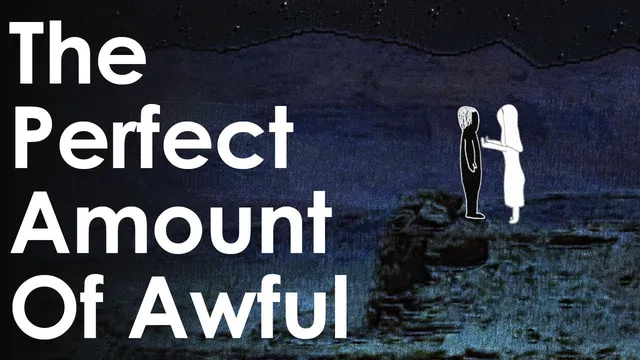
Utopia - The Perfect Amount Of Awful
Based on Pursuit of Wonder's video on YouTube. If you like this content, support the original creators by watching, liking and subscribing to their content.
A life with constant perfection can become emotionally sterile, eliminating the contrast that makes feelings meaningful.
Briefing
A man who tries to escape unbearable life by jumping off a canyon edge is met by a mysterious woman who forces him to confront what “perfect” actually costs—and what “awful” can teach. In the first confrontation, she appears as he prepares to die, and he describes a fantasy life where everything is beautiful, conflict-free, and instantly meaningful: no tragedy, no heartbreak, no hardship, no traffic, and no daily irritations. The fantasy is so complete it becomes emotionally sterile. When the woman pushes him off the cliff, he wakes to a flawless, utopian Tuesday morning—pink skies, perfectly singing birds, everyone smiling, and a reality where the meaning of life is obvious and sadness has no place.
But the utopia doesn’t last as a cure. After “a year or so,” the man returns to the same canyon with the same suicide ritual—flashlight, car registration, unscrewed license plate—only now he feels nothing. The second time, the woman’s presence doesn’t shock him; instead, he treats her like a familiar obstacle and tells her the truth: the problem isn’t pain anymore, it’s emptiness. Life has become easy and boring, with no real feelings to chase and nothing worth doing. When she asks what kind of life he wouldn’t want to jump from, he revises his earlier wish. He no longer demands total perfection. He wants a world where beauty exists but isn’t constant, happiness comes in uneven doses, sadness arrives sometimes so it can be distinguished, and not everyone loves everyone—so connection can feel earned. He also wants hardship that requires effort and creativity, so success and meaning carry weight.
The woman’s final push seals the lesson: the “perfect amount of awful” isn’t a slogan about suffering for its own sake. It’s a claim that emotional contrast, friction, and imperfection are what make life legible—what allow appreciation, attachment, and purpose to form. The man’s first fantasy removes the very ingredients that generate feeling; the second fantasy keeps the possibility of beauty while restoring the stakes that make beauty matter. By the end, the utopian dream is revealed as a trap of numbness, while the canyon—still dangerous, still real—becomes the setting where he learns to want a life that is difficult enough to be meaningful, not so smooth that it becomes meaningless.
Cornell Notes
A man contemplating suicide is confronted by a mysterious woman who tests his idea of what would make life worth living. In his first fantasy, he imagines a flawless world with constant beauty, no conflict, and clear meaning; she pushes him off the cliff, and he wakes into that perfect reality. After time passes, the perfection turns hollow: he feels nothing and returns to the canyon to die again. This time, he describes a life he would choose—one with mixed beauty and ugliness, happiness and sadness, people who aren’t always kind, and occasional hardship that makes success feel earned. The woman’s final push underscores that emotional contrast and imperfection are necessary for meaning.
Why does the man’s first “perfect life” fail to keep him alive?
What changes in the man’s thinking during the second canyon encounter?
How does the story connect imperfection to meaning?
What role does the woman play in the man’s transformation?
What does the repeated canyon setting emphasize?
Review Questions
- What specific emotional elements disappear in the first utopian version, and how does that lead to numbness?
- How does the man’s second description of a “life worth living” differ from his first, and what does that imply about the value of contrast?
- Why does the story treat hardship and imperfection as necessary rather than merely unfortunate?
Key Points
- 1
A life with constant perfection can become emotionally sterile, eliminating the contrast that makes feelings meaningful.
- 2
Removing conflict, sadness, and difficulty may prevent growth and make life feel “boring” rather than safe.
- 3
Emotional contrast matters: happiness is more valuable when it isn’t constant and sadness exists to clarify it.
- 4
Earned meaning requires effort—success and purpose feel real when they involve thought, creativity, and stakes.
- 5
Relationships and connection become more significant when not everyone is kind and love isn’t guaranteed.
- 6
The story reframes “awful” as a necessary ingredient in a life that can still contain beauty and appreciation.
- 7
The same suicide setting is used to show that changing one’s environment isn’t enough if the emotional structure of life stays wrong.