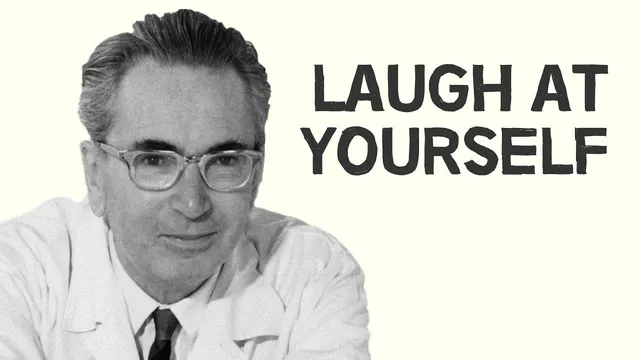
Viktor Frankl's Method to Overcome Fear (Paradoxical Intention)
Based on Einzelgänger's video on YouTube. If you like this content, support the original creators by watching, liking and subscribing to their content.
Paradoxical intention treats anxiety by having people deliberately wish for the feared symptom rather than trying to suppress it.
Briefing
Viktor Frankl’s logotherapy offers a counterintuitive way to beat anxiety: instead of fighting fear or trying to suppress it, people deliberately “wish for” the very symptom they dread. The approach—paradoxical intention—targets the vicious loop that turns normal nervousness into a self-sustaining neurosis, and it has been used for anxiety, phobias, and even insomnia.
Frankl’s starting point was a clinical pattern he saw in patients: fear tends to trigger avoidance, and avoidance tends to intensify fear. In his framework, anxiety neurosis begins with a “flight from fear.” The moment someone becomes afraid of their fear—worrying about trembling, sweating, stammering, or losing control—dread multiplies. That dynamic resembles what later writers would call a feedback loop: anxiety about anxiety produces more anxiety, until the symptom becomes the main problem.
Frankl also distinguished another layer he called “fighting against fear.” Many people don’t just avoid; they actively try to remove the discomfort through willpower, reasoning, or control. Social anxiety provides a clear example. A person who fears public speaking may avoid presentations until avoidance is no longer possible. Even when rational arguments suggest the situation is safe, “anticipatory anxiety” can still spike—fear isn’t only about the event, but about the unwanted emotional and physical reactions the event might trigger.
The mechanism is a pressure-cooker cycle. Frankl described it as “pressure induces counterpressure, and counterpressure, in turn, increases pressure,” creating a self-reinforcing spiral. When someone tries harder to stop symptoms like trembling, dizziness, or a racing heart, the effort adds pressure rather than relieving it. Underneath that spiral sits “hyper-intention”: an excessive focus on achieving (or preventing) a specific outcome. Insomnia illustrates the pattern. The more an insomniac concentrates on falling asleep, the more sleep becomes a high-stakes target—turning the original difficulty into a larger, more threatening problem.
Paradoxical intention breaks the cycle by flipping the goal. Instead of wanting fear to disappear, the person intentionally wants the fear—or the symptom—to happen. In the case Frankl used, a young physician feared sweating in front of others, and the fear of sweating made him sweat more. Frankl advised him to lean into the symptom: whenever a situation triggered his sweating, he would tell himself, “I only sweated out a quart before, now I’m going to pour at least ten quarts!” The result, according to Frankl’s account, was rapid relief—freedom from the phobia after a single session, within a week.
The method depends on a psychological stance: self-detachment through humor. Paradoxical intention asks people to stop taking their neurosis so seriously, to ridicule it “in an ironical way,” and to be willing to look foolish. Frankl’s clinical claim is that once the patient stops fighting obsessions and instead treats them with irony, the vicious circle is cut—the symptom diminishes and can atrophy. In short: fight your fear and it sticks; wish for what you fear, and the grip can loosen.
Cornell Notes
Viktor Frankl’s logotherapy uses paradoxical intention to treat anxiety, phobias, and insomnia by reversing how people relate to their symptoms. Anxiety often grows through a loop: fear leads to avoidance (“flight from fear”) and also to attempts to suppress the fear (“fighting against fear”), which adds pressure and strengthens the symptom. Frankl links this to hyper-intention—over-focusing on preventing a specific outcome, like sweating or staying awake. Paradoxical intention breaks the loop by having patients deliberately wish for the feared symptom (e.g., wanting to sweat more or stay awake longer). The technique works best when patients can detach from their neurosis with humor and treat the fear ironically rather than seriously.
What two habits tend to intensify anxiety in Frankl’s framework?
How does anticipatory anxiety differ from fear of the situation itself?
Why does “fighting fear” often make symptoms worse?
What is hyper-intention, and how does it relate to insomnia?
How does paradoxical intention work in practice for a sweating phobia?
Why does humor matter for paradoxical intention?
Review Questions
- How do “flight from fear” and “fighting against fear” each contribute to the maintenance of anxiety?
- Explain hyper-intention and give an example of how it can turn a manageable problem into a self-amplifying one.
- In paradoxical intention, what changes about the patient’s goal—from eliminating fear to something else—and why does that shift matter?
Key Points
- 1
Paradoxical intention treats anxiety by having people deliberately wish for the feared symptom rather than trying to suppress it.
- 2
Avoidance (“flight from fear”) and suppression (“fighting against fear”) can both strengthen anxiety by reinforcing the fear response.
- 3
Anticipatory anxiety often centers on dreading the uncontrollable reactions that fear might produce, not the situation itself.
- 4
Frankl describes a pressure cycle: attempts to stop symptoms add pressure, which increases symptoms and sustains the loop.
- 5
Hyper-intention—over-focusing on preventing a specific outcome—helps explain why efforts like willpower can worsen insomnia and other anxieties.
- 6
Frankl’s sweating-physician example used a simple reframe: in triggering situations, the patient would aim to sweat “ten quarts” instead of trying to stop sweating.
- 7
Self-detachment and humor are essential; patients must be willing to ridicule the fear ironically and not take themselves too seriously.