Watch this if you feel like you’re behind in life
Based on Ali Abdaal's video on YouTube. If you like this content, support the original creators by watching, liking and subscribing to their content.
Feeling behind often comes from mimetic desire—imitating what others want—then judging yourself as if you should already match their milestones.
Briefing
Feeling “behind in life” isn’t just about having slower progress—it often comes from comparing your life to other people’s milestones and treating their success as proof that you should already be there. That emotional trap is tied to mimemetic desire: the tendency to borrow what others want, then measure yourself against an imagined “should be” version of your life. The result is a specific kind of self-punishment—anxiety, guilt, and a sense of failure—because the mind converts a goal (“I want X”) into a verdict (“I should already have X”).
A key illustration comes from a story about a friend about to receive a promotion with a big salary increase and a prestigious new title. The friend’s news triggers more than happiness; it sparks comparison and second-guessing: if the friend can get it, why can’t the narrator? The theory behind that reaction traces back to French philosopher René Girard, who argued that people often imitate desires rather than simply choose them. Those borrowed wants can quietly steer decisions—where to live, what status to pursue, even which achievements feel “necessary”—without anyone explicitly discussing it.
Luke Burgess’s framework divides the sources of imitation into two “worlds.” One is celebran—modeled after celebrities and influencers, even when they’ve never been personally known. The other is freshmanistan—modeled after people “like us,” such as friends, neighbors, classmates, and relatives. The second category is often more psychologically potent because it feels like a direct competition: if someone close is getting promotions, earning more, building a fancier business, or posting a more fulfilling family life, it can create the belief that you’re falling short of a shared standard.
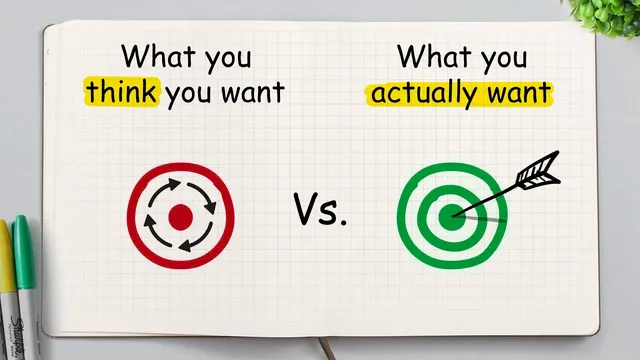
The practical takeaway is that the problem isn’t goal-setting itself; it’s goal selection. Chasing the wrong goals turns them into instruments of self-flagellation. The video argues that desires shape goals, and goals shape daily actions and emotions—so changing the destination changes the journey. That’s why the focus shifts from “how to achieve more efficiently” to “how to choose what to want in the first place.”
Several strategies follow. First, distinguish thick desires from thin desires. Thick desires are enduring, energizing, and often present since childhood; thin desires are surface-level wants adopted because respected people want them. A second method is to identify personal “Michelin stars”—the hidden scorecards used to judge worth, from exam rankings to social metrics like followers and ad revenue. The point isn’t to reject external measures, but to notice which ones are actually aligned with authentic values and which ones exist mainly because others reward them.
Next comes boundary-setting against unhealthy mimetic models: unfollowing accounts that trigger envy, creating mental pauses to ask whether a desire is truly yours, and even questioning “overnight experts,” since credibility can be mimetically awarded in fields where proof is less visible. Finally, the video recommends building positive flywheels of desire—using one authentic motivation to generate healthier habits that reinforce it over time.
The central promise is not that comparison disappears forever, but that awareness changes the response. When people anchor on thick desires and stop treating external models as the scoreboard, the “behind” feeling loses its grip—and progress becomes something to recognize rather than something to resent.
Cornell Notes
Mimetic desire helps explain why people feel “behind”: they don’t just want goals, they adopt other people’s wants and then judge themselves as if they should already match those milestones. Burgess’s framework traces imitation to two sources—celebrity models (celebran) and “people like us” (freshistan)—with the latter often creating the strongest sense of competition. The remedy starts with choosing better goals by identifying thick desires (enduring, energizing) versus thin desires (borrowed, draining). People are also urged to locate their personal “Michelin stars,” the hidden scorecards that drive comparison, and then set boundaries around unhealthy models. The final step is to create positive flywheels of desire so authentic motivation produces habits that reinforce well-being rather than self-punishment.
What turns a normal goal into the painful feeling of being “behind”?
How does mimetic desire work, and why does it matter for everyday decisions?
Why does “freshistan” often hit harder than “celebran”?
What’s the thick-versus-thin desire test, and how can it reveal borrowed goals?
What are “Michelin stars,” and how do they show up in real life?
How can boundaries and “positive flywheels” reduce comparison-driven behavior?
Review Questions
- Think of a recent milestone that made you feel behind. Which category likely drove the desire—celebran or freshmanistan—and what evidence supports that?
- Choose one “Michelin star” you’ve been chasing. Is it aligned with thick desires or mostly with thin, modeled desires? What would you do differently if you stopped treating it as a scoreboard?
- Recall a time when you felt genuinely fulfilled after taking action. What were the three elements of that fulfillment story (action, competence, lasting accomplishment), and how could they guide a current goal?
Key Points
- 1
Feeling behind often comes from mimetic desire—imitating what others want—then judging yourself as if you should already match their milestones.
- 2
Goal-setting isn’t the problem; goal selection is. Desires determine goals, which then shape daily actions and emotions.
- 3
Mimetic desire draws from two model sources: celebran (celebrities/influencers) and freshmanistan (people like us such as friends and classmates).
- 4
Thick desires are enduring and energizing; thin desires are borrowed and tend to fade quickly once the social comparison context changes.
- 5
Identifying personal “Michelin stars” reveals hidden scorecards (exam rankings, publications, followers, revenue, status) that may not reflect authentic values.
- 6
Boundary-setting can reduce unhealthy comparison by changing inputs (unfollowing/muting), adding mental pauses, and limiting exposure to envy-triggering environments.
- 7
Building positive flywheels of desire uses authentic motivation to create reinforcing habits, turning imitation-driven urges into healthier outcomes.