Watch this if you procrastinate
Based on Ali Alqaraghuli, PhD's video on YouTube. If you like this content, support the original creators by watching, liking and subscribing to their content.
Treat procrastination as primarily emotional and neurochemical, not purely a discipline or logic failure.
Briefing
Procrastination often isn’t a logic problem—it’s an emotional and neurochemical one. When people stall, it’s usually because they feel overwhelmed and unclear about what to do next, or because fear and emotional resistance (often fear of failure and perfectionism) makes the task feel threatening. A third, quieter driver is simple disinterest: the task doesn’t compete well with more immediately rewarding options. The practical takeaway is that stopping procrastination requires changing what the brain focuses on, not just “trying harder.”
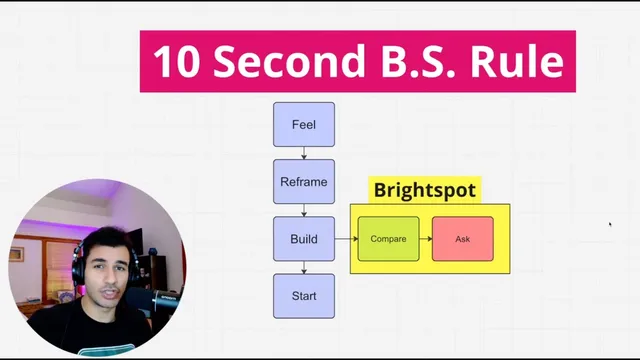
A 10-second technique laid out as a four-step protocol targets those emotional bottlenecks directly. First, instead of thinking about completing the task, the person imagines how they’ll feel after it’s done—relief, confidence, pride, and the sense of being “on top of things.” The method is deliberately brief (a few seconds), and it works by shifting attention away from the task itself and toward the emotional payoff that follows completion. For people with ADHD—where motivation tends to respond more to short-term reward than long-term benefits—this imagined feeling acts like an immediate reward signal, associated with dopamine, which can create inertia and momentum.
Second, the goal gets reframed. Rather than aiming to do the task perfectly or to “get it done the right way,” the goal becomes simply finishing it so the desired feeling arrives. That reframing is presented as a way to “annihilate” fear of failure: fear grows when attention locks onto doing a good job under pressure, but it weakens when the task is treated as a means to an emotional outcome. Ironically, lowering the perfection pressure makes it more likely the person will start—and often do a solid job—because the emotional resistance drops.
Third, the technique adds clarity by building a mental road map of the steps needed to complete the task. The approach uses a shortcut: recall a similar problem already solved in the past and extract the procedure steps from that memory. The example given is about resisting website work—once the person remembered having fixed a similar website issue before, the next actions became obvious within seconds. If no comparable past task exists, the road map can be generated by asking an AI tool for a concise, step-by-step plan (the transcript suggests prompting ChatGPT with something like “I am procrastinating on building a website; give me a 5-step clear road map; be concise”). Even a rough plan helps by steering attention toward actionable steps rather than the looming pressure of “getting it done.”
The overall message is a fast, repeatable reset: induce a quick reward by imagining the post-task feeling, reframe success as completion rather than perfection, then convert uncertainty into steps—using memory, assistance, or AI when needed. After that sequence, the person is expected to feel unusually motivated to begin, because the task stops feeling like a high-stakes emotional threat and starts feeling like the next logical move.
Cornell Notes
Procrastination is treated as mostly emotional and neurochemical, driven by overwhelm/uncertainty, fear of failure, and sometimes disinterest. A four-step “10-second rule” aims to interrupt the cycle by (1) imagining how it will feel after the task is finished, (2) reframing the goal from doing it perfectly to simply completing it so the good feeling arrives, and (3) creating a mental road map for the next steps. Clarity comes either from recalling a similar task already solved or from getting a concise step plan from AI like ChatGPT. The method matters because it reduces perfection pressure and fear, then replaces it with short-term reward and immediate action steps.
Why does procrastination persist even when someone knows what they should do?
What is the first move in the 10-second protocol, and what does it accomplish?
How does reframing the goal reduce fear of failure?
What does the “road map” step do, and how is it built quickly?
How can AI be used without overthinking the plan?
Review Questions
- How does imagining the post-task feeling change attention compared with focusing on completing the task itself?
- What specific reframing turns “doing it perfectly” into a lower-pressure goal, and why does that reduce fear of failure?
- What are two different ways to generate a mental road map, and when would each be most useful?
Key Points
- 1
Treat procrastination as primarily emotional and neurochemical, not purely a discipline or logic failure.
- 2
Identify the common drivers: overwhelm/uncertainty, fear of failure/perfectionism, and sometimes simple disinterest.
- 3
Use a fast reward shift by imagining how you’ll feel after the task is finished (relief, confidence, pride) for a few seconds.
- 4
Reframe success as completion that unlocks the good feeling, rather than perfection while doing the task.
- 5
Create clarity immediately by building a mental road map from a similar past task you’ve solved.
- 6
If past-task recall fails, request a concise step plan from ChatGPT to generate actionable next thoughts.
- 7
After the feeling shift + goal reframing + road map, starting becomes easier because emotional pressure drops and next actions become concrete.