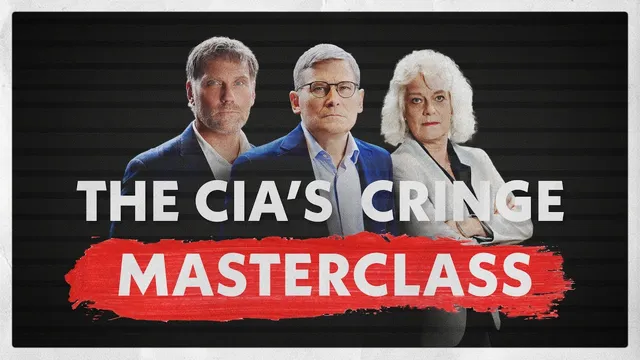
We Watched The CIA Masterclass So You Don't Have To
Based on Second Thought's video on YouTube. If you like this content, support the original creators by watching, liking and subscribing to their content.
The CIA Master Class markets “critical thinking,” relationship-building, and risk management as everyday skills while tying them to human intelligence source cultivation.
Briefing
A CIA “Master Class” pitch aimed at teaching “critical thinking,” relationship-building, and risk management draws heavy backlash for mixing banal workplace advice with graphic, coercive tradecraft—and for repeatedly dressing hard-power realities in corporate-friendly, identity-politics-flavored messaging. The most striking through-line is the gap between the polished, self-improvement framing and the underlying subject matter: covert action, deception, and violence presented as transferable “life skills.”
The episode’s opening segment leans on dramatic storytelling and cinematic editing—hallway strolls, staged “spy” visuals, and theatrical narration—before landing on a core claim: CIA methods can improve everyday relationships and decision-making. A recurring theme is trust and patience in cultivating sources. In a roundtable discussion, former CIA officials emphasize listening, waiting, and avoiding transactional relationships—advice that sounds like leadership training until it’s tied directly to human intelligence work, where the goal is information extraction. The contrast becomes a focal point for criticism: the language of empathy and confidence is treated as a veneer over coercive outcomes.
One of the episode’s early examples centers on a 9/11-era anecdote involving President George W. Bush and an Air Force One security posture. The story claims F-16s would position themselves to intercept a surface-to-air missile threat on final approach. That detail triggers skepticism about plausibility and about how the class uses “high-stakes” drama to make routine security logic feel like cinematic heroism.
As the discussion moves into analysis and intelligence tradecraft, the episode claims CIA work is not “connecting dots” but assembling a more complex “puzzle.” Critics in the transcript argue that this is essentially standard analytic reasoning—packaged as mystique. The same pattern appears in the treatment of deception: “cues” that someone might be lying are framed as a specialized skill, but the transcript’s reaction suggests it’s generic management advice dressed up as spycraft.
The most politically charged portion targets the class’s portrayal of institutional accountability and past decisions. A segment on the lead-up to the Iraq War is framed as an “honest mistake” after faulty intelligence—yet the transcript argues the underlying claims were widely known to be false pretenses used to justify invasion. The critique extends to how the episode handles confirmation bias, contrition, and “speak truth to power” messaging: the language of humility and reform is seen as performative given the scale of consequences.
The episode also highlights covert action as the CIA’s third mission—explicitly described as changing the world through presidentially directed operations. That framing, paired with examples of communications, disguise, and manufactured documents, reinforces the transcript’s central complaint: the “Master Class” sells a sanitized, corporate version of clandestine work, while the real-world record includes lethal operations and failed assumptions.
Finally, the transcript’s reaction turns to the business model itself: paying for a “master class” that, in the critics’ view, largely recycles generic leadership lessons and propaganda-friendly narratives. The episode ends with a broader indictment of why anyone would pay for it—especially when the content is perceived as more branding than instruction, and when the “life skills” are inseparable from coercion and war-making.
Cornell Notes
The CIA “Master Class” is presented as a transferable set of skills—critical thinking, relationship-building, and risk management—meant to help people in careers and everyday life. The transcript’s central critique is that the polished, workplace-friendly framing repeatedly clashes with the realities of covert action: deception, source cultivation, and lethal operations. Trust and patience are emphasized in handling human sources, but the advice is treated as a veneer when tied to intelligence extraction. The episode also uses dramatic storytelling and “accountability” language around major events like the Iraq War, which the transcript argues functions as performative contrition rather than genuine correction. Overall, the transcript portrays the class as branding that repackages hard-power tradecraft into self-improvement content.
What “life skills” does the CIA Master Class claim to teach, and how are they connected to intelligence work?
Why does the transcript treat the episode’s dramatic security anecdotes as suspect or misleading?
How does the transcript evaluate the “analysis” and “deception” lessons?
What is the transcript’s critique of the Iraq War “faulty data” framing?
What does the transcript say about the class’s portrayal of covert action and institutional missions?
Why does the transcript argue the “Master Class” is not worth paying for?
Review Questions
- Which specific “transferable” skills are emphasized (trust, patience, listening, risk management), and what intelligence function do they map to in the transcript’s critique?
- How does the transcript connect dramatic storytelling (e.g., Air Force One security) to skepticism about credibility and intent?
- What does the transcript claim is missing or distorted in the Iraq War “faulty data” and contrition framing?
Key Points
- 1
The CIA Master Class markets “critical thinking,” relationship-building, and risk management as everyday skills while tying them to human intelligence source cultivation.
- 2
Trust and patience in building relationships are presented as leadership advice, but the transcript argues the underlying goal is information extraction rather than mutual benefit.
- 3
Dramatic, cinematic storytelling is used to frame security and intelligence anecdotes, prompting skepticism about plausibility and credibility.
- 4
Generic analytic concepts like “puzzle” reasoning and “lie cues” are portrayed as specialized CIA tradecraft, which the transcript treats as over-mystified workplace guidance.
- 5
The Iraq War segment is framed as an “honest mistake,” but the transcript argues it functions as performative contrition that avoids key motivations and widely known false premises.
- 6
Covert action is described as the CIA’s third mission—world-changing operations directed by the president—yet the transcript criticizes the sanitized, corporate packaging of lethal work.
- 7
The transcript’s overarching complaint is that the paid “master class” feels more like branding and propaganda than actionable instruction.