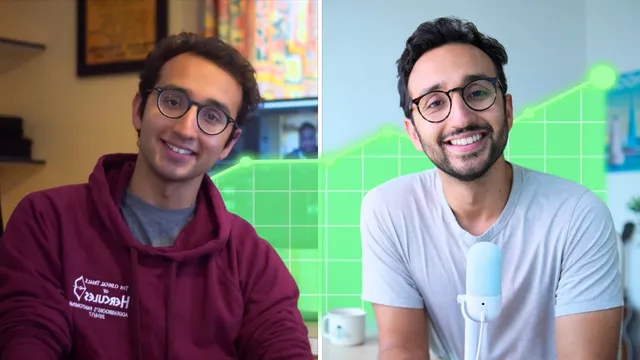
What 8 Years on YouTube Taught Me About Life
Based on Ali Abdaal's video on YouTube. If you like this content, support the original creators by watching, liking and subscribing to their content.
Abdaal argues that foggy creative paths require action before strategy; waiting for certainty often prevents the first step.
Briefing
Eight years of YouTube taught Ali Abdaal that long-term success in uncertain, creative work depends less on having the “right” plan and more on three habits: starting before certainty arrives, persisting through fear and burnout, and continuously engineering enjoyment into the process. The stakes feel different once a side project becomes a livelihood—medicine offers a clear “yellow brick road,” while building a personal brand or business is foggy, with no guaranteed path to outcomes. That uncertainty can trigger a paralyzing need to “get it right,” the same box-ticking mindset that works in structured careers but fails in domains where strategy only becomes clear after repeated action.
Abdaal’s first reflection is that serious plans often arrive too late to be useful. He argues that most people never begin because they want certainty—niche, strategy, the perfect approach—before they’ve produced enough work to learn what actually fits. In his YouTuber Academy, he tells students not to even use the word “niche” until they’ve made at least seven videos, because execution clarifies direction far more reliably than pre-planning. He frames the problem as an addiction to certainty: people wait for boxes to exist, then freeze when the boxes don’t. In medicine, progression is predictable; in YouTube, the “path” is not.
The second reflection shifts from starting to staying. Abdaal says the hardest part isn’t launching—it’s continuing when external motivation fades. Money can motivate early, but it becomes unreliable and can even turn into a fear-based engine that drives burnout. He describes recurring “existential crises” every few months, often tied to view drops after the pandemic and the nagging thought that the channel is dying. The antidote is realigning with deeper reasons to keep going. He summarizes that alignment as two C’s: connection (hearing from viewers through comments, DMs, emails, and in-person interactions) and contribution (imagining real people helped, and even doing “therapy sessions” for other creators). He links this to intrinsic motivation—autonomy, mastery, and purpose—drawing on Dan Pink’s framework.
The third reflection is that sustainability requires enjoyment, not just discipline. Abdaal argues that enjoyment improves creativity and reduces burnout, but it’s not a fixed property of the activity; it can be designed. His approach is to “inject” fun by doing enjoyable tasks when possible and, when not, changing the approach so the work becomes more enjoyable. When one source of fun runs dry—like editing becoming less exciting—he looks for new “wells of enjoyment,” such as working with an in-person team, outsourcing parts of production, or even accepting under-optimization when the algorithm would otherwise drain satisfaction. He also stresses the craft-versus-commerce tradeoff: optimizing for visible metrics (views, subscribers, revenue) can steadily erode joy.
Ultimately, Abdaal argues that creative careers are shaped by asymmetrical outcomes. Drawing on a Jeff Bezos baseball analogy, he says business is less like a capped scoring system and more like repeated shots on goal: most attempts fail, but one success can transform everything. He describes years of flopped businesses before YouTube became the “home run,” and he credits the willingness to keep taking swings—starting, persisting for years, and choosing fulfillment over short-term optimization.
Cornell Notes
Ali Abdaal’s eight-year YouTube reflection centers on how to win in uncertain, creative work: start without a perfect plan, keep going when fear and motivation fade, and design enjoyment so the effort stays sustainable. He contrasts medicine’s predictable “yellow brick road” with YouTube’s foggy path, arguing that the need for certainty can stop people from beginning. Once started, money is a weak long-term motivator; lasting consistency comes from intrinsic drivers—connection and contribution, plus autonomy, mastery, and purpose. He adds a practical sustainability rule: enjoyment isn’t fixed, so creators must keep finding new “wells of enjoyment,” even if that means leaving some money or views on the table.
Why does Abdaal say a “grand plan” can prevent people from starting?
What changes when a side project becomes a full-time occupation?
Why does money stop being a reliable motivator for long-term consistency?
How does Abdaal recommend creators handle recurring motivation crises?
What does “enjoyment is efficiency” mean in his framework?
What’s the craft-versus-commerce tradeoff, and why does he accept leaving money on the table?
Review Questions
- What specific mechanism does Abdaal claim turns uncertainty into paralysis, and how does his “seven videos before niche” rule address it?
- How does Abdaal distinguish early-stage motivation from long-term motivation, and what internal factors replace money?
- What strategies does he use to keep enjoyment from running dry, and how does that affect decisions about optimizing for views?
Key Points
- 1
Abdaal argues that foggy creative paths require action before strategy; waiting for certainty often prevents the first step.
- 2
Medicine’s predictable progression contrasts with YouTube’s uncertainty, and that difference is a major source of fear when switching to full-time work.
- 3
The need to “get it right” functions like box-ticking; in domains without boxes, it blocks starting and slows learning.
- 4
Money can motivate early, but fear of losing money becomes a burnout driver; intrinsic motivation is more sustainable.
- 5
Connection (audience interaction) and contribution (real-world impact) help creators realign during recurring motivation crises.
- 6
Enjoyment is designed, not found: creators should keep finding new “wells of enjoyment,” even if it means under-optimizing for algorithmic performance.
- 7
Entrepreneurship is asymmetrical: repeated attempts can fail many times, but one success can transform a life—so taking shots on goal matters more than perfect odds.