What Everyone Gets Wrong About Planes
Based on Veritasium's video on YouTube. If you like this content, support the original creators by watching, liking and subscribing to their content.
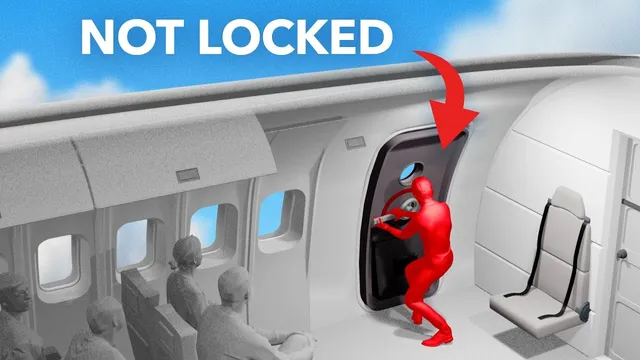
Most plane doors rely on pressure physics rather than locks: pressurization pushes plug-shaped doors into their frames, making inward opening impractical at altitude.
Briefing
Plane doors rarely get opened in flight not because they’re locked, but because cabin pressurization makes outward-opening doors physically impossible to force inward at cruising altitude. At typical flight levels around 30,000–38,000 ft, the cabin is pressurized to near the minimum needed for human oxygen intake, while the outside air pressure is far lower. That pressure differential pushes the door into its frame, creating an airtight seal and requiring forces so large that even a determined person can’t overcome it mid-flight—unless the aircraft is close to the ground where the pressure difference shrinks.
The reason planes fly high ties directly into this pressure story. As altitude increases, air density drops sharply—by about a third at roughly 33,000 ft (10 km) compared with sea level—so engines can move the same amount of air with less drag and the aircraft can fly faster and burn less fuel. Jet engines also become more efficient in colder, thinner air, and higher cruising altitudes let aircraft ride smoother conditions and jet stream tailwinds. Weather avoidance and smoother rides matter, but the fuel and speed advantages dominate.
The tradeoff is that high altitude air is not breathable in practice. Even though oxygen still makes up about 21% of the atmosphere, the partial pressure of oxygen falls with the drop in air pressure. At 10 km, oxygen’s partial pressure is only about a quarter of sea level, leaving too little oxygen to force adequate oxygen into the bloodstream. That’s why cabins must be pressurized, with outside air continuously fed into the cabin via the jet engine compression stage.
Pressurization reshapes aircraft doors and the fuselage itself. Before pressurization, planes flew around 10,000 ft, where oxygen partial pressure sat near the human limit and pressure differences across doors were small. Once pressurized cabins became necessary, doors were redesigned into “plug” shapes—wider on the inside than the outside—so higher cabin pressure clamps them shut. Cabin pressure isn’t held at sea level; it’s kept closer to the minimum required for passengers. That’s why a bag of chips can inflate as the plane climbs, and why cabin altitude can jump slightly when air escapes during events like flushing a toilet.
Safety engineering also explains why pressurization is kept as low as practical. The International Space Station is pressurized to sea level, but planes cycle pressure every flight, stretching and relaxing the fuselage. The 1988 Aloha Airlines 243 disaster—where a cracked fuselage led to explosive decompression at 24,000 ft—highlighted how fatigue accumulates over tens of thousands of flight cycles. Keeping cabin pressure lower reduces structural stress and extends aircraft life.
Even with these safeguards, rare incidents can happen when pressure differentials are small. A May 2023 event involved a passenger opening an Airbus emergency exit during final approach, when the cabin-to-outside pressure gap was minimal. The discussion then broadens to other “rules of flying,” including airplane mode: cell phone bans were justified by concerns about interference and network overload, but the physics of a metal aircraft acting like a Faraday cage suggests disruption would be limited, and airplane mode’s most reliable effect is battery saving. Finally, cabin conditions influence taste—dry air dulls smell and flavor, while loud cabin noise may boost umami via the chorda tympani—helping explain why tomato juice is disproportionately popular in flight.
Cornell Notes
Cruising altitude is mainly an economic and performance choice: thinner air at about 10 km reduces drag and lets planes fly faster and burn less fuel, while colder temperatures improve jet engine efficiency. The biological problem is oxygen—oxygen’s partial pressure drops with air pressure, so cabins must be pressurized to the minimum level that keeps passengers conscious and functioning normally. That minimum pressurization drives the door design: plug-shaped doors and outward-opening mechanisms rely on large cabin-to-outside pressure differences to prevent inward opening mid-flight. Keeping cabin pressure low also reduces structural stress from repeated pressurization cycles, a lesson reinforced by the Aloha Airlines 243 decompression accident. Rare exceptions occur near the ground, when pressure differences shrink enough for a door to be forced open.
Why don’t plane doors need locks to stay shut during flight?
What makes flying at high altitude cheaper and faster?
How does oxygen availability change with altitude, and why does that force cabin pressurization?
Why is cabin pressure kept near the minimum needed rather than at sea level?
What explains the popularity of tomato juice on planes?
What’s the real rationale behind airplane mode, and how solid is the interference argument?
Review Questions
- How do cabin-to-outside pressure differences and door geometry combine to prevent inward opening at cruising altitude?
- Why does lower air density at altitude improve aircraft performance, and what biological constraint forces pressurization anyway?
- What structural-safety lesson from Aloha Airlines 243 supports keeping cabin pressure near the minimum required for passengers?
Key Points
- 1
Most plane doors rely on pressure physics rather than locks: pressurization pushes plug-shaped doors into their frames, making inward opening impractical at altitude.
- 2
Cruising high reduces fuel burn and increases speed because air density drops and jet engines operate more efficiently in colder, thinner air.
- 3
Cabin pressurization is required because oxygen partial pressure falls with altitude; breathable air depends on partial pressure, not oxygen percentage alone.
- 4
Cabin pressure is intentionally kept near the minimum needed to reduce repeated structural stress from pressurization cycles, a lesson reinforced by the Aloha Airlines 243 decompression.
- 5
Door failures become plausible mainly when the cabin-to-outside pressure differential is small, such as during final approach.
- 6
Cell phone bans were driven by interference and network-overload concerns, but the Faraday-cage effect of aircraft metal suggests disruption would be limited; airplane mode’s sure benefit is battery conservation.
- 7
Cabin dryness and low pressure dull taste and smell, while loud cabin noise may enhance umami—helping explain why tomato juice is disproportionately popular in flight.