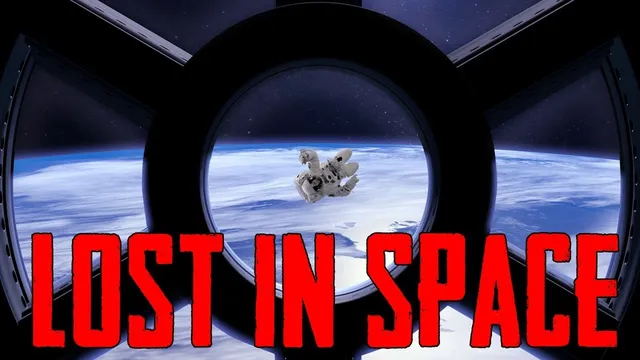
What if an Astronaut Drifts Away into Space?
Based on Second Thought's video on YouTube. If you like this content, support the original creators by watching, liking and subscribing to their content.
ISS EVA safety relies on a layered system: suit life support, a high-tensile tether, and SAFER propulsion for tether-failure recovery.
Briefing
Astronauts drifting away from the International Space Station after a tether failure is a rare but brutally unforgiving scenario—so the ISS’s safety stack is designed to buy time, not guarantee survival. Outside the station, a spacesuit provides the first line of defense: it shields the astronaut from space’s vacuum and can supply roughly eight hours of oxygen and about one liter of water. The suit is also tethered to the ISS with a long braided steel line rated for nearly 500 kilograms of tensile strength, keeping the astronaut secured even if a grip slips.
If the tether breaks, the simplified aid for extra vehicular activity (SAFER) is meant to prevent the “slow drift into the black” outcome. SAFER is a nitrogen-propelled jetpack controlled by a small joystick. In an ideal failure, the astronaut would activate the system, counteract any tumbling, orient themselves using directional thrust, and then fly back toward the station in a controlled, gradual return.
The grim part is what happens when SAFER doesn’t work—or when the astronaut’s trajectory and speed make recovery unlikely. If the jetpack refuses to function, the astronaut’s motion is dictated by whatever forces existed at the moment of disconnection. In a weightless environment, struggling can’t meaningfully change course; the astronaut simply drifts away from the ISS. Rescue then depends on whether another astronaut on a spacewalk is close enough. The practical limit is about a 26-meter range of that astronaut’s tether—close enough for a retrieval attempt, but far beyond what station systems can reliably handle.
The station’s robotic arm is too slow and imprecise to capture a small, moving target like a drifting EVA astronaut. Other rescue options are also constrained by timing and readiness. Soyuz capsules require about a full day to power up and undock, and the space shuttle—once the only vehicle with a rescue-ready air-locked compartment—has been retired. Without a willing crew member able to create a “super tether” by attaching multiple tethers and then jet-pack out, there may be no feasible recovery.
Once separated, the endgame depends on direction. If the astronaut’s path bends toward Earth, increasing speed leads to destructive re-entry and burning up. If the path carries the astronaut into orbit, the remaining hours of oxygen become the clock: water would be available, the astronaut could watch multiple sunrises and sunsets and see Earth’s lights and continents drift below, and then consciousness would fade when air runs out. Over years, the orbit would decay until the astronaut eventually falls back to Earth—ending in a final, gravity-driven return.
The overall takeaway is that ISS EVA safety is built around redundancy and rapid response: suit life support, tether strength, and SAFER propulsion. When that chain breaks—especially if SAFER fails—the margin for error collapses quickly, turning a manageable emergency into an almost irreversible fate.
Cornell Notes
A tether failure during an ISS spacewalk can turn a routine EVA into a near-impossible rescue problem. Spacesuits provide shielding plus about eight hours of oxygen and roughly one liter of water, and a steel tether rated for nearly 500 kilograms keeps astronauts attached. If the tether breaks, SAFER—a nitrogen-propelled jetpack—can counter tumbling and guide the astronaut back, but recovery depends on SAFER working and on the astronaut’s trajectory. If SAFER fails, rescue is limited: another astronaut can retrieve only within about 26 meters, the station’s robotic arm is too slow, and other spacecraft options are not fast enough. Depending on direction, the astronaut may face re-entry or an orbital decline until oxygen runs out and the orbit decays.
What three layers of protection are designed to prevent an EVA astronaut from being lost after a tether failure?
Why can’t an astronaut simply “fight” their way back if they drift after disconnection?
What rescue options exist immediately after a tether failure, and what are their limits?
How does the astronaut’s fate differ depending on whether their trajectory points toward Earth or away from it?
What does “ideal” SAFER performance look like during a tether failure?
Review Questions
- If SAFER fails during an EVA tether break, which specific rescue mechanisms become ineffective or too slow, and why?
- How do tether strength and suit life support change the time window for survival after disconnection?
- What factors determine whether an astronaut experiences re-entry versus orbital drift after separation?
Key Points
- 1
ISS EVA safety relies on a layered system: suit life support, a high-tensile tether, and SAFER propulsion for tether-failure recovery.
- 2
A spacesuit can provide roughly eight hours of oxygen and about one liter of water while shielding the astronaut from space’s vacuum.
- 3
The tether’s tensile strength is designed to keep astronauts attached even if a grip fails, reducing the chance of separation.
- 4
SAFER is a nitrogen-propelled jetpack controlled by a joystick, intended to counter tumbling and guide an astronaut back to the ISS.
- 5
If SAFER doesn’t work, the astronaut’s drift is largely fixed by the trajectory at the moment of disconnection, and struggling can’t meaningfully change it.
- 6
Immediate rescue is constrained: another astronaut can retrieve only within about 26 meters, while the robotic arm is too slow for a moving target.
- 7
If separation leads toward Earth, re-entry becomes catastrophic; if it leads into orbit, oxygen runs out first and the orbit decays over years until eventual return to Earth.