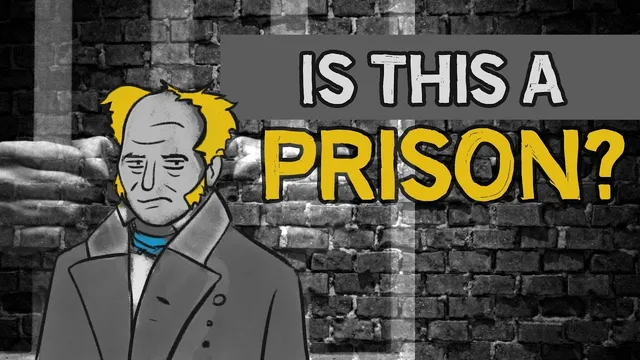
What If The World is Actually a Prison? | The Philosophy of Arthur Schopenhauer
Based on Einzelgänger's video on YouTube. If you like this content, support the original creators by watching, liking and subscribing to their content.
Schopenhauer treats pain as the primary driver of desire, making pleasure largely a temporary relief from discomfort rather than a lasting good.
Briefing
Arthur Schopenhauer’s grim lens—treating human life as a kind of penitentiary—turns the usual search for happiness on its head. Instead of pleasure being the main goal, pain is portrayed as the fundamental condition of existence, while “happiness” is largely just the temporary relief that follows the fulfillment of desires created by discomfort. That framing matters because it changes what people should expect from life and how they should treat one another: if suffering is built in, then cruelty and disappointment stop looking like personal betrayals and start looking like predictable features of a shared predicament.
Schopenhauer’s prison analogy rests on several parallels. No one, in general, chooses to be born into the world. Escape is limited—either by the end of one’s “sentence” or by self-ending—while time steadily closes in through aging and death. Inside these boundaries, life is described as a continuous stream of worry, tragedy, and misery. Even pleasure is treated as a stopgap: people move from one gratification to another mainly to reduce pain, not to reach lasting fulfillment. Nature itself is cast as a brutal system where organisms driven by a “will-to-live” feed on one another, competing for survival in an ongoing struggle that resembles prison conflict. Human beings, meanwhile, intensify the misery by exploiting others and draining the environment, only to face their own disasters and diseases.
From this perspective, the world also looks less like the work of a benevolent deity and more like an environment of punishment. Schopenhauer challenges the idea that an all-wise, all-good, all-powerful Being would produce such an outcome, arguing instead that evil is what makes suffering felt, while good is merely the absence of disturbance. Life becomes both a disappointment and a “cheat”: hopes burn bright early, then erode into insecurity, betrayal, poverty, physical pain, and even loss of reason. Even when desires are met, the result is often boredom—another dissatisfaction—rather than genuine contentment.
The most practical twist in this pessimism is compassion. If everyone is trapped in the same cycle of anxiety, grief, and physical pain—and if no one asked to be there—then anger at others’ failures becomes less rational. Schopenhauer’s view encourages people to regulate expectations, interpret rudeness or wrongdoing as the predictable behavior of fellow prisoners, and respond with tolerance rather than indignation. Compassion, defined as the capacity to feel sympathy for others’ misfortunes, becomes the “answer” to life in a penitentiary: it supports patience, regard, and neighbor-love, and it makes the shared sentence more bearable by reframing others not as enemies but as “fellow-sufferers.”
Cornell Notes
Schopenhauer portrays life as a penitentiary: people did not choose to be here, time steadily tightens through aging and death, and suffering dominates daily existence. Pleasure is not treated as a positive good but as temporary relief—often less satisfying than expected—while pain is the driver of desire itself (hunger, for example, creates the wish for food). This outlook can sound purely bleak, but it yields a practical moral shift: compassion. Recognizing that everyone shares the same anxieties and misfortunes makes it easier to respond to others with tolerance and sympathy rather than personal outrage, helping people “make the collective prison sentence more bearable.”
Why does Schopenhauer treat pain as more “positive” than pleasure?
What does the “penitentiary” metaphor add to the claim that life is full of suffering?
How does Schopenhauer reinterpret morality and blame under this worldview?
What is the “secret” benefit of pessimism in Schopenhauer’s framework?
How does Schopenhauer connect suffering to religion or the idea of divine goodness?
Review Questions
- How does Schopenhauer’s account of desire link pain to pleasure, and what does that imply about happiness?
- Which parts of the penitentiary metaphor (choice, time, escape, daily experience) most directly support the claim that life is a shared sentence?
- Why does compassion become more rational—or more necessary—once others are viewed as “fellow-sufferers” rather than enemies?
Key Points
- 1
Schopenhauer treats pain as the primary driver of desire, making pleasure largely a temporary relief from discomfort rather than a lasting good.
- 2
Life is compared to a penitentiary through features like lack of choice, limited escape, and time steadily tightening toward death.
- 3
Nature’s survival struggle (“eat or be eaten”) is used to reinforce the idea that suffering and competition are built into existence, not accidental add-ons.
- 4
Schopenhauer rejects the notion that the world reflects an all-good, all-powerful deity, arguing instead that evil is what makes suffering felt while good is only absence of disturbance.
- 5
A central practical payoff of pessimism is compassion: recognizing shared suffering supports tolerance, patience, and neighbor-love.
- 6
Interpreting others’ faults as predictable outcomes of a shared condition reduces personal blame and encourages helpfulness.