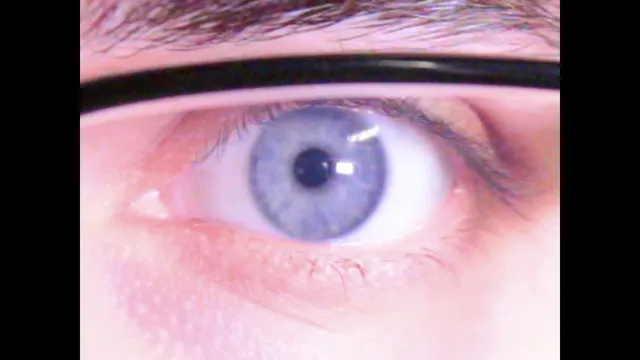
What Is The Resolution Of The Eye?
Based on Vsauce's video on YouTube. If you like this content, support the original creators by watching, liking and subscribing to their content.
Resolution is about distinguishable detail, not just total pixel dimensions or megapixel counts.
Briefing
Human vision can’t be mapped cleanly onto “megapixels,” but it can be approximated by asking how many distinct visual elements would need to fit across a person’s field of view to eliminate noticeable pixelation. The key insight is that resolution isn’t just about total pixel count; it depends on factors like light levels, sensor size (or retinal sampling), what the pixels encode, and—crucially—how close the subject is. Even screen “resolutions” that sound high often fail to look different from one another at typical viewing distances because the eye’s ability to distinguish fine detail is limited by optics and viewing geometry.
A more useful comparison starts with spatial resolution: the ability to tell neighboring details apart. When an image goes out of focus, the pixel grid doesn’t change, but the eye can’t resolve as much detail—showing that “more pixels” alone doesn’t guarantee perceived sharpness. Cameras also differ from eyes because they capture a whole frame at once, while human vision is built from eye movements and brain processing that merges information from both eyes into a single, coherent percept.
That processing matters because the raw retinal image is far from a finished, camera-like picture. The fovea—the small retinal region responsible for sharpest central vision—covers only about the central two degrees of the field of view (roughly the area spanned by both thumbs held at arm’s length). Optimal color vision and 20/20 acuity are possible mainly within that region. Outside it, acuity drops, and the retina also contains literal blind spots where the optic nerve meets the retina. If a camera produced such blank regions, it would be unacceptable; humans avoid noticing them because eye movements constantly reposition the fovea and the brain fills in missing information.
Using a classic estimate by Roger N. Clark, the angular resolution of the human eye (given as 0.59 arcminutes) implies that about 576 megapixels could be packed into a display large enough to fill a person’s entire field of view, assuming optimal acuity across the whole scene and allowing the eye to move. But a single glance is more like a camera snapshot than a scanning process. Under that fixed-stare analogy, only about 7 megapixels—corresponding to the fovea’s two-degree window—would be needed to render the image undetectable from real life, with the remainder of the field requiring only roughly an additional 1 megapixel.
These numbers help explain why modern screens can “fool” the eye: pixel densities on devices like Apple’s Retina Displays can exceed what typical eyesight can differentiate at common reading distances. Yet the takeaway isn’t that human perception is truly digital or that people see the world in discrete pixels. Vision is continuous and heavily processed, with no evidence for “photographic memory” that preserves a pixel-perfect record. The final twist lands on a metaphor: movies resolve conflict like discrete pixels with clean beginnings and endings, while real life is continuous—more “and” than “credits roll.”
Cornell Notes
The human eye’s effective “resolution” depends on more than pixel count: light, optics, viewing distance, and especially how sharply the eye can distinguish neighboring details. The fovea provides the highest acuity but covers only about two degrees of the field of view, while the rest of vision is lower-detail and includes a literal blind spot where the optic nerve connects to the retina. Using Roger N. Clark’s angular resolution estimate (0.59 arcminutes), a full-field approximation comes out to about 576 megapixels if optimal acuity is available everywhere and the eye can move. For a single fixed glance—closer to a camera snapshot—about 7 megapixels (plus roughly 1 megapixel more for the rest of the field) would be enough to avoid noticeable pixelation. This helps explain why high-density displays can look indistinguishable from real scenes, even though human vision isn’t truly pixel-based.
Why isn’t “more pixels” the same as “more resolution” in human perception?
What role does the fovea play in determining how much detail the eye can actually resolve?
How do blind spots and eye movements affect comparisons to camera images?
What estimate links human eye acuity to a megapixel count?
Why does the “single glance” megapixel estimate drop dramatically?
How do high-density screens relate to these human limits?
Review Questions
- How do spatial resolution and viewing distance change what a person can distinguish, even when pixel counts stay the same?
- Why does the fovea’s limited two-degree coverage lead to a much smaller megapixel requirement for a fixed stare?
- What assumptions distinguish the 576-megapixel full-field estimate from the ~7-megapixel single-glance estimate?
Key Points
- 1
Resolution is about distinguishable detail, not just total pixel dimensions or megapixel counts.
- 2
Perceived sharpness depends on light, optics, sensor/retinal sampling, what’s encoded per pixel, and how close the subject is.
- 3
Spatial resolution can drop when an image is out of focus, even if the underlying pixel grid remains unchanged.
- 4
The fovea provides peak acuity but covers only about two degrees of the field of view; outside it, detail is lower and the brain fills in gaps.
- 5
Humans have literal blind spots, but constant eye movements and brain processing prevent them from being noticed.
- 6
Angular acuity estimates (0.59 arcminutes) translate into about 576 megapixels for full-field, eye-movable viewing, but only about 7 megapixels for a fixed glance.
- 7
High-density displays like Apple’s Retina Displays can exceed what typical eyesight can differentiate, making pixelation hard to detect—without implying vision is truly pixel-based.