What is the Shortest Poem?
Based on Vsauce's video on YouTube. If you like this content, support the original creators by watching, liking and subscribing to their content.
Poetry is framed as literary art where aesthetic or rhythmic properties make the result mean more than ordinary language would.
Briefing
The shortest “poem” isn’t a fixed length so much as a test of what language (or even its absence) can do—compressing meaning into a single letter, a shape, or silence. The central idea is that poetry qualifies when aesthetic or rhythmic properties make the result mean more than it normally would, whether that takes six words, two letters, or nothing at all. That matters because it reframes “brevity” from a trivia contest into a way to measure how powerfully humans can create significance with minimal material.
A handful of famous contenders anchor the discussion. Ernest Hemingway is often credited with a six-word story—“For sale. Baby shoes. Never worn.”—frequently treated as the shortest story in the world and used as a benchmark for extreme compression. For shortest-poem bragging rights, WorldsShortestPoem.com spotlights a rhyming couplet attributed to Strickland Gillilan, “Fleas,” sometimes written as “Fleas / Adam / Had ’em.” Even shorter rhyming couplets exist: Gyles Brandreth’s “Ode to a Goldfish” (“Oh, wet / pet”) and Muhammad Ali’s four-letter “me / we,” delivered as a compact statement about role models and collective uplift.
But the transcript pushes past word-count toward form. Poetry doesn’t have to rhyme or contain multiple words; it’s defined as literary art that uses aesthetic or rhythmic properties of language to mean more than the words themselves. That definition drives the examples into single-letter territory. Aram Saroyan’s one-word poem—“Lighght,” adding an extra “gh” to “light”—became controversial after the NEA paid him $500, with critics attacking its simplicity even as the controversy amplified its reach. The “gh” turns a familiar word into something ambiguous in sound and texture, forcing readers to imagine what that extra letter “does.”
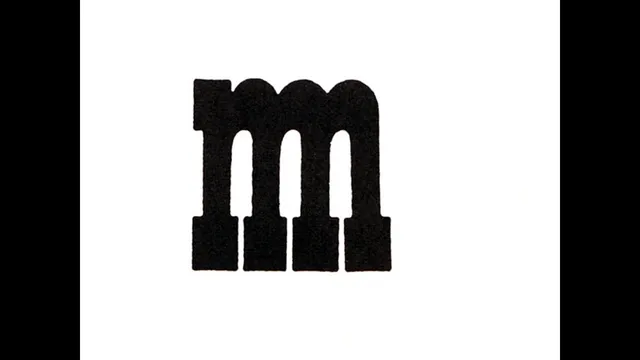
The search for even smaller units continues with two-letter poems attributed to Geof Huth: “fit / n” and “nought / t,” plus a two-letter “amalgam” where an “L” and an “Y” combine into a single character to express the difference between “strange” and “strangely.” Guinness records once credited Saroyan with the shortest poem, including a “m” with an extra hump—an image-like letter that blurs whether it’s text or a visual symbol.
The transcript then expands the definition further: poetry can be a purposeful gap. It cites compositions that are essentially “places where language could go,” and even silence as music, including John Denver’s “Ballad of Richard Nixon,” sold on iTunes as silence. The point lands with a broader critique of record-keeping: Guinness stopped listing records for the shortest song, poem, and concert, arguing that competing to be “shortest” trivializes the activity. Even so, the takeaway is that tiny poems—down to a letter, a fingerprint, or a meaningful pause—can still carry enormous perspective, because they function as narration and commentary, not just as length.
Cornell Notes
The transcript argues that “shortest poem” is less about counting words and more about whether a minimal unit—letter, altered spelling, combined character, or silence—creates meaning beyond its literal form. Poetry is treated as literary art that uses aesthetic or rhythmic properties to communicate more than ordinary language would. Examples range from Hemingway’s six-word story and Gillilan’s “Fleas” couplet to Muhammad Ali’s four-letter “me / we,” Aram Saroyan’s “Lighght,” and even single-letter or image-like characters. The discussion ends by extending poetry to purposeful absence, including silence as music, while noting Guinness stopped tracking these records because “shortest” contests can trivialize the art. The practical takeaway: brevity can still be a vehicle for narration and perspective.
Why doesn’t the transcript treat “shortest poem” as a strict word-count problem?
What makes Muhammad Ali’s “me / we” count as poetry in this framework?
How does Aram Saroyan’s “Lighght” turn a simple word into something poem-like?
What’s the significance of treating letters as images or symbols (like the “m” with an extra hump)?
How does the transcript justify silence as poetry or art?
Why did Guinness stop listing records for shortest poems and songs?
Review Questions
- What definition of poetry is used to justify poems that are only letters or even silence?
- Choose one example (Ali’s “me / we,” Saroyan’s “Lighght,” or the “m” with an extra hump) and explain what extra meaning the minimal form creates.
- Why does the transcript suggest record-keeping about “shortest” can miss what makes the art powerful?
Key Points
- 1
Poetry is framed as literary art where aesthetic or rhythmic properties make the result mean more than ordinary language would.
- 2
Extreme brevity can still carry theme and narration, as shown by Muhammad Ali’s “me / we” and its message about collective uplift.
- 3
Aram Saroyan’s “Lighght” demonstrates how a tiny spelling change can shift sound, texture, and interpretation.
- 4
Single letters and letter-like symbols can function as poems when their visual form adds meaning beyond their literal identity.
- 5
Purposeful absence—silence or gaps where language could go—can count as art when it communicates significance.
- 6
Guinness stopped tracking “shortest” records, arguing that the competition for minimal length trivializes the activity.
- 7
Even when “shortest” is disputed, the transcript treats minimal poems as perspective-shaping commentary rather than mere trivia.