What Is The Speed of Dark?
Based on Vsauce's video on YouTube. If you like this content, support the original creators by watching, liking and subscribing to their content.
Darkness in everyday scenes is the absence of photons, so it changes shape when light is blocked or unblocked—not because darkness itself travels as a physical entity.
Briefing
“The speed of dark” is mostly a physics trick: what looks like darkness racing across space is either light moving at light speed or a geometric change that carries no new information faster than light. Light travels at the maximum speed allowed for physical influence, and darkness appears to “move” because it’s the absence of photons—an unfilled gap that changes shape only when newly unblocked light arrives. In that sense, the darkness you experience is not a substance traveling through space; it’s the timing of when light stops reaching a point.
A classic example is a shadow. A shadow can stretch and sweep across a surface faster than light would travel if you track the shadow’s edge alone—such as when a shadow cast from Earth reaches the Moon. The edge of the shadow can cover thousands of kilometers in the same time it takes a person’s finger to move only centimeters. That sounds like a light-barrier violation, but it isn’t, because no information is transmitted from the “old” shadow position to the “new” one faster than light. The relevant causal chain runs from the source to each point on the shadowed region at light speed; the shadow’s motion is a geometric consequence of how the unblocked region changes.
The transcript then sharpens the idea by describing shadow anatomy. The umbra is the fully blocked region, while the penumbra is where only part of the light source is blocked. When penumbras overlap, the combined blocking can create a “shadow blister,” a visible bulging effect as dark regions merge. Even here, the apparent super-fast behavior is tied to how overlapping gaps in illumination evolve, not to photons or signals sprinting across space.
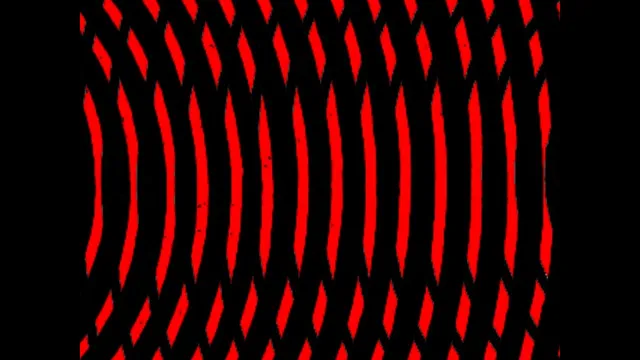
From there, the discussion turns to “fast darkness” that really can move in superluminal ways—again without breaking the information limit. When two lines intersect, the intersection point can move faster than light. The same geometric logic applies to wave interference: destructive interference produces darkness, and under certain conditions the dark patches can oscillate or shift faster than the underlying light waves. The key is that these faster-than-light motions are about where the pattern of cancellation appears, not about faster-than-light transfer of usable information.
The final pivot broadens “darkness” into ignorance. A bank robber in 1995, McArthur Wheeler, used lemon juice as “invisible ink” and assumed it would make him invisible to cameras—an extreme case of the Dunning–Kruger effect, where people overestimate what they know because they don’t yet understand how much remains unknown. The transcript links this to a growing “circumference of darkness” around knowledge: as learning expands, so does the boundary of what’s still unanswered. It cites ideas from George Bernard Shaw and Albert Einstein to frame ignorance as a driver of science, not just a deficit—facts are the snapshots, while ignorance is the fuel that keeps inquiry moving. In the end, the “speed” of darkness becomes the rate at which new questions outpace the answers, and the practical takeaway is to value what you don’t know as the starting point for discovery.
Cornell Notes
The transcript argues that “darkness” doesn’t behave like a physical thing that can outrun light. In everyday cases such as shadows, darkness is the absence of photons, and the apparent motion of a shadow edge comes from geometry: each point becomes dark only when light is blocked or unblocked, with causality still tied to light speed. Even when a shadow’s boundary can sweep across large distances quickly, it doesn’t transmit information faster than light.
It then describes two mechanisms for “fast darkness” patterns: the superluminal motion of geometric intersection points and the superluminal appearance of dark regions from destructive interference in waves. Finally, the discussion reframes darkness as ignorance, using the Dunning–Kruger effect and quotes attributed to Shaw and Einstein to suggest that learning expands the “circumference of darkness,” driving science forward.
Why does a shadow’s edge sometimes appear to move faster than light, and why doesn’t that break physics?
What’s the difference between umbra and penumbra, and how does that relate to the “shadow blister” effect?
How can a geometric intersection point move faster than light without carrying new information?
How does destructive interference create “dark patches” that can appear to move faster than the waves?
What does the lemon-juice bank robbery story illustrate about knowledge and ignorance?
How does the transcript connect scientific progress to a growing “circumference of darkness”?
Review Questions
- Give two reasons why a shadow’s apparent superluminal motion does not imply faster-than-light information transfer.
- Explain how destructive interference can produce dark regions whose apparent motion can exceed the speed of the underlying waves.
- How does the Dunning–Kruger effect relate to the transcript’s idea of ignorance expanding as knowledge grows?
Key Points
- 1
Darkness in everyday scenes is the absence of photons, so it changes shape when light is blocked or unblocked—not because darkness itself travels as a physical entity.
- 2
A shadow can appear to move faster than light because its boundary is a geometric pattern, but each point becomes dark only through causal influence that still propagates at light speed.
- 3
The umbra (fully blocked region) and penumbra (partially blocked region) determine how shadows look, and overlapping penumbras can create a visible “shadow blister” effect.
- 4
Geometric features like the intersection point of two moving lines can shift faster than light without violating causality because they don’t carry new information.
- 5
Destructive interference can make cancellation zones (“dark patches”) appear to move faster than the underlying wave pattern, since superposition governs where darkness occurs.
- 6
The transcript reframes “darkness” as ignorance: limited knowledge can cause overconfidence (Dunning–Kruger), while deeper learning expands the boundary of what remains unknown.
- 7
Science advances by treating ignorance as fuel—facts are snapshots, but unanswered questions drive the next steps of inquiry.