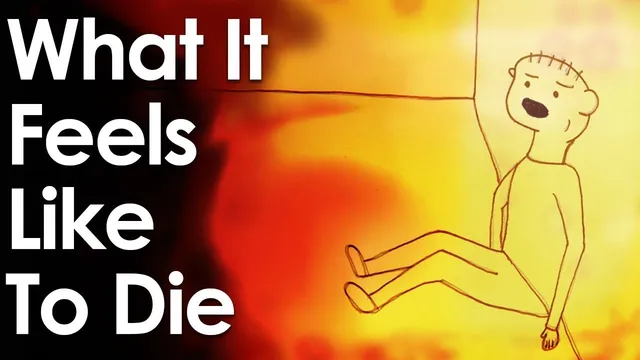
What It Feels Like To Die (Animated Short)
Based on Pursuit of Wonder's video on YouTube. If you like this content, support the original creators by watching, liking and subscribing to their content.
A death experience is framed as an internal reckoning: the “judge” is the man’s own self stripped of ego and mental chemistry.
Briefing
A man wakes in a blank, doorless white space after a car accident, only to learn the experience is death—and that the “voice” in his head is effectively his own self, stripped of the usual mental filters. In this in-between moment, he’s told he’ll soon watch his entire life play out “objectively,” without ego, pressure, or the comforting distortions that come from being alive. The premise matters because it turns mortality into a psychological reckoning: not just an ending, but a forced audit of choices, priorities, and missed chances.
The conversation quickly shifts from confusion to an unsettling clarity. He asks who the voice belongs to, and it answers that it’s him—either the identity he built from language and self-awareness, or the brain’s “you” construct. As the chemicals of life drain away, recognition breaks down, but the voice insists it will still be present “for a tiny bit longer.” Then the life review begins, delivered as fragmented memories and blunt judgments rather than a comforting narrative.
The fragments land like an itemized list of regrets. He “loved” and “trusted” people, yet still failed to protect his own emotional needs. He drank too much. He took too long with someone named Sarah, and she moved on. He worked hard for a company that made him “scared all the time,” sacrificing a third of his life to fear. He never truly stood up for himself, rushed into marriage not because he found the right person, and kept wanting to “stop time”—to have more time—without acting on it. The voice also points to unfinished dreams: sailing, writing a book, and the decision to never follow through.
When the man realizes the meaning of it all, he tries to bargain with the moment. He lists a full set of changes he would make—reconnecting with friends, being kinder and more understanding, improving communication with his wife, forgiving his parents, forgiving himself, getting healthier, exercising, eating better, taking chances, laughing more, worrying less, and enjoying life instead of living in anxiety. But the voice cuts him off: he’s dead, and the chance to implement those resolutions is gone forever.
The short ends on that hard stop. The final takeaway isn’t supernatural spectacle; it’s the emotional logic of a life review that removes excuses. In death’s instant, the character finally understands what went wrong and what he would do differently—then loses the ability to do anything at all. The sting is the contrast between clarity and action, and the way regret becomes a mirror held up without mercy.
Cornell Notes
After a car accident, a man wakes in a white, doorless space and learns he’s dead. A voice identifies itself as his own self—the “you” his brain attached to identity—now stripped of the usual ego and mental chemistry that make life feel coherent. As the life review begins, memories arrive as sharp, regret-focused fragments: drinking too much, losing Sarah by taking too long, working for a fearful company, failing to stand up for himself, rushing into marriage, and postponing dreams like sailing and writing a book. He responds with a long list of resolutions—better relationships, health, forgiveness, and taking chances—but the voice stops him: death means those changes can’t happen. The moment turns mortality into an unforgiving audit of choices.
How does the story define the “voice” the man hears, and why does that matter to the life review?
What specific regrets are highlighted during the life review?
Why does the life review feel “objective,” and what changes for the man emotionally?
What resolutions does the man try to make after understanding his mistakes?
How does the story undercut the man’s attempt to change, and what is the consequence?
Review Questions
- Which parts of the life review point to avoidance or fear rather than isolated mistakes?
- How does the story’s idea of identity (“the voice” as the brain’s “you”) affect the meaning of the life review?
- What resolutions does the man list, and which regret themes do they directly respond to?
Key Points
- 1
A death experience is framed as an internal reckoning: the “judge” is the man’s own self stripped of ego and mental chemistry.
- 2
The life review is presented as “objective,” removing the pressures and self-protective distortions of being alive.
- 3
Regrets cluster around fear-driven work, delayed action, and failure to advocate for himself.
- 4
Relationships are treated as consequences of timing and communication—Sarah moves on after he takes too long, and marriage is rushed.
- 5
Unfinished dreams (sailing, writing a book) symbolize procrastination and the desire for “more time” without follow-through.
- 6
The story turns insight into tragedy by showing that clarity arrives at the exact moment action becomes impossible.
- 7
The final emotional punch comes from the contrast between a detailed list of intended changes and the inability to carry them out.