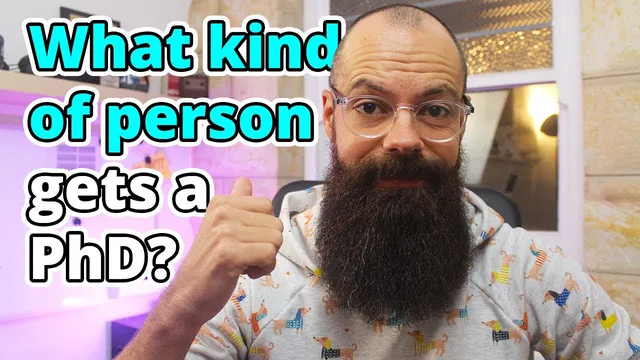
What kind of person gets a PhD? Is this YOU?
Based on Andy Stapleton's video on YouTube. If you like this content, support the original creators by watching, liking and subscribing to their content.
Most PhD candidates fall into the “no clear plan afterward” category rather than the “already know the next step” category.
Briefing
A PhD tends to attract two extremes of people: those who already know what they want to do next, and those who have no clear plan at all. The practical warning is blunt—if someone enters a PhD without a credible idea of what they’ll do afterward, the time investment can become a “massive” waste, even if the usual narrative promises that more credentials automatically unlock better opportunities.
Most people, based on lived experience in academia, fall into the “I don’t know what I want to do” camp rather than the “I have a plan” camp. The promise that qualifications lead to opportunity may hold for bachelor’s degrees that directly qualify someone for a specific job. But a PhD is different: it can stretch for years, and without a plan for the end point, the payoff is uncertain.
From there, the transcript breaks PhD candidates into several recognizable types. One major group pursues a better life—often tied to where they want to live. A personal example centers on choosing Australia for the PhD largely because it aligned with a desired destination and, crucially, because visa pathways were more straightforward. That decision was shaped by the supervisor’s willingness to argue for an international fee waiver, which made the move easier and helped the candidate build an adult life around the research.
Another group aims at becoming a college professor but misunderstands what that job actually entails. The day-to-day reality includes a blended workload—teaching, research, and administration—plus ongoing demands like outreach and securing funding. The transcript pushes back on the “academic freedom” dream: the work is not endless exploration, and many people finish the PhD realizing they don’t want their supervisor’s role.
At the opposite end sits the “unicorn” candidate: someone who genuinely loves the subject and treats research like a hobby. The transcript calls this rare, citing an example of a person who built a business from their research and stayed energized by discovery even outside formal lab hours.
Between unicorn and professor-chaser is a more common middle: people who don’t love the topic but end up there anyway, or who mainly want to avoid “a job” because jobs feel like desk-bound boredom after years of studying something they can already do well. Even when motivation is shaky, the transcript argues that persistence is the real common denominator. Regardless of why someone starts, most eventually reach the same finish line: a thesis they’re proud of, demonstrating both boundary-pushing in the field and personal endurance in completing a complex process—until the moment they decide, with months left, “this has to finish.”
Cornell Notes
The transcript frames PhD motivation as a spectrum: some candidates have a clear plan, while most start without knowing what they’ll do afterward. That uncertainty matters because a PhD can be a long, high-cost commitment, and the usual “more qualifications bring better opportunities” story may not hold unless there’s a post-PhD direction. Several candidate types appear: people seeking a better life (often tied to visas and relocation), people chasing a professor career who underestimate the teaching/research/admin workload, and rare “unicorn” researchers who truly love the subject. Still, nearly everyone shares one eventual truth—finishing requires persistence and purpose, even if the original reason for starting was vague.
Why does the transcript warn that a PhD without a post-PhD plan can be a “massive” waste of time?
What “PhD types” are described, and how do their motivations differ?
How does the transcript challenge the “academic freedom” dream for future professors?
What makes the “unicorn” researcher rare, according to the transcript?
What common experience unites PhD students, regardless of why they start?
Review Questions
- Which motivation type best matches someone who chooses a PhD primarily to secure a visa and stay in a particular country, and what tradeoffs does that imply?
- How does the transcript’s description of a college professor’s workload undermine the idea of “academic freedom”?
- Why does the transcript suggest that persistence matters more than the original reason for starting a PhD?
Key Points
- 1
Most PhD candidates fall into the “no clear plan afterward” category rather than the “already know the next step” category.
- 2
Bachelor’s degrees often map more directly to careers, but PhDs can become a poor investment if the end goal is unclear.
- 3
Choosing a PhD can be driven by life logistics—especially where someone wants to live and how visa pathways work.
- 4
Aspiring to be a professor is risky if the full job reality (teaching, research, administration, outreach, funding pressure) is underestimated.
- 5
True research passion—the “unicorn” case—is described as rare, even among people who do excellent work.
- 6
Many candidates start for avoidance reasons (e.g., not wanting a desk job), but completion still depends on persistence.
- 7
Despite different starting motivations, most students eventually finish with a thesis that reflects both field contribution and personal endurance.