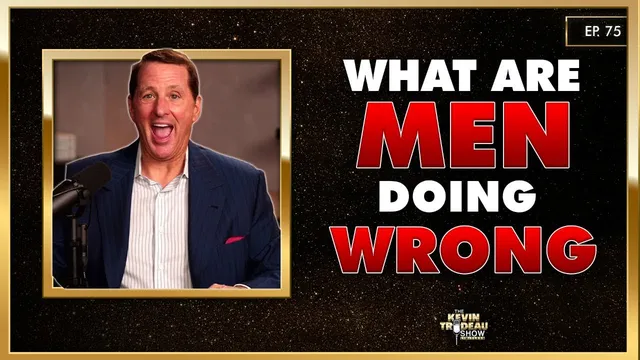
What Men Do Wrong In Relationships | Ep. 75
Based on The Kevin Trudeau Show: Limitless's video on YouTube. If you like this content, support the original creators by watching, liking and subscribing to their content.
Grooming and clean, coordinated clothing are framed as subconscious signals that the relationship is valued.
Briefing
The central message is blunt: most relationship problems blamed on “women” are framed as avoidable mistakes men make—starting with basic day-to-day behavior and ending with deeper communication and intimacy skills. The practical payoff promised is straightforward: better connection, more satisfying sex, less stress and anxiety, and a relationship that feels more secure because the man is responding to what his partner actually needs.
A first cluster of “fixes” focuses on presentation and attraction. Grooming matters because it signals effort and self-respect; clothing should be clean, not wrinkled, and coordinated even if the style is casual. Smell is treated as a major subconscious driver of attraction: men are urged to be aware of body odor, shower regularly, use deodorant/antiperspirant, and avoid either excessive cologne or neglecting cleanliness. Cologne is described as optional, but awareness isn’t. The transcript also claims pheromones can create a “magnetic pull,” citing a double-blind-style bar experiment where women gravitated toward a man sprayed with pheromones versus water.
Another major theme is masculinity expressed as confidence and direction. Men are told not to “act like boys,” with confidence, drive, and ambition positioned as traits women respond to both consciously and subconsciously. A story about a woman who stopped dating “boys” and started dating “men” is used to illustrate that the difference is less age and more certainty—knowing where life is going and committing to it.
Communication is where the advice becomes more behavioral. Men are urged to listen more than they talk, letting women speak and avoiding the assumption that women think and act like men. Specific “listening” phrases are recommended—lean in, make eye contact, then say “I hear you” or “I get what you’re saying,” even repeating the woman’s words to show attention. When a woman shares a problem, the transcript draws a sharp line: don’t jump to fixing it. Offer validation instead—“I can imagine what you’re feeling now”—because advice-seeking is framed as something women rarely ask for in those moments.
The relationship blueprint then shifts to matching emotional needs through “love languages.” The transcript lists five: words of affirmation, receiving gifts, acts of service, physical touch, and quality time. The key instruction is to identify the partner’s love language (via a free online test) and then consistently use it; using the wrong language is portrayed as a reliable way to feel disconnected.
Finally, the advice expands into trust and intimacy. Men are told to keep agreements and promises, because women remember broken commitments and subtle failures (like being late without notice) damage credibility. Leadership in dating is emphasized—men should plan specifics rather than leaving everything open-ended. Intimacy skills are also treated as learnable: men are urged to improve kissing, sex, and oral sex, and to raise awareness of the partner’s feelings rather than acting from low consciousness or self-focus. When conflict happens, invalidating a woman’s emotions is framed as a major mistake; the recommended response is to acknowledge how actions could feel to her and apologize.
Overall, the transcript presents relationship success as a skill set: hygiene and attraction cues, confidence and leadership, validation-based listening, love-language alignment, promise-keeping, and improved intimacy—each offered as a lever to reduce friction and increase closeness.
Cornell Notes
The transcript argues that many relationship failures stem from predictable mistakes men make, not from fate or women’s “mystery.” It highlights grooming and smell as subconscious attraction signals, then pivots to confidence and direction as the core of “acting like a man.” Communication advice centers on listening, validating feelings instead of fixing problems, and using phrases like “I hear you” to prove attention. Emotional connection is framed through the “five love languages,” with men urged to identify their partner’s love language and consistently act on it. The final sections add promise-keeping, taking the lead on dates, improving intimacy skills, and avoiding emotional invalidation during conflict.
Why does grooming and smell get treated as a relationship “mistake” rather than a superficial issue?
What listening behaviors are recommended when a woman shares concerns or problems?
How does “love language” function as a practical tool in the transcript?
What does “acting like a man” mean in this advice framework?
What are the transcript’s rules for conflict and trust?
Review Questions
- Which specific phrases are suggested to show listening and validation, and how do they differ from advice-giving?
- How would you determine which of the five love languages a partner responds to, and what would you do differently if you guessed wrong?
- What behaviors in dating and conflict are framed as trust-damaging in the transcript, and what replacement behaviors are recommended?
Key Points
- 1
Grooming and clean, coordinated clothing are framed as subconscious signals that the relationship is valued.
- 2
Men are urged to manage body odor carefully and avoid both neglecting smell and overusing cologne.
- 3
Confidence, drive, and clear life direction are presented as the core of “acting like a man.”
- 4
Listening is treated as a skill: let the partner talk, lean in, make eye contact, and use validation phrases like “I hear you.”
- 5
When a woman shares a problem, validation is prioritized over fixing it; “I can imagine what you’re feeling now” is recommended.
- 6
Emotional connection is built by matching the partner’s love language—words of affirmation, gifts, acts of service, touch, or quality time.
- 7
Promise-keeping and emotional validation are positioned as trust foundations; broken agreements and invalidating feelings are described as major relationship damage.