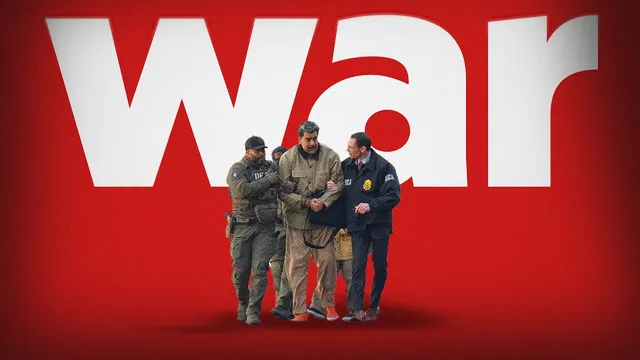
What Now?
Based on Second Thought's video on YouTube. If you like this content, support the original creators by watching, liking and subscribing to their content.
U.S. strikes tied to Venezuela are portrayed as part of a regime-change effort, with critics pointing to war-crime concerns and the lack of due process for civilians.
Briefing
U.S. strikes and escalating operations tied to Venezuela are being framed as both a war crime issue and a bid for regime change—an approach that, critics say, has long been paired with oil and corporate interests. The central through-line is that Washington’s justification (“Maduro is a drug runner” connected to a terrorist cartel) is now moving from political talking points into legal and institutional channels, even as many Americans oppose a war and question the stated rationale. The result is a fast escalation: early attacks in the Caribbean and along Venezuela’s coast have reportedly shifted into more explicit language about “war with Venezuela,” without a congressional declaration—raising the stakes from alleged cross-border violence to open-ended political takeover.
A second, more structural claim is that Venezuela is not an isolated case. The push for a leadership change is described as part of a longer pattern of U.S. destabilization in Latin America—sometimes covert, sometimes overt—aimed at reshaping governments to unlock resources and align markets. The transcript points to earlier episodes in the region, including attempts to remove or replace leaders through plots, aid pressure, and “transition frameworks.” In Venezuela specifically, it cites a sequence of efforts: a failed plan to kidnap Maduro years earlier, the Juan Guaidó episode, border-aid strategies, and a later attempt to engineer a coup that collapsed when key generals stayed loyal.
What’s different now, according to the analysis, is not the existence of interference but the context around U.S. power. After decades of U.S. hegemony—supported by alliances, economic dominance, and overwhelming military reach—the transcript argues that the balance has shifted. China’s economic rise, persistent diplomatic resistance at the UN (including repeated votes against U.S. positions on Cuba), and growing reputational damage even among close allies are presented as evidence that Washington can’t rely on broad obedience anymore. As a consequence, the strategy is said to be changing from global leadership to regional dominance: controlling Latin America through a mix of pressure, incentives, and political engineering.
That regional approach is also linked to domestic policy cuts that, critics say, undermine U.S. soft power. The transcript highlights planned elimination of most USAID foreign aid contracts and large reductions in overseas assistance, arguing that while USAID isn’t purely humanitarian, it has funded emergency rations, medical supplies, and disease response—benefits that can reduce preventable deaths. The claim is that cutting these programs quickly translates into higher mortality, especially for children, and that the reputational damage is hard to reverse.
Finally, the transcript challenges the idea that the current mix of tariffs, war footing, and aid reductions is “short-sighted stupidity” only in the sense of being reckless. Instead, it argues the U.S. is acting from a position of diminished leverage—scrambling to preserve elite gains while shifting costs onto ordinary people. The forecast is grim: even if the Venezuela gambit benefits oil companies and elite investors, the broader outcome would be more suffering abroad, more distraction from domestic problems, and worsening conditions at home unless policy priorities change.
Cornell Notes
The transcript frames U.S. strikes and detention/capture developments in Venezuela as part of a broader push for regime change, justified publicly through claims about drug trafficking and ties to foreign terrorist groups. Critics argue the escalation is rapid and legally fraught, moving from alleged war crimes to explicit “war” language without congressional declaration. The analysis places Venezuela within a long pattern of U.S. destabilization in Latin America, now intensified by a shift from global hegemony toward regional dominance. It also links foreign policy to domestic cuts, especially reductions in USAID funding, arguing that these changes can increase preventable deaths and erode soft power. The bottom line: elite and corporate interests may benefit, but the costs fall on ordinary people and can worsen both foreign and domestic conditions.
Why does the transcript treat the Venezuela escalation as more than a routine counter-drug operation?
What evidence is used to argue that Venezuela fits a long-running U.S. pattern in Latin America?
How does the transcript explain why U.S. behavior is changing now?
What role do USAID and foreign aid cuts play in the transcript’s argument?
How does the transcript connect foreign policy to domestic economic pain?
Review Questions
- What specific chain of escalation does the transcript use to argue that Venezuela is moving from limited strikes to regime-change war footing?
- How does the transcript connect U.S. diminished global leverage to a shift toward regional dominance in Latin America?
- Which domestic policy actions (tariffs, aid cuts, or other measures) does the transcript cite as evidence that the costs of the strategy are falling unevenly?
Key Points
- 1
U.S. strikes tied to Venezuela are portrayed as part of a regime-change effort, with critics pointing to war-crime concerns and the lack of due process for civilians.
- 2
The transcript argues that the “drug trafficking” justification is becoming institutional, including through movement into the American judicial system.
- 3
Venezuela is presented as one case within a broader historical pattern of U.S. destabilization and leadership-removal attempts across Latin America.
- 4
A central explanation is that U.S. global hegemony has weakened, pushing strategy toward regional dominance rather than worldwide control.
- 5
Planned reductions in USAID and other foreign aid are framed as eroding soft power and increasing preventable deaths through the loss of emergency health and relief funding.
- 6
The transcript links the foreign-policy push to domestic economic strain, including tariff-driven price increases and job losses, while suggesting elites benefit disproportionately.
- 7
The overall warning is that even if corporate interests gain in Venezuela, the likely outcome is more suffering abroad and worsening conditions at home.