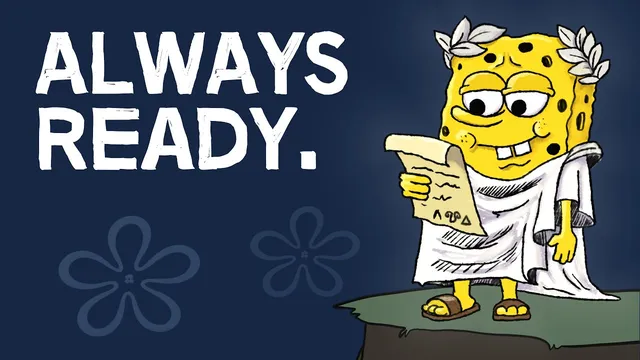
What SpongeBob Understands About Life (That You Don’t)
Based on Einzelgänger's video on YouTube. If you like this content, support the original creators by watching, liking and subscribing to their content.
Happiness is framed as eudaimonia (flourishing), achieved through virtuous living rather than through external achievements like wealth or status.
Briefing
SpongeBob SquarePants’ everyday cheer isn’t treated as a lucky accident—it’s framed as a working model of Aristotle’s “eudaimonia,” or flourishing. The core claim is that real happiness doesn’t come from chasing wealth, status, or power, but from living virtuously day to day: choosing the right emotional and moral “middle,” doing ordinary work with excellence, and leaning on friendships and basic “furniture of fortune” that make virtue easier.
The argument starts by contrasting modern assumptions about happiness with what plays out in Bikini Bottom. People there pursue pleasure, honor, and money—yet those paths never deliver lasting satisfaction. Mr. Krabs treats wealth as the highest good; Squidward seeks recognition as an artist; Plankton longs for power and success. Their striving is portrayed as endless and ultimately unfulfilling, because each goal depends on external conditions and can be lost or never reached.
SpongeBob, by contrast, is consistently happy without chasing those same external prizes. He lives simply, works at The Krusty Krab, and shows little interest in climbing social ladders. That mismatch becomes the entry point for ancient Greek ethics. Aristotle’s Nicomachean Ethics argues that happiness is the final end—something pursued for its own sake—while many other targets are merely means. Happiness, in this view, is not a feeling that arrives after achievement; it’s the result of living well through virtue.
Virtue, the transcript emphasizes, is guided by Aristotle’s “Golden Mean,” avoiding both excess and deficiency. SpongeBob’s courage is used as a test case: he can be overenthusiastic, but he also knows when to stop reckless behavior. In “Pre-Hibernation Week” (S2:E7), he quits when Sandy Cheeks pushes extreme challenges too far—rejecting recklessness without falling into cowardice. In The SpongeBob SquarePants Movie, he courageously goes to Shell City to retrieve King Neptune’s crown after Plankton frames Mr. Krabs, aiming to save a life rather than protect his comfort.
A second virtue cluster—friendliness, generosity, and hospitality—appears in “Can you spare a dime?” (S3:E7). SpongeBob offers Squidward a place to stay after he becomes homeless, then overextends: massages, breakfast in bed, and constant care slide toward servility when Squidward exploits the kindness. The transcript treats SpongeBob’s eventual anger as morally functional. Aristotle’s view of anger is invoked: anger can be good when it’s directed at the right person, degree, time, and purpose. SpongeBob’s outburst becomes the correction that restores the Golden Mean.
Work is another pillar. SpongeBob loves flipping burgers, not because it’s glamorous, but because he performs it with excellence. Making Krabby Patties becomes an opportunity for virtue in action—an Aristotelian point illustrated by the harpist example: playing is not enough; playing well matters.
Finally, flourishing still needs supports. External goods aren’t virtues themselves, but Aristotle calls them “furniture of fortune”—friends, stability, and enough resources to act nobly. SpongeBob lacks some traditional advantages (no kids, limited influence), yet he has a best friend in Patrick Star, a beloved pet in Gary, community ties, and a stable home and food. In everyday life, his radical optimism, joy in ordinary activities, resilience after setbacks, and the centrality of friendship (captured by the F.U.N. song) complete the picture. The result is a portrait of happiness as a practiced way of living—imperfect, but consistently oriented toward virtue and connection.
Cornell Notes
The transcript argues that SpongeBob SquarePants embodies Aristotle’s idea of eudaimonia—flourishing—by living virtuously rather than chasing external rewards. While Bikini Bottom’s characters pursue pleasure, honor, money, or power (and repeatedly fall short), SpongeBob finds happiness in the way he lives day to day: aiming for the Golden Mean, doing ordinary work with excellence, and recovering quickly when things go wrong. His virtues show up in specific storylines, such as balancing courage in “Pre-Hibernation Week” (S2:E7) and practicing generosity and hospitality in “Can you spare a dime?” (S3:E7), even when he risks excess. The transcript also stresses that flourishing still depends on “furniture of fortune”—friends, stability, and basic resources—so SpongeBob’s relationships and home life matter.
Why does the transcript treat wealth, fame, and power as unreliable routes to happiness?
What is the “Golden Mean,” and how does SpongeBob illustrate it?
How does “Can you spare a dime?” (S3:E7) show virtue turning into excess?
Why does the transcript defend SpongeBob’s anger as potentially virtuous?
How does SpongeBob’s job connect to Aristotle’s idea of happiness through excellence?
What role do friends and basic resources play in flourishing?
Review Questions
- How does the transcript distinguish between happiness as a feeling and happiness as eudaimonia (flourishing)?
- In what ways does SpongeBob’s behavior in “Can you spare a dime?” (S3:E7) demonstrate both virtue and the risk of excess?
- Why does the transcript argue that ordinary work can become a route to flourishing when performed with excellence?
Key Points
- 1
Happiness is framed as eudaimonia (flourishing), achieved through virtuous living rather than through external achievements like wealth or status.
- 2
Bikini Bottom’s pleasure-, honor-, and money-seeking characters are portrayed as stuck because those goals depend on conditions outside the self.
- 3
Aristotle’s Golden Mean is used to interpret SpongeBob’s character: virtue sits between deficiency and excess (e.g., courage between cowardice and recklessness).
- 4
SpongeBob’s generosity and hospitality can slide into servility when others exploit his kindness, and his anger functions as boundary-setting correction.
- 5
SpongeBob’s job at The Krusty Krab becomes an Aristotelian example of excellence in activity: doing ordinary work well can support flourishing.
- 6
Flourishing still requires external supports—friends, stability, and basic resources—so SpongeBob’s relationships (especially Patrick Star and Gary) matter.
- 7
SpongeBob’s radical optimism and resilience are treated as practical habits that help him recover quickly and keep living toward virtue.