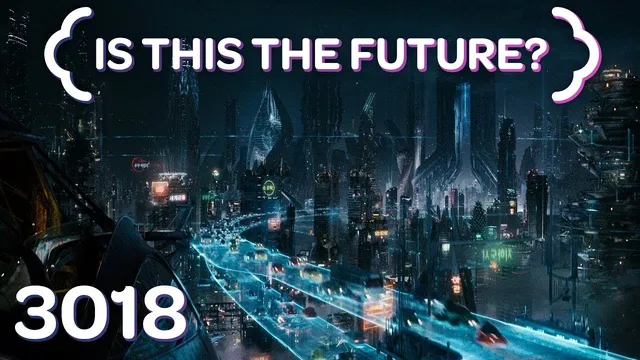
What Will Happen in the Next 1000 Years?
Based on Second Thought's video on YouTube. If you like this content, support the original creators by watching, liking and subscribing to their content.
Off-world colonization is presented as a redundancy plan against extinction-level disasters that could strike Earth.
Briefing
Over the next 1,000 years, humanity’s biggest fork in the road is survival: whether people spread beyond Earth in time to avoid extinction-level shocks, or remain concentrated on a single fragile planet. The most plausible pathway presented is becoming interplanetary—by the mid-2030s at the latest, with government agencies such as NASA and private firms like SpaceX pushing toward human landings on Mars. Even then, full “Earth-like” living on Mars is portrayed as unlikely by 3018 because creating a breathable atmosphere would take far longer than a millennium. A more realistic near-term vision is long-term habitation in protective suits and indoor environments, followed by gradual expansion into large bio-domes that would allow more normal life.
Leaving Earth is framed as urgent because disaster is statistically inevitable: a planet-killing asteroid, a runaway climate catastrophe, or other man-made cataclysms could end civilization if humanity stays planet-bound. The argument extends beyond Mars. Venus is pitched as a potential colonization target because its cloud layer offers a relatively temperate environment above the surface, enabling floating “cloud cities” while terraforming efforts proceed below. The core logic is simple: the more independent footholds humanity builds across worlds, the lower the odds that a single event wipes out the species.
Back on Earth, the transcript lays out a grim baseline—continued pollution, ozone depletion, ecosystem collapse, and runaway climate change—paired with a conditional lifeline. If societies shift quickly toward greener technology and stop destructive consumption patterns, the future could improve dramatically. The stakes are quantified: fossil fuels could run out in under 110 years without alternatives, while solar power might supply roughly a third of energy needs by 2060 and, with wind and geothermal support, renewable energy could reach near-totality by 2100. That transition is positioned not only as a climate fix but as a platform for broader technological progress.
One of the most consequential advances expected is transhumanism: merging human bodies with machine capabilities. By around 2060, computers are described as performing most tasks as well as—or better than—humans, pushing society either toward machine-run labor or deeper human-machine integration. Potential benefits include augmented senses and interfaces, direct brain-to-device downloads, and replacement of damaged body parts—promising longer lives and higher productivity. But the risks are equally emphasized: cybersecurity threats to brain-linked systems, possible rejection of artificial components, and social instability such as overpopulation if lifespans expand faster than governance can adapt.
The transcript also sketches two broad societal futures. One is an “automated utopia” where humans pursue personal goals; the other is a loss of status as AI outpaces human abilities, potentially producing a society less connected in person and more dependent on virtual life. Cultural change is expected regardless—more global connectivity, fewer language barriers, possibly shared currencies, and a renaissance in arts and humanitarian efforts. Some even speculate that uploading consciousness could defeat death, but the central uncertainty remains: whether humanity can cooperate enough to choose the better path—and whether people still exist in 1,000 years.
Cornell Notes
The central claim is that humanity’s survival over the next 1,000 years depends on escaping Earth’s single-point-of-failure risks and building off-world colonies in time. Mars colonization is treated as likely by the 2030s, but fully breathable, suit-free living by 3018 is considered unlikely; large bio-domes and long indoor life are more realistic. Earth’s future hinges on whether societies rapidly shift to renewable energy—fossil fuels could be depleted in under 110 years without alternatives—and avoid runaway climate impacts. Technological change could also reshape humanity through transhumanism, bringing major benefits like body augmentation and longer lives while raising cybersecurity, health, and social-order risks. The outcome is uncertain: an AI- and machine-heavy utopia, or a world where humans fall behind.
Why does the transcript treat interplanetary expansion as a survival strategy rather than just an ambition?
What timeline is given for Mars, and what limits are acknowledged for making it Earth-like?
How does the transcript justify Venus as a colonization target?
What energy and climate milestones are used to argue Earth could still be saved?
What are the main promises and dangers of transhumanism in the transcript?
What two competing societal futures are sketched around AI and virtual life?
Review Questions
- What survival argument links off-world colonization to extinction risk on Earth?
- Why does the transcript treat 3018 as too soon for breathable Mars, even if colonies exist?
- Which combination of energy sources is projected to make near-total renewables possible by 2100, and why does that matter for climate outcomes?
Key Points
- 1
Off-world colonization is presented as a redundancy plan against extinction-level disasters that could strike Earth.
- 2
Mars settlement is expected by the 2030s, but breathable, suit-free living is treated as unlikely by 3018 due to terraforming timelines.
- 3
Venus is pitched as a colonization candidate because its cloud layer may support floating cities while surface terraforming proceeds.
- 4
Earth’s near-term trajectory depends on whether societies rapidly cut emissions and shift to renewables before fossil fuels run out in under 110 years.
- 5
Renewable energy projections include solar supplying about a third of energy by 2060 and near-total renewables by 2100 with wind and geothermal support.
- 6
Transhumanism could expand human capabilities and lifespan, but it introduces cybersecurity, health, and governance risks.
- 7
AI-driven automation could produce either a human-centered utopia or a future where humans lose relative advantage and social cohesion declines.