What Would Colonizing Venus Look Like?
Based on Second Thought's video on YouTube. If you like this content, support the original creators by watching, liking and subscribing to their content.
Venus’s surface is far too hostile for colonization: about 450°C and roughly 90 times Earth’s atmospheric pressure have repeatedly destroyed probes.
Briefing
Venus looks like a better “backup planet” on paper than Mars—closer to Earth, similar size, and Earth-like gravity—but human colonization at the surface is effectively ruled out by extreme heat and crushing pressure. The surface sits around 450°C at the equator and experiences about 90 times Earth’s atmospheric pressure, conditions that have repeatedly destroyed probes and made even short landings impractical. That grim reality explains why Venus rarely enters the conversation as a near-term colony destination.
The path forward comes from changing where “colonization” happens. As you climb through Venus’s thick atmosphere, temperatures drop sharply; at roughly 50 km altitude, conditions are estimated to be around 75°C—far more manageable. NASA’s Jeffrey Landis points to a key mismatch between expectations and reality: the “ground level” is the problem, not the planet as a whole. In other words, Venus can be treated less like a place to stand and more like a place to float.
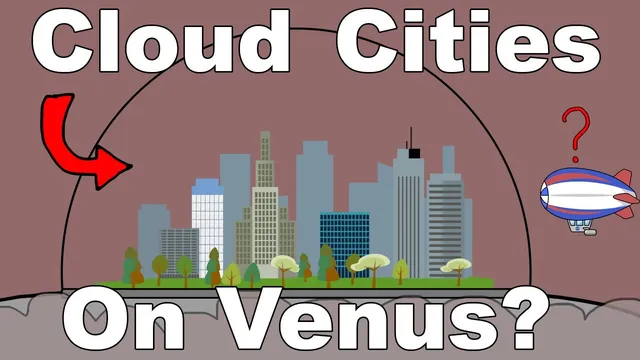
Since the upper atmosphere is dense and rich in carbon dioxide, it can provide lifting power for habitats—similar in concept to airships. Prototype “aerostat habitats” would use a balloon filled with human-safe gases to suspend small outposts above the worst of the surface environment. The upper atmosphere also offers protection: it shields against cosmic radiation with roughly Earth-like effectiveness, and it keeps the habitat away from the searing heat and pressure below. Instead of trying to hold position, these systems could ride high-altitude winds—though speeds can reach up to 340 km/h—reducing structural stress by allowing the craft to move with the atmosphere.
Early cloud colonies would still need basic life support, mainly oxygen and protection from acidic rain. But as designs improve, enclosed domes could create breathable air inside, potentially reducing dependence on bulky pressurized suits and oxygen tanks. Longer-term visions go bigger: floating cities above the clouds, supported by agriculture. Because Venus’s atmosphere is mostly carbon dioxide, plants could be grown after filtering out sulfuric acid, enabling greater self-sufficiency.
Major engineering and resource hurdles remain. Venus’s clouds are made of highly corrosive sulfuric acid and sulfur dioxide, and Venus is nearly devoid of water in usable form. Any habitat would need materials resistant to acid corrosion, and the limited water present in the acid would have to be heavily treated and filtered for human use. Importing water from Earth or nearby asteroids would be costly and slow, but may be necessary with current capabilities.
Finally, true “Earth-like” living on Venus would require terraforming—removing or converting the dense carbon dioxide atmosphere, reducing surface temperatures, and establishing a more Earth-like day-night cycle. Proposals often rely on freezing carbon dioxide and adding hydrogen or water, but these efforts are far beyond today’s technology. For now, the most plausible colonization strategy is not landing on Venus, but building habitable cloud cities above it—waiting until the engineering, materials, and life-support systems can make that floating future real.
Cornell Notes
Venus is often dismissed for colonization because the surface is lethal: about 450°C and roughly 90 times Earth’s atmospheric pressure. Yet conditions improve dramatically with altitude; around 50 km, temperatures are estimated near 75°C, and the upper atmosphere provides radiation shielding comparable to Earth. That shift enables “cloud city” concepts using aerostat habitats—balloon or airship-like structures that suspend small outposts above the hostile surface. These designs could eventually support enclosed domes, agriculture, and larger floating settlements, but they face hard constraints: corrosive sulfuric acid clouds, near-total lack of accessible water, and the long timeline required for any terraforming. The practical near-term goal is living in Venus’s upper atmosphere, not on the ground.
Why does Venus’s surface fail as a colonization target, even though Venus is similar to Earth in size and gravity?
What altitude change makes Venus potentially habitable, and what numbers are used to justify it?
How do aerostat habitats use Venus’s atmosphere to support floating colonies?
What life-support and infrastructure challenges come from Venus’s clouds and lack of water?
What would “terraforming Venus” aim to change, and why is it considered far off?
Review Questions
- What specific surface conditions on Venus make land-based colonization unrealistic, and how do those conditions change with altitude?
- How do aerostat habitats reduce the need for heavy astronaut-style pressurized suits, and what still remains necessary for survival?
- Which two resource constraints—corrosion chemistry and water availability—pose the biggest obstacles to making cloud cities sustainable?
Key Points
- 1
Venus’s surface is far too hostile for colonization: about 450°C and roughly 90 times Earth’s atmospheric pressure have repeatedly destroyed probes.
- 2
A shift in strategy—from ground to altitude—makes Venus more plausible, with estimates around 50 km altitude near 75°C.
- 3
Cloud-city concepts rely on aerostat habitats that float above the worst conditions and benefit from radiation shielding in the upper atmosphere.
- 4
High-altitude winds can reach up to 340 km/h, so drifting with the atmosphere may reduce structural stress compared with trying to hold position.
- 5
Habitat materials must resist corrosive sulfuric acid and sulfur dioxide, and breathable environments would likely start with oxygen supply before moving toward enclosed domes.
- 6
Venus’s near-total lack of accessible water is a major bottleneck; water would need to be processed from sulfuric acid or imported at high cost.
- 7
Terraforming would require major atmospheric, thermal, and rotational changes and is considered far beyond current capabilities, making cloud cities the more immediate goal.