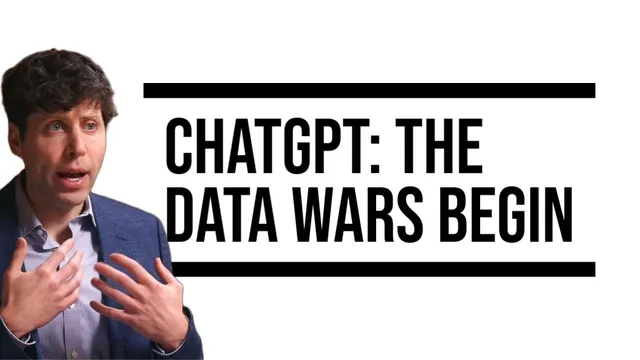
What's Behind the ChatGPT History Change? How You Can Benefit + The 6 New Developments This Week
Based on AI Explained's video on YouTube. If you like this content, support the original creators by watching, liking and subscribing to their content.
ChatGPT’s “turn off chat history” setting is described as applying only to conversations started after the change, not necessarily to older chats.
Briefing
A new ChatGPT setting that lets users “turn off chat history” is drawing attention less for privacy optics and more for what it may signal about OpenAI’s data practices—and the legal and regulatory pressure that could reshape how AI companies collect training material. The change, attributed to Sam Altman’s recent tweet, allows users to disable chat history and training for conversations started after the switch. But existing chats appear to remain eligible for training by default, and the interface links “chat history” and “training” into a single on/off choice rather than offering a clean separation between keeping personal records and opting out of model improvement.
The practical takeaway is immediate: users can check the setting via the three-dots menu in a ChatGPT conversation, then go to Settings and the relevant “data controls” area. If chat history is disabled, OpenAI still monitors chats for “abuse,” even though the user is opting out of providing data for training. For people who want to retain their chat history while avoiding training, the transcript suggests that’s not straightforward—because the product design effectively forces a tradeoff. There is also an opt-out form, but it comes with a warning that it may limit how well models address a specific use case.
Amid the privacy controversy, the feature may offer one clear benefit: an “export data” option buried in the settings that triggers an email containing a link to download a full conversation history archive. That export can be searched across all chats from the start of use to the present, giving users a concrete way to audit what they typed.
Why the timing matters: the transcript ties the announcement to looming compliance deadlines under Europe’s GDPR. An MIT Technology Review report is cited describing how it may be impossible for OpenAI to fully comply because of how AI training data is collected before any user opts in. The stakes are framed as existential—potential bans, large fines, and even orders to delete models and training data if regulators conclude the data use was illegal. Regulators across jurisdictions “from Brazil to California” are expected to watch the outcome, with the implication that GDPR-style enforcement could become a global template.
Beyond regulation, the transcript points to a widening web of data sourcing disputes and copyright claims. Examples include harvesting pirated ebooks from a site formerly known as “book ZZ” (with content still present in Common Crawl), use of Common Crawl and “The Pile” (which includes pirated books and other sensitive material), and the possibility that training sets may contain unexpected content—such as benchmark data mixed in “inadvertently,” according to a GPT-4 technical report footnote. It also raises the question of whether data contributors get paid: Reddit users, Wikipedia editors, and Stack Overflow contributors are all mentioned as potential stakeholders, with claims that major platforms are moving toward charging AI companies for training data.
The transcript then shifts to litigation and future harm. Lawsuits involving Microsoft, GitHub, and OpenAI are described, including arguments about whether plaintiffs can prove injury from tools like GitHub Copilot. The concern is that proving job loss could become easier as AI systems replace more workers, but that blocking access to a model could also create new arguments about who is “injured.” In parallel, publishers and journalists are referenced through claims that proprietary content is being used without compensation.
Finally, the transcript speculates about how this could evolve: OpenAI’s data spend might fall if models generate synthetic training data or reduce reliance on human feedback loops. Yet the immediate reality remains that users are being offered a more granular control surface while regulators and courts push AI firms toward stricter accountability for where training data comes from and who benefits from it.
Cornell Notes
ChatGPT’s new “turn off chat history” control is presented as a privacy lever, but it appears to be tightly coupled to training: conversations started after disabling history won’t be used for training, while older chats may still be eligible by default. The transcript argues this design makes it harder to keep chat logs while opting out of training. It also highlights an “export data” feature that lets users download and search their full conversation history, offering a practical audit tool. The broader context is regulatory risk under GDPR, where regulators could impose bans, fines, or even orders to delete models and training data. Copyright and scraping disputes—along with lawsuits and questions about whether contributors get paid—are framed as the next pressure points for AI companies.
What does “turn off chat history” actually change for training, and what doesn’t it change?
Why is the setting described as less flexible than it sounds?
What practical tool does the transcript highlight for users who want to audit their data?
How does GDPR enforcement enter the picture, and what could happen if compliance fails?
What kinds of training-data disputes are raised beyond GDPR?
Why do lawsuits hinge on proving “injury,” and how might that change over time?
Review Questions
- How does the transcript distinguish between disabling chat history for future conversations versus opting out for past conversations?
- What regulatory remedies under GDPR does the transcript say could extend beyond fines to model or data deletion?
- Which examples are used to question whether training-data contributors are compensated, and what legal mechanism is implied to make compensation more likely?
Key Points
- 1
ChatGPT’s “turn off chat history” setting is described as applying only to conversations started after the change, not necessarily to older chats.
- 2
The transcript claims chat history and training are linked into a single choice, making it harder to keep logs while opting out of training.
- 3
An “export data” option provides a way to download and search a user’s full conversation history via an emailed link.
- 4
GDPR enforcement is framed as a major driver of urgency, with potential outcomes including bans, large fines, and possible deletion of models and training data.
- 5
The transcript lists multiple training-data controversies involving Common Crawl, pirated ebook sources, and “The Pile,” plus concerns about unexpected benchmark mixing.
- 6
A recurring theme is whether data contributors (Reddit, Wikipedia, Stack Overflow) receive compensation as AI companies monetize training.
- 7
Litigation is portrayed as hinging on proving “injury,” which may become easier as AI tools more directly displace jobs.