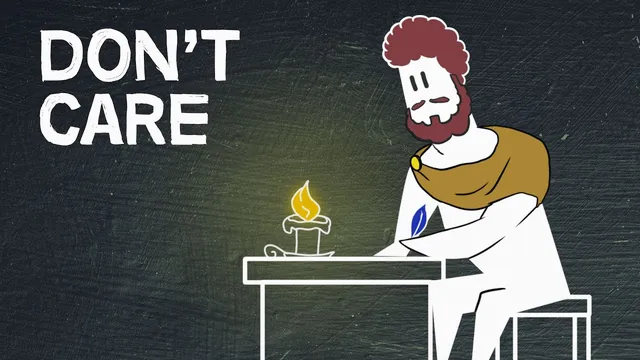
When Life Hurts, Care Less About It | The Philosophy of Marcus Aurelius
Based on Einzelgänger's video on YouTube. If you like this content, support the original creators by watching, liking and subscribing to their content.
Stoic coping starts by separating what is controllable (judgments, choices, actions) from what isn’t (Fortune, other people, disasters, aging).
Briefing
Marcus Aurelius’ core prescription for when life hurts is to stop treating uncontrollable events as if they were personal commands. Stoicism draws a hard line between what people can govern—choices, judgments, and actions—and what they can’t—other people’s behavior, wars, natural disasters, aging, and most outcomes shaped by “Fortune.” When suffering spikes, it often reflects misplaced attention: the mind rehearses scenarios that aren’t happening yet, or replays wounds that can’t be changed, then hands those imagined forces the steering wheel. The result is a kind of self-inflicted bondage, where external circumstances “pull the strings” only because attention keeps granting them power.
The argument is structured around three time horizons in Marcus Aurelius’ Meditations: future, past, and present. For the future, the misery comes from imagination, not reality. People suffer more in their thoughts than in events, because imagined threats—cancer diagnoses, financial ruin, even “Third World War” fears—exist only in the mind until they arrive. Marcus Aurelius insists that the future cannot disturb someone who can already handle the present; the same “weapons of reason” used today should be used tomorrow. This doesn’t mean pretending danger doesn’t exist. It means refusing to pre-suffer it, since the future only hurts when it is worried about now.
For the past, the key problem is that it’s unreachable and often misremembered. What’s gone is gone; there is no time machine, and even recollections are filtered through personal perspective and limited verification. Still, people cling to “I wish I could have done this differently” fantasies, trying to control what has already been flushed away. Marcus Aurelius doesn’t deny learning from history—he treats the pattern of events coming and going as useful for anticipating what tends to repeat—but he rejects the idea that dwelling on past events can change anything. The more rational move is to focus on one’s reaction: what matters is whether the response preserves justice, generosity, self-control, sanity, prudence, honesty, humility, and straightforwardness.
The present is the narrow field people actually inhabit, yet it becomes a torture chamber when people fight what Fortune delivers or cling to what they fear losing. Marcus Aurelius compares resistance to pigs squealing when they’re being sacrificed: futile, because the world’s course can’t be forced to match desires. The same goes for clinging—fear of loss still hands control to circumstances. Acceptance, in this Stoic frame, isn’t passive surrender; it’s redirecting energy toward what remains under human governance: opinions, actions, and civic virtue. Even hardship becomes “practice of virtue,” a chance to exercise rational civic character rather than scream at nature’s inevitabilities.
In short, life hurts less when attention stops being a megaphone for the uncontrollable—whether that uncontrollability is imagined future catastrophe, replayed past regret, or present events that don’t match wishes. The payoff is steadiness: unperturbed focus on the task at hand, and freedom defined by internal command rather than external outcomes.
Cornell Notes
Marcus Aurelius’ Stoic method for coping with pain centers on attention: suffering intensifies when people care about what they cannot control. Stoicism separates controllables (judgments, choices, actions) from uncontrollables (Fortune, other people, disasters, aging). Worry about the future is misery created in imagination, because future events don’t exist outside the mind until they arrive. Regret about the past is also futile, since the past is unreachable and memories are unreliable; what can be shaped is the present response. In the present moment, acceptance of what happens enables “practice of virtue,” turning adversity into an opportunity to exercise rational civic character.
Why does Stoicism treat future worries as a special kind of suffering?
What’s the Stoic critique of dwelling on the past?
How does Marcus Aurelius distinguish learning from the past from being trapped by it?
Why does the present become painful even when the future and past are ignored?
What does “accepting the present” mean in Stoic terms?
How does adversity become an opportunity rather than an excuse?
Review Questions
- Which types of suffering does Marcus Aurelius attribute to imagination, and how does that change what you should do in the moment?
- How does Stoicism justify focusing on reactions rather than on past events themselves?
- What practical behaviors in the present does Marcus Aurelius criticize—resistance, clinging, or both—and what Stoic alternative replaces them?
Key Points
- 1
Stoic coping starts by separating what is controllable (judgments, choices, actions) from what isn’t (Fortune, other people, disasters, aging).
- 2
Worry about the future is present-tense misery created by imagination, because future events don’t exist outside the mind until they arrive.
- 3
Regret about the past is futile because the past can’t be changed and memories are often unreliable; what can be shaped is the present response.
- 4
Learning from the past is allowed when it reveals patterns that repeat, but re-experiencing past pain as if it could be undone is an illusion.
- 5
Emotional disturbance in the present often comes from resisting what happens or clinging to what might be lost—both surrender control to circumstances.
- 6
Acceptance in Stoicism means embracing nature’s course and redirecting energy toward virtue rather than fighting reality.
- 7
Adversity functions as “practice of virtue,” turning hardship into an opportunity to exercise rational civic character.