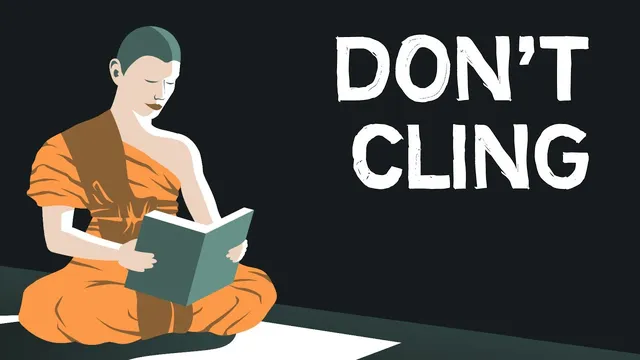
When Life Keeps Knocking You Down | A Buddhist Antidote
Based on Einzelgänger's video on YouTube. If you like this content, support the original creators by watching, liking and subscribing to their content.
The Eight Worldly Winds—gain/loss, fame/disgrace, praise/blame, pleasure/pain—are treated as impermanent conditions that come and go unpredictably.
Briefing
Life rarely stays “in order.” Gain turns into loss, praise fades into silence, and pleasure can vanish the moment circumstances shift. Buddhism frames that constant whiplash through the Eight Worldly Winds—gain and loss, fame and disgrace, praise and blame, and pleasure and pain—treating them like fickle weather that blows in and out regardless of how carefully people plan. The central point is blunt: the winds themselves are not the problem; suffering comes from how tightly people cling to the winds they want and recoil from the ones they don’t.
The transcript grounds this in everyday patterns. People chase gain—degrees, careers, money, relationships—then suffer when the same things inevitably change or disappear. Reputation becomes another battleground: fame is treated like relevance, especially in a social-media economy where attention functions as currency. That makes disgrace feel sudden and uncontrollable, since individuals can’t control who chooses to admire, ignore, or attack. Praise and blame follow the same logic. A personal example illustrates the cycle: a YouTube channel surged after a viral Taoist philosophy video, then shifted downward after ChatGPT’s launch, bringing fewer positive signals and more silence despite attempts to adapt. The emotional lesson is that even strong approval is temporary.
Pleasure and pain complete the set. Western culture is described as pain-averse—seeking anesthesia for physical pain and medication for emotional pain—while treating pleasure as both accessible and desirable. Yet the transcript stresses that pain can’t be fully avoided and pleasure can be taken away instantly. Pleasure and pain also connect to the other winds: loss, disgrace, and blame tend to bring pain, while gain, fame, and success tend to bring pleasure.
Why do these shifts hit so hard? The answer is expectation. People build lives around controlling what can’t be controlled, so mental states become chained to external conditions. The transcript links this to Epictetus’ Stoic distinction between what’s within control (actions) and what isn’t (health, wealth, fame, power). Buddhism and Stoicism converge here: clinging to worldly outcomes leaves people “dependent on others,” vulnerable to rapid mood swings when conditions change.
Resilience, then, isn’t about stopping the winds. It’s about working with the “second arrow”—the suffering that arises from internal reaction—rather than the first arrow, the unavoidable pain of life’s disruptions. The transcript uses the two-arrows simile to separate inevitable events (unfriendly people, flat tires, delayed trains) from the mental story that turns events into anguish (“This is wrong!” “Why always me?”). Buddhist practice aims at the cessation of suffering by loosening attachment to desired outcomes and remembering impermanence—captured in “This too shall pass.” The practical takeaway is acceptance without passivity: true strength means not being carried away by the winds, even though they keep coming.
Cornell Notes
Buddhism explains recurring hardship through the Eight Worldly Winds: gain/loss, fame/disgrace, praise/blame, and pleasure/pain. These conditions are inherently impermanent, so clinging to what feels good and resisting what feels bad creates suffering. The transcript argues that life’s external changes (“the first arrow”) are unavoidable, but the deeper pain (“the second arrow”) comes from mental reactions—stories of injustice, fear, and “why me?” Resilience comes from training attention toward transience and attachment, using reminders like “This too shall pass,” so moods don’t swing as violently with reputation, success, or comfort.
What are the Eight Worldly Winds, and why are they framed as “winds”?
How does the transcript connect worldly change to suffering?
What does the “two arrows” simile add to the Eight Worldly Winds framework?
Why does the transcript say fame and reputation are especially unstable?
How does “This too shall pass” function as a resilience tool?
How do Stoic ideas reinforce the Buddhist message in the transcript?
Review Questions
- Which of the Eight Worldly Winds tends to trigger the strongest clinging in you, and what “second arrow” reaction typically follows?
- How would you apply the two-arrows simile to a recent setback—what was the first arrow, and what was the second arrow?
- What reminders about impermanence (“This too shall pass”) could realistically reduce attachment to gain, fame, praise, or pleasure in your daily life?
Key Points
- 1
The Eight Worldly Winds—gain/loss, fame/disgrace, praise/blame, pleasure/pain—are treated as impermanent conditions that come and go unpredictably.
- 2
Suffering arises less from external change and more from clinging to desired outcomes and resisting undesired ones.
- 3
Resilience depends on separating inevitable events (“the first arrow”) from mental anguish (“the second arrow”).
- 4
Reputation-based emotions are especially volatile because attention can shift quickly and people can’t control who chooses to notice or ignore them.
- 5
Pleasure and pain are linked to the other winds, so changes in gain, fame, or blame often carry emotional consequences.
- 6
Training attention toward transience—using reminders like “This too shall pass”—reduces how strongly success, praise, and relationships control mood.
- 7
True strength is defined as not being carried away by the winds, since controlling them is impossible.