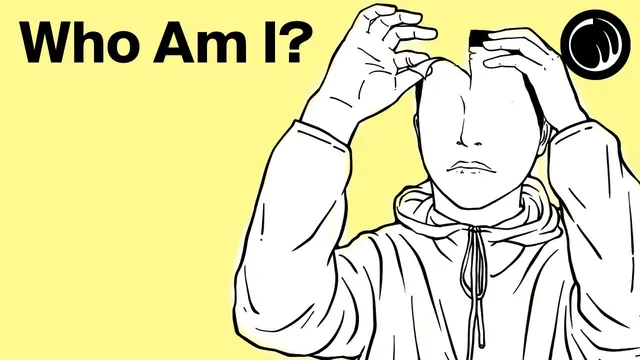
Who Am I? - A Thought Experiment That Changes How You Think About Yourself
Based on Pursuit of Wonder's video on YouTube. If you like this content, support the original creators by watching, liking and subscribing to their content.
The transcript argues that “self” lacks a stable physical or psychological anchor across time.
Briefing
The core insight is that “self” doesn’t behave like a single, stable object carried through time. Instead, it looks more like an ongoing experience produced by shifting brain activity and changing relationships with the world—so the feeling of being the same person is real as an experience, but not grounded in anything that stays constant.
The argument starts by challenging the usual candidates for what makes someone “them.” The body is an obvious place to look, but it fails as a permanent anchor: limbs can be lost without erasing the sense of identity, and even on a biological level most cells are replaced over roughly a decade. Appearance changes dramatically too—an eight-year-old and a thirty-year-old may look like different people while still claiming the same identity. Circumstances shift as well, even when someone remains in the same location, because the environment and context are never truly static. If the body and external life can’t supply a persistent “who,” attention turns to the brain. Yet the brain isn’t a single seat of “you.” Much of it runs automatic processes outside conscious control, and people typically don’t identify with those functions. Even the parts tied to preferences, skills, speech, and temperament are in flux across a lifetime. Tastes change, abilities grow or fade, and personality traits and humor evolve—so the “you” associated with these features doesn’t remain fixed.
That leaves memory as the most plausible continuity. The discussion treats memory as the glue that makes a person feel continuous from one decade to the next, and then tests the idea with extreme cases such as long-term memory loss in Alzheimer’s disease. If memory disappears, does the person become “nobody,” and what does it mean to interact with someone whose autobiographical continuity is broken? The transcript pushes toward a paradox: even for people without severe impairment, searching for a concrete, central self inside body and mind yields “nobody-ness.” There’s no brain region where everything converges into a single ego center, no control-room where thoughts are displayed and judged. Modern neuroscience is used to support this distributed view of consciousness—Sam Harris is quoted describing consciousness as a cascade of neurophysiology with activity spread everywhere.
From there, the self is reframed as an emergent process rather than a unitary entity. A feedback loop links world, body, and mind, and the experience of self arises from that ongoing interaction. The result is a shift in what “being yourself” could mean. If the self is not a stable thing to discover and preserve, then authenticity may not require consistency with a past version or obedience to expectations. Instead, it becomes honest embodiment of what someone feels, thinks, and wants right now—an Emerson-style rejection of “foolish consistency.” Being yourself is portrayed as continual becoming: speaking what feels true now, then revising as tomorrow’s understanding arrives.
Finally, the transcript places these questions in a long human lineage—from Heraclitus and Plato to Buddha and Advaita Vedanta—while acknowledging the perspective-dependent nature of any theory. The closing message treats selfhood as a strange, beautiful experience unique to humans: simultaneously something and nothing, experiencer and experiences, prompting attachment and disorientation while also offering a kind of existential wonder.
Cornell Notes
The transcript argues that “self” isn’t a fixed object located in the body or brain. Bodies change physically, circumstances shift, and even brain-related traits like preferences, skills, and temperament evolve, undermining the idea of a constant core. Memory seems like the best continuity candidate, but cases like Alzheimer’s raise the question of what identity means when long-term memory fails. Neuroscience is used to support a distributed, non-central view of consciousness, making the self an emergent experience rather than a stable entity. If selfhood is process, “being yourself” may mean honest embodiment of what feels true now—not rigid consistency with a past version.
Why does the transcript treat the body as a weak candidate for “who you are”?
What happens when the search for self moves from the body to the brain?
Why is memory presented as the strongest continuity candidate, and what challenge does Alzheimer’s introduce?
How does neuroscience reshape the idea of a unified ego?
If the self is an emergent process, what does “being yourself” mean?
What philosophical tradition does the transcript connect to this view of selfhood?
Review Questions
- Which identity candidates are tested and rejected before memory is introduced as the strongest continuity mechanism?
- What does the transcript claim about whether there is a central brain location where the self forms?
- How does the transcript redefine authenticity if selfhood is treated as a process rather than a stable entity?
Key Points
- 1
The transcript argues that “self” lacks a stable physical or psychological anchor across time.
- 2
Body-based identity is undermined by bodily change, cell turnover, and the fact that identity can persist even with major bodily loss.
- 3
Brain-based identity is undermined because preferences, skills, speech patterns, and temperament change throughout life.
- 4
Memory is presented as the strongest continuity candidate, but Alzheimer’s-style long-term memory loss raises hard questions about identity.
- 5
Neuroscience is used to support a distributed, non-central view of consciousness, making the self an emergent experience.
- 6
“Being yourself” is reframed as honest embodiment of present truth rather than rigid consistency with a past version of you.
- 7
The transcript situates these ideas in a long philosophical lineage while emphasizing that any conclusion remains a perspective.