Why Are Bad Words Bad?
Based on Vsauce's video on YouTube. If you like this content, support the original creators by watching, liking and subscribing to their content.
Regional profanity use varies, with Ohio residents reported as most likely to use several common taboo terms and Washington residents reported as least likely.
Briefing
Bad words persist because they do real work in human communication—marking taboo, signaling emotion, and sometimes functioning like a social alarm—so attempts to suppress them don’t erase the need they fill. Data from the Marchex Institute, based on more than 600,000 recorded U.S. phone conversations, found clear regional differences in profanity use: people in Ohio were most likely to deploy the “A” word, the “F” word, and the “S” word, while Washington state residents were least likely to do so. The question “what makes a word bad?” turns out to have no single answer, and even “bad” itself has a history as a derogatory term.
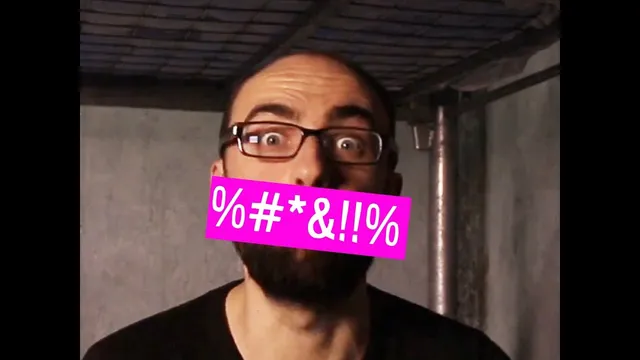
Swearing’s social role is both widespread and oddly efficient. One analysis cited in the discussion suggests that socially unacceptable words make up about 0.7% of the daily vocabulary of an average English speaker—used almost as often as socially descriptive terms. When people bleep profanity on calls, the audio is often masked with a 1 kilohertz sine wave, and the visual symbols used to represent censored words have a name: grawlixes, popularized by cartoonist Mort Walker. The persistence of profanity also shows up in repetition over time: a large share of swear words overheard in public across multiple years were essentially the same, implying that taboo vocabulary is sticky even as it shifts in intensity.
Steven Pinker’s framework breaks swearing into five categories. Abusive swearing aims to hurt—insulting, humiliating, objectifying, or marginalizing targeted groups. When the target is God, the practice becomes “supernatural swearing,” which was especially taboo in Victorian times; people avoided direct references and invented euphemisms like “Zounds!” and “Gadzooks!” rooted in older religious imagery. Emphatic swearing is less about attacking someone and more about letting taboo words carry emotional force when social rules would otherwise restrain speech. Dysphemism and euphemism sit at the center of this: “defecate” can sound professional, while a harsher alternative makes the speaker’s disgust unmistakable.
Other functions are more social than emotional. Idiomatic swearing uses profanity without emphasis, signaling casualness—“we’re all cool here.” Cathartic swearing provides relief during pain, and neuroscience hints at why: swearing may involve different brain regions than ordinary language. The discussion links this to an evolutionary logic—taboo words are “special” because people wouldn’t use them casually, so they work like high-salience alarms when someone is hurt or threatened.
Finally, profanity changes. Some terms are used more often over time, while others become less acceptable as cultural fears fade and new sensitivities rise. The talk points to how disease and sex once drove taboo, but as those topics become more personal and less frightening, related words lose their sting; meanwhile, older common insults can become newly unpleasant. It also highlights how online culture and backlash shape what becomes taboo, including the “No Cussing Club” campaign that drew heavy cyberbullying. The bottom line: bad words are a moving boundary—sometimes arbitrary, sometimes irrational, always shifting toward acceptance—and they remain powerful because they help societies negotiate emotion, identity, and change.
Cornell Notes
Profanity endures because it serves multiple communication functions: it can attack (abusive swearing), intensify emotion (emphatic swearing), mark social distance or closeness (idiomatic swearing), and even provide pain relief (cathartic swearing). Taboo words also appear to be processed differently in the brain, which may explain why some people can struggle with normal language but still swear fluently. Historical and social forces influence which words are considered “bad,” including class differences that shaped English vocabulary (Latin/French “polite” terms versus Germanic “less classy” ones). Over time, the taboo status of words shifts as cultural fears and norms change, and online backlash can accelerate that movement. That’s why profanity doesn’t disappear—it evolves.
What does the Marchex Institute data suggest about where profanity is used in the U.S.?
Why does swearing get bleeped, and what do the masking and symbols have in common?
How does Pinker’s five-part breakdown explain different reasons people swear?
What’s the difference between euphemism and dysphemism, and why does it matter?
How do class and language history help explain why some words become swear words?
What does neuroscience suggest about why swearing can survive brain damage?
Review Questions
- Which of Pinker’s swearing categories best fits a scenario where someone uses profanity to intensify disgust about an experience, and why?
- How does the class-history explanation connect Latin/French-derived terms and Germanic-derived terms to modern social acceptability?
- What evidence from the discussion links swearing to emotion-related brain systems rather than standard language processing?
Key Points
- 1
Regional profanity use varies, with Ohio residents reported as most likely to use several common taboo terms and Washington residents reported as least likely.
- 2
Swearing has multiple functions—abusive, emphatic, idiomatic, cathartic, and sometimes supernatural—so “badness” isn’t a single rule.
- 3
Euphemism and dysphemism show how word choice can signal both the topic and the speaker’s emotional stance, even when referring to the same reality.
- 4
Historical class divisions helped shape which words became socially acceptable versus taboo, influencing modern swear vocabulary.
- 5
Taboo words can act like high-salience signals, which may connect to why swearing can be automatic or neurologically distinct.
- 6
Cultural change shifts what counts as “bad,” as older taboos fade and new targets of social discomfort emerge.
- 7
Online attention and backlash can accelerate how communities treat certain words, reinforcing the idea that taboo boundaries move over time.