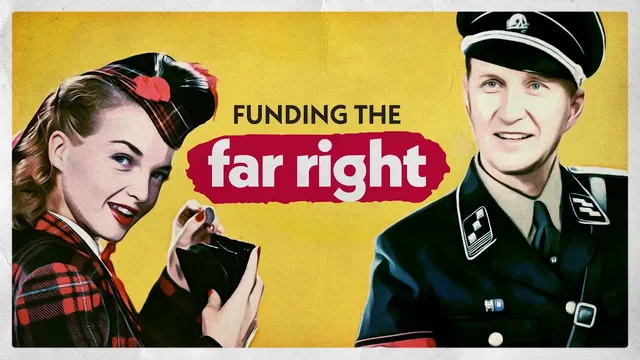
Why Are Democrats Funding The Far Right?
Based on Second Thought's video on YouTube. If you like this content, support the original creators by watching, liking and subscribing to their content.
Democratic-linked spending is described as boosting far-right Republican nominees in GOP primaries, using messaging that frames them as the most Trump-aligned conservative choice.
Briefing
Democrats are funding far-right Republican candidates—sometimes through high-profile party-linked groups and prominent political figures—because doing so is a repeatable electoral strategy that positions Democrats as the “reasonable” alternative. The ads described in the transcript are portrayed as tightly targeted to conservative audiences and framed around a single theme: each funded candidate is presented as the most conservative option closest to Donald Trump, effectively turning GOP primaries into a pipeline for more extreme nominees.
The pattern is illustrated with multiple examples: a $840k ad by Democrat Josh Shapiro supporting far-right Republican Doug Mastriano; Democratic Colorado PAC funding for far-right candidate Ron Hanks; and Democratic Governors Association spending on an ad for far-right Republican Darren Bailey. The transcript also points to ads funded by a Nancy Pelosi PAC in California, emphasizing that the messaging is “essentially the same” across races—designed to inflame conservative voters and make the eventual general-election choice feel like the lesser evil.
At the center of the argument is a two-step electoral logic. First, by helping far-right candidates win GOP primaries, Democrats expect moderate Republicans to feel outraged and defect to a more centrist Democratic nominee. Second, left-wing voters—also angered by the far-right nominee—are expected to turn out anyway, voting for the “lesser of two evils.” The transcript claims this approach has worked before, citing 2012: Democrat Claire McCaskill allegedly spent $1.7 million on ads for ultra-conservative Todd Akin, after which Akin gained momentum, won the GOP primary, and then lost in the general election.
The transcript then argues that this is not merely hypocrisy—wanting a principled opposition while funding extremists—but a coherent strategy that keeps Democrats as the only viable political option. By portraying Republicans as “hijacked” by extremists while actively financing that hijacking, Democrats can cast themselves as the last line of democracy until Republicans “return to normal,” a return the transcript says will never happen.
Why take a risky path that could backfire? The transcript offers two explanations. The first is mechanical and party-level: the Democratic Party’s fundraising and donor structure makes it difficult to adopt genuinely socialist policies at scale, because wealthy donors are unlikely to fund platforms that threaten their profits. The second explanation is societal: it draws on the idea that “fascism is capitalism in decay,” arguing that when capitalism fails to meet mass needs, governments and ruling elites may concede to reactionary politics that preserve private ownership and profit.
In that framework, fascism grows not only through overt manipulation but through incentives and institutional design. The transcript claims Democrats often choose the easier electoral route—running against far-right opponents—rather than building a political alternative capable of resisting the drift toward authoritarianism. The conclusion is a warning that, even without anyone needing to be personally dishonest, the “path of least resistance” can still increase fascist airtime, normalize extreme slogans, and ultimately shift the political center rightward while undermining democratic safeguards.
Cornell Notes
The transcript argues that Democrats fund far-right Republicans as an electoral strategy: boosting extreme candidates in GOP primaries so general-election voters see Democrats as the safer, more “reasonable” option. It cites multiple examples of Democratic-linked spending on far-right nominees and claims the ads share a consistent targeting and framing approach. A historical example is offered from 2012, when Claire McCaskill’s spending on Todd Akin is said to have helped Akin win the primary and then lose the general election. The transcript then connects this strategy to party fundraising constraints and to a broader theory that capitalism in crisis can make fascist politics more likely. The stakes, it argues, are that this “lesser of two evils” approach can still accelerate ultra-conservative politics and fascism.
What pattern links the cited Democratic-funded ads for far-right candidates?
How does the transcript claim this strategy works in general elections?
Why does the transcript reject the idea that this is just hypocrisy?
What historical example is used to justify the strategy’s effectiveness?
What two explanations does the transcript give for why Democrats keep using this approach?
What does the transcript say about how fascism spreads through institutions and incentives?
Review Questions
- Which specific electoral outcomes does the transcript claim Democrats are trying to trigger by funding far-right primary candidates?
- How does the transcript connect donor incentives and fundraising realities to the difficulty of adopting socialist policies at scale?
- What does the transcript mean by “fascism is capitalism in decay,” and how does it link that to the Democratic strategy of running against the far right?
Key Points
- 1
Democratic-linked spending is described as boosting far-right Republican nominees in GOP primaries, using messaging that frames them as the most Trump-aligned conservative choice.
- 2
The transcript claims the ads are consistently targeted and framed to inflame conservative voters while setting up a general-election “lesser of two evils” choice.
- 3
A two-part electoral theory is offered: moderate Republicans defect to Democrats after far-right primary wins, while left-wing voters turn out against the far right.
- 4
The transcript argues the strategy is coherent rather than hypocritical because it helps Democrats portray themselves as the only viable defense of democracy.
- 5
A historical example is cited from 2012: Claire McCaskill’s alleged spending on Todd Akin is said to have helped Akin win the primary and then lose the general election.
- 6
Two explanations are provided for why the strategy persists: party fundraising constraints and a broader theory that capitalist crisis can make fascist politics more likely.
- 7
The transcript concludes that institutional incentives and the “path of least resistance” can accelerate authoritarian drift even without overt dishonesty.