Why Are Things Creepy?
Based on Vsauce's video on YouTube. If you like this content, support the original creators by watching, liking and subscribing to their content.
Creepy feelings often come from ambiguity—possible threat without enough information to label the situation as safe or dangerous.
Briefing
Creepy things trigger a distinct kind of fear: not the clear alarm of an obvious threat, but an uneasy response to uncertainty. When an image, sound, or human-like figure seems “almost” understandable—dangerous enough to worry about, yet ambiguous enough that the mind can’t confidently label it as safe—people get stuck in a mental no-man’s-land. That mismatch produces the “creeped out” feeling: parts of the brain register danger while others can’t justify it, leaving the body in a state closer to unease than full panic.
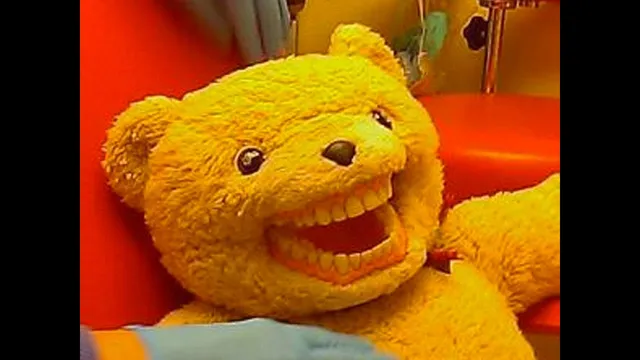
The discussion starts by contrasting ordinary fear—poisonous insects, hungry tigers—with fear that arrives without a clear target. Teddy bears with human teeth and oddly familiar images like “smile.jpg” feel wrong, even though nothing directly threatens the viewer. To make sense of that difference, the video draws on Stephen King’s three-part taxonomy of scary experiences: “gross-out” (disgust and disease), “horror” (the unnatural), and “terror,” which is defined as a specific kind of dread—discovering that reality has been replaced with exact copies, or feeling something behind you and finding nothing there. “Terror” is framed as creepier because it involves a gap between expectation and what the senses confirm.
Several theories then explain why ambiguity is so effective at producing the creeps. One line of thought links creepiness to facial disguise and masks: Claude Lévi-Strauss argued that disguising the face removes cues about personal feelings and intentions, so even a neutral mask can read as threatening simply because the wearer’s internal state is unclear. Another major mechanism is the “uncanny valley,” where near-human figures—close enough to be familiar, but not close enough to be convincing—create a troubling mismatch. Examples include Singing Androids by John Bergeron and the character ShayeSaintJohn by Eric Fournier, both described as humanoids that sit between categories the brain can label.
A complementary psychological account comes from Francis T. McAndrew and Sara Koehnke, who describe “creeped out” as an adaptive response to ambiguous threats from other people. Creepy stimuli occupy a gray zone: they might be dangerous, but they might not be. The mind can’t decide, so it doesn’t execute a clean fear response; instead it produces unease.
The ambiguity theme extends beyond faces and monsters into everyday cognition. The “High Place Phenomenon,” associated with Jennifer Hames at Florida State University, describes how people near ledges can experience intrusive urges to jump or push—even when nothing is physically pushing them. The survival instinct pulls the person away, but motor and balance systems don’t confirm the threat, leaving the intention-processing system to “fill in” a cause that may be false.
Even language reflects this double-edged experience. Words like “terrible/terrific” and “horrible/horrific” point to how powerful experiences can be both awe-inspiring and awful. The creeps, in this framing, is a physical reminder that the world is vague and uncertain—and that humans are clever enough to interpret it, yet fragile enough to be unsettled by what can’t be confidently categorized.
Cornell Notes
Creepy experiences arise when the brain faces uncertainty rather than a clear danger. Unlike “horror” (the unnatural) or “gross-out” (disgust), “terror” and “creeped out” feelings emerge when something seems threatening but can’t be confidently identified. Masks and the uncanny valley work because they hide or distort cues about intentions and humanity, leaving people unable to label the stimulus as safe. Research by McAndrew and Koehnke frames “creeped out” as an adaptive response to ambiguous threats from others. The same ambiguity mechanism appears in the “High Place Phenomenon,” where people near ledges can experience intrusive urges to jump or push despite no actual external force.
How does creepiness differ from ordinary fear?
Why do masks and clowns often feel creepy even when they look harmless?
What is the uncanny valley, and why does it cause unease?
What does “creeped out” mean in adaptive terms?
How does the High Place Phenomenon connect to ambiguity?
Why do words for fear sometimes carry both positive and negative meanings?
Review Questions
- What features of a stimulus make the brain unable to trigger a clear fear response, leading to “creeped out” unease?
- How do masks and the uncanny valley each manipulate cues about intention or humanity?
- In the High Place Phenomenon, what mismatch between survival instincts and motor/balance signals helps produce intrusive urges?
Key Points
- 1
Creepy feelings often come from ambiguity—possible threat without enough information to label the situation as safe or dangerous.
- 2
Stephen King’s framework distinguishes “gross-out” and “horror” from “terror,” with “terror” tied to unsettling uncertainty about reality and presence.
- 3
Masks can feel creepy because they remove facial cues that normally communicate emotions and intentions, making threat assessment harder.
- 4
The uncanny valley describes near-human figures that are neither clearly fake nor convincingly real, producing a troubling categorization failure.
- 5
“Creepiness” can be adaptive: it reflects an evolved response to ambiguous threats from others rather than a straightforward fear trigger.
- 6
The High Place Phenomenon shows how the brain can generate intrusive urges when intention-processing tries to explain a lack of external force near danger.
- 7
Language hints at the same duality: powerful experiences can be both awe and dread, captured in word pairs like “terrible/terrific.”