Why Are Things Cute?
Based on Vsauce's video on YouTube. If you like this content, support the original creators by watching, liking and subscribing to their content.
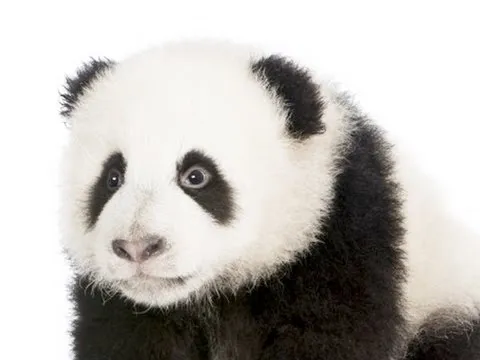
Cuteness is strongly linked to juvenile visual proportions: small bodies, large round heads, large eyes, and soft rounded shapes.
Briefing
Cuteness isn’t just a cultural vibe—it’s a measurable biological trigger that pushes the brain toward reward and care. Humans tend to react with an instinctive “oooooh” when they see certain juvenile-looking features, and brain-imaging work links that reaction to the nucleus accumbens, a pleasure-related region tied to dopamine. That reward circuitry helps explain why cuteness can influence what people like and even what they buy, and why industries—from cartoons to character design—lean into more exaggerated “cute” traits over time.
The roots of “cute” itself trace back to older meanings. The word once meant “acute” in the sense of keen, shrewd, or perceptive, then shifted about 180 years ago into slang for a pretty girl. Over time, it broadened again to describe cuddly, delicate, quaint, precious, youthful qualities—exactly the traits that later research tries to pin down.
Konrad Lorenz’s work on cuteness in animals produced a concrete checklist: small body size paired with a disproportionately large head, large round eyes, and soft, rounded body features. Those same cues map closely onto human babies, which helps explain the protective, nurturing response. The key twist is that cuteness can be “faked” by non-baby objects if they borrow the same visual geometry. Lorenz’s framework predicts that people can find cuteness in things that aren’t alive—like shells, bunnies, owls, and even a hammer—once the object is reshaped to look rounder and squatter, mimicking baby proportions. Daniel Dennett’s phrasing captures the logic: if human babies looked like that instead, people would still find them cute.
Brain studies reinforce the idea that cuteness has a neural payoff. When researchers show subjects baby photos of varying cuteness during functional MRI, the cuter the baby, the more activation appears in the nucleus accumbens. Because that region is part of the brain’s reward system and releases dopamine, cuteness becomes more than a feeling—it becomes a chemical and behavioral driver.
That driver shows up in design and culture. Cartoon characters such as Mickey Mouse and Pikachu have trended toward increasingly cute proportions. The Japanese concept of kawaii is also described as quantifiable using head-to-height ratios: heroic or noble manga-style figures often look around 8 to 8.5 heads tall, while cute manga characters drop to roughly 5.5 to 6.5. Even adult perception can be nudged by how strongly a character signals juvenile traits.
Cuteness also connects to broader psychology. Many mechanisms push people to care for young, but not all juvenile cues are pleasant—poopy diapers, for example, can still trigger a protective bias in mothers’ judgments of smell, even when they can’t identify which diaper belongs to which child. In animals, the persistence of juvenile traits into adulthood is called neoteny, a feature especially valued in pets.
Finally, the modern dog is framed as a prime example of human-directed evolution. Through selective breeding, dogs have been shaped to stay cute longer and to perform tasks humans value, making the dog less a purely natural outcome and more a kind of living human technology—an invention that, in the spirit of Science Friday’s line, may be “man’s best friend” because it’s also “man’s best invention.”
Cornell Notes
Cuteness works like a biological shortcut: specific juvenile features—small bodies, big round heads and eyes, and soft shapes—trigger protective and nurturing instincts. Lorenz’s research links these cues to human babies, and the same response can be elicited by non-baby objects when they’re reshaped to match baby-like proportions (even a hammer can become “cute”). Functional MRI studies show that the cuter the baby photo, the more activity appears in the nucleus accumbens, a dopamine-related reward center. Because this reward circuitry can shape preferences and purchasing, designers and cartoon creators increasingly exaggerate “cute” traits. Selective breeding and neoteny further help explain why pets, especially dogs, can look and behave in ways that keep eliciting care.
What visual traits make something feel cute, according to Lorenz’s framework?
Why can people find cuteness in objects that aren’t alive, like shells or even a hammer?
What brain region is linked to how cute people find baby pictures?
How does cuteness influence behavior beyond feelings?
What are neoteny and kawaii, and how do they relate to cuteness?
How do researchers explain the “care” response even when juvenile cues are unpleasant?
Review Questions
- Which specific baby-like features (size, head, eyes, body shape) are most associated with cuteness in Lorenz’s list?
- How do functional MRI findings connect cuteness to dopamine and the nucleus accumbens?
- Give one example of how cuteness can be engineered into a non-baby object, and explain why it works.
Key Points
- 1
Cuteness is strongly linked to juvenile visual proportions: small bodies, large round heads, large eyes, and soft rounded shapes.
- 2
Lorenz’s framework predicts that non-living objects can become “cute” when reshaped to mimic baby-like traits.
- 3
Functional MRI studies associate higher perceived cuteness with greater activation in the nucleus accumbens, a dopamine-related reward center.
- 4
Cuteness can steer preferences and purchasing, helping explain why character design trends toward increasingly exaggerated cute features.
- 5
Kawaii can be quantified through head-to-height ratios, with cute characters typically drawn with fewer heads tall than heroic ones.
- 6
Neoteny—keeping juvenile traits into adulthood—helps explain why many pet animals remain appealing as “forever young.”
- 7
Selective breeding, especially in dogs, can be framed as human-directed “technology” that preserves cuteness and enhances usefulness.